1961–1972
Apollo Program
NASA's program that landed the first humans on the Moon and returned them safely to Earth.
15
Missions
4
Spacecraft
17
Images
14
Completed
Historical archive
Missions, spacecraft, imagery, and milestones from the Apollo Program program.
Program Overview
The program
NASA's program that landed the first humans on the Moon and returned them safely to Earth.
Program Timeline
Program Flights
Missions
Explore every Apollo Program mission currently preserved in the OrbitingTruths archive.
Apollo 1
Launch
February 21, 1967
Status
Ground Test Accident
Duration
Mission never launched
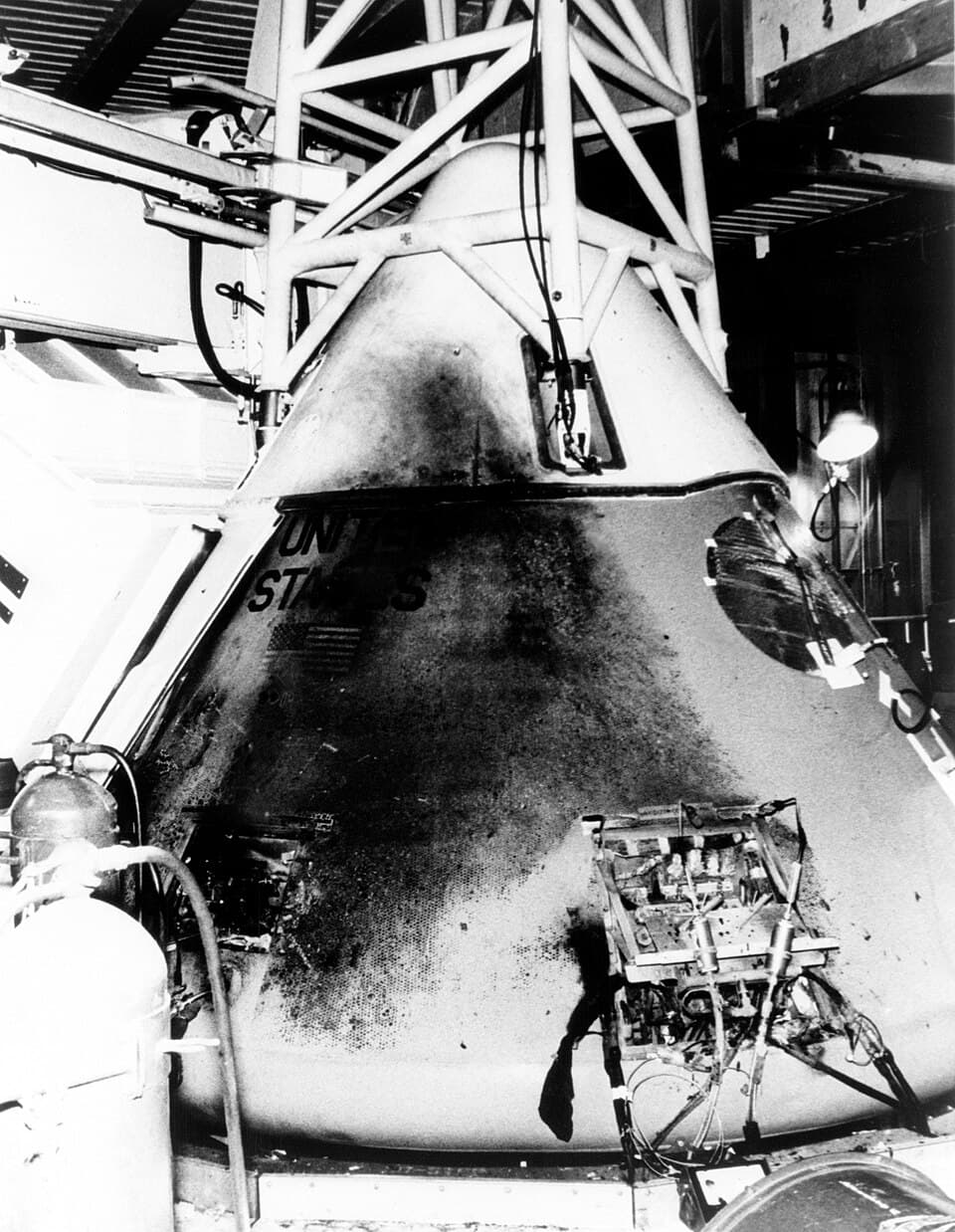
Apollo 1 was intended to become the first crewed flight of NASA's Apollo spacecraft. The mission never launched. During a launch rehearsal on January 27, 1967, a cabin fire claimed the lives of astronauts Virgil I. Grissom, Edward H. White II, and Roger B. Chaffee. The tragedy forced NASA to confront serious spacecraft, testing, and safety failures before continuing toward the Moon.
View Mission →
Apollo 4
Launch
November 9, 1967
Status
Successful
Duration
8 hours, 36 minutes, 59 seconds
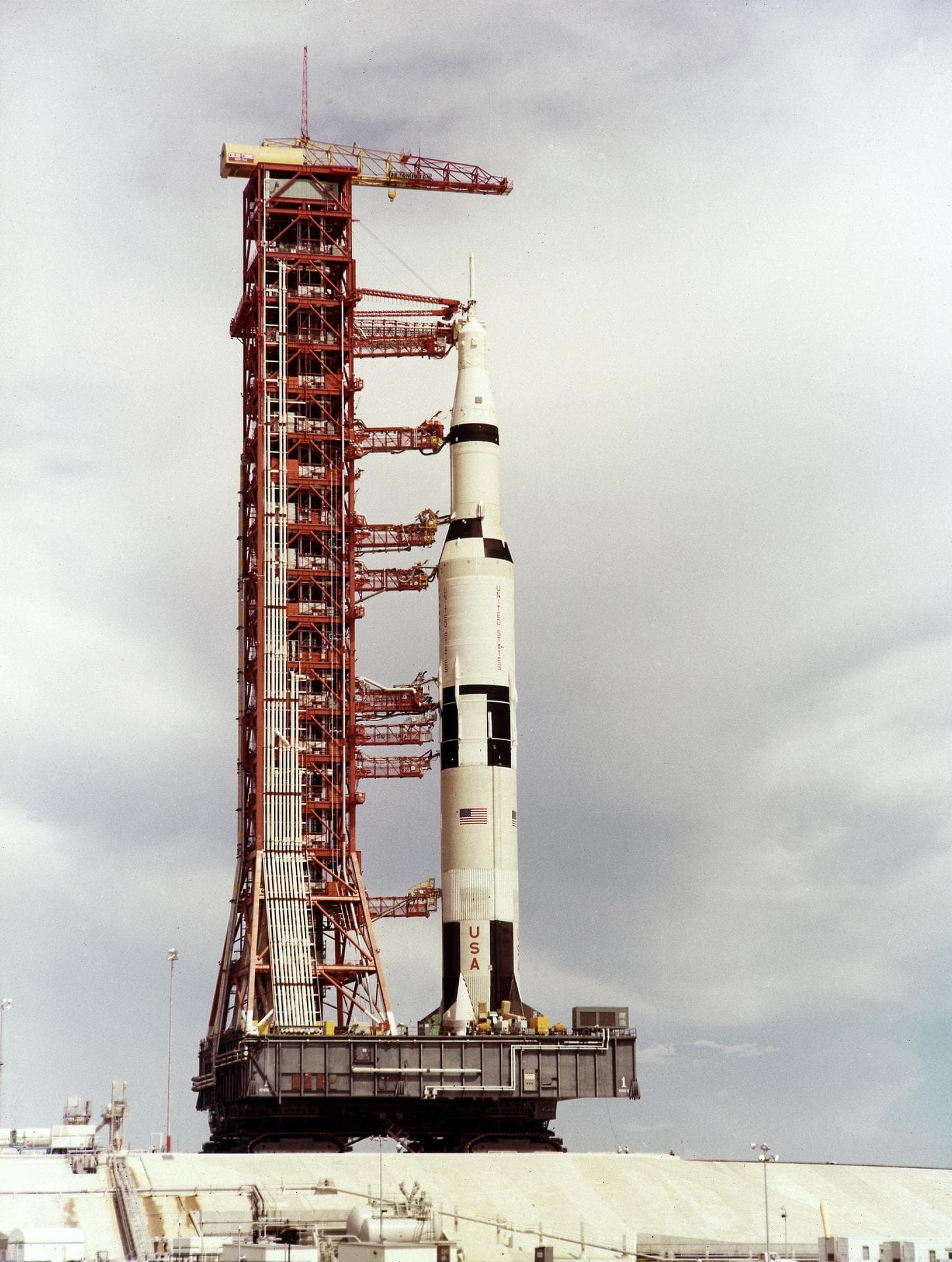
Apollo 4 was the first flight of the Saturn V, the enormous rocket built to carry astronauts to the Moon. The uncrewed mission tested all three rocket stages together, restarted the third stage in space, fired the Apollo spacecraft's main engine, and sent the Command Module back through Earth's atmosphere at nearly the speed of a spacecraft returning from the Moon.
View Mission →
Apollo 5
Launch
January 22, 1968
Status
Successful
Duration
11 hours, 10 minutes
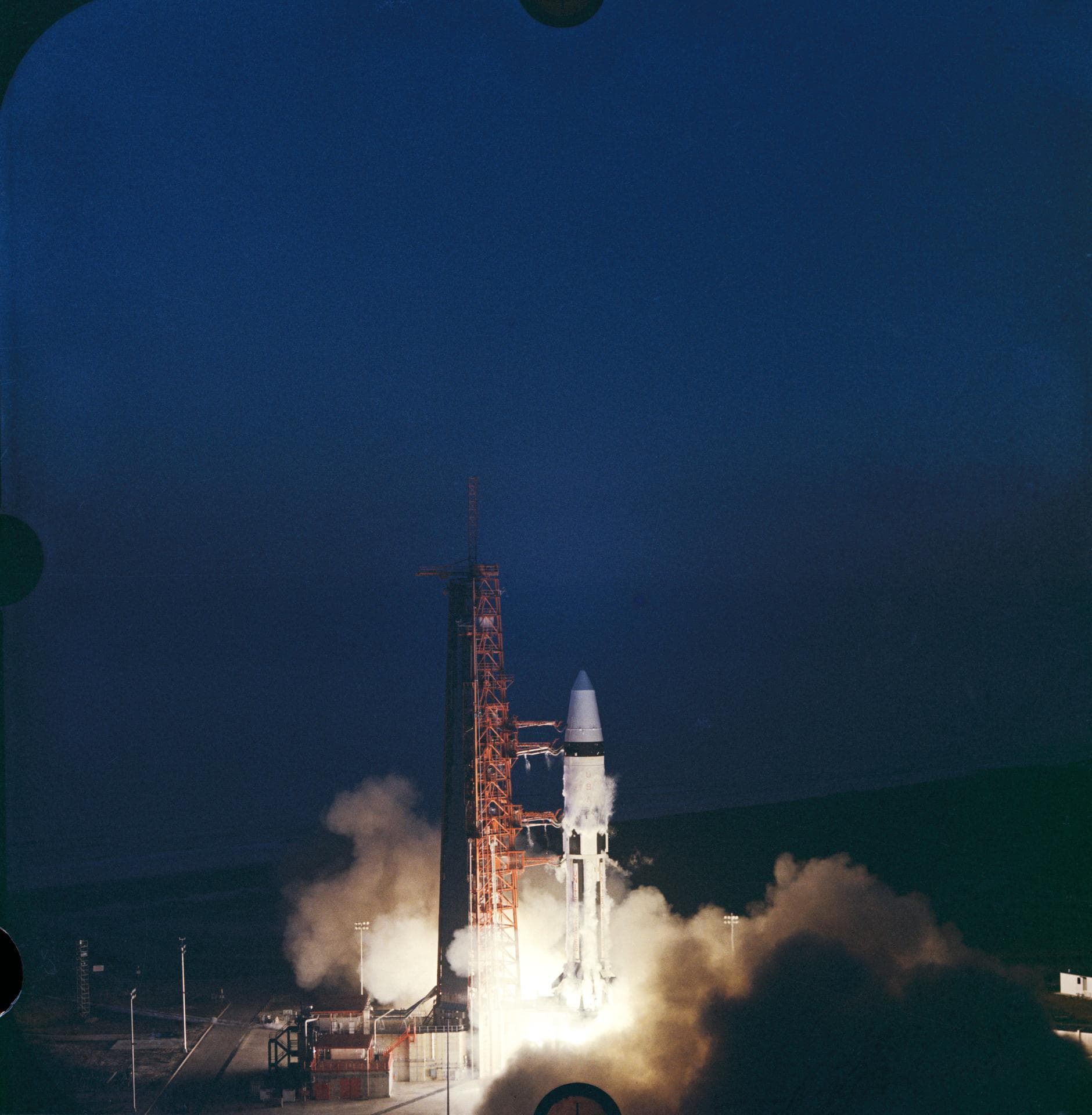
Apollo 5 was the first flight of NASA's Lunar Module, the extraordinary spacecraft designed exclusively to land astronauts on the Moon. The uncrewed mission tested both the descent and ascent engines, validated the Lunar Module's guidance systems, and proved that the vehicle could perform the complex maneuvers required for future lunar landings.
View Mission →
Apollo 6
Launch
April 4, 1968
Status
Partially Successful
Duration
9 hours, 57 minutes
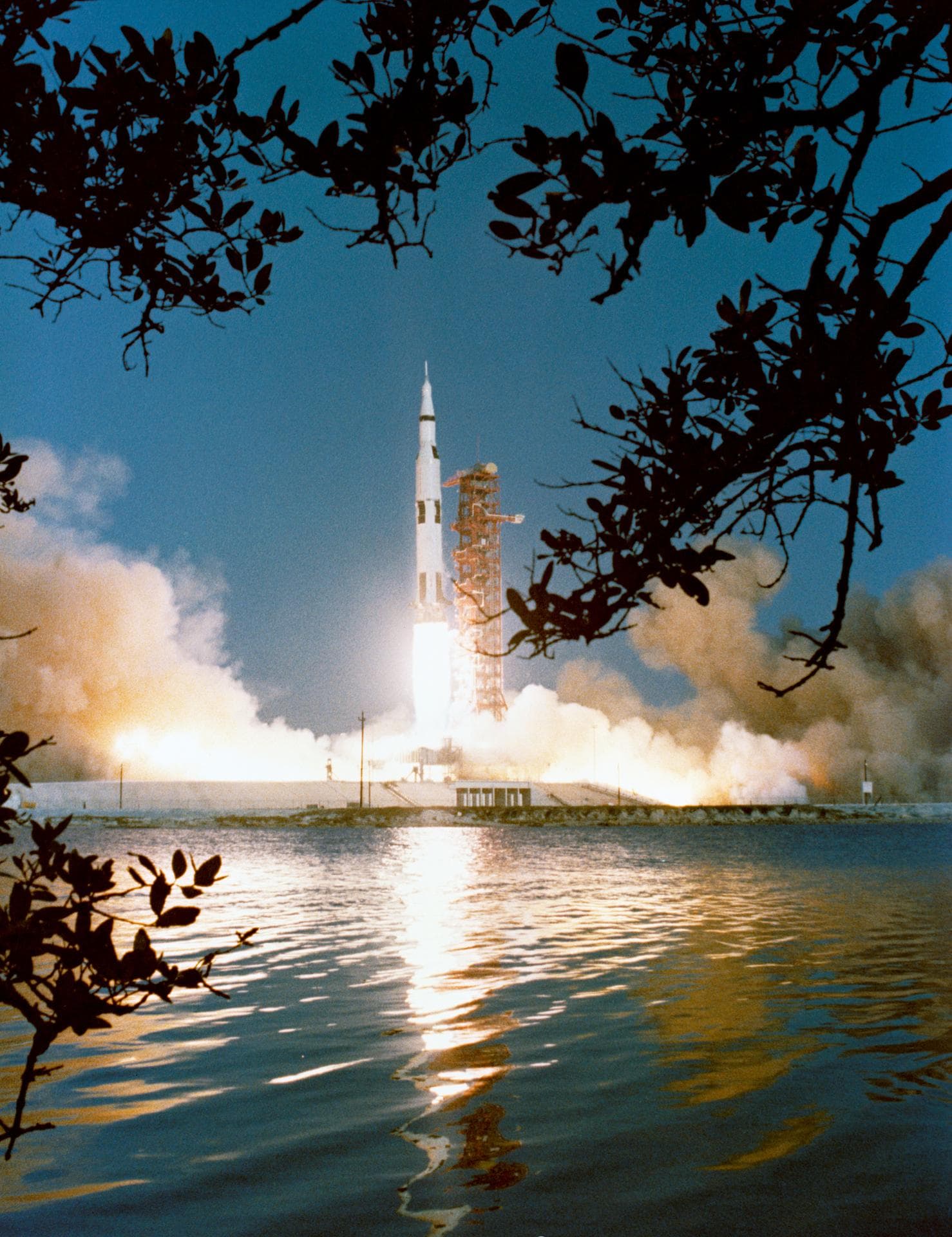
Apollo 6 was the second and final uncrewed test flight of the Saturn V rocket. Although the mission experienced severe engine failures and dangerous pogo oscillations, NASA successfully demonstrated the Apollo spacecraft's ability to return safely from a simulated lunar mission and gathered critical engineering data that paved the way for the first crewed Saturn V flight.
View Mission →
Apollo 7
Launch
October 11, 1968
Status
Successful
Duration
10 days, 20 hours, 9 minutes
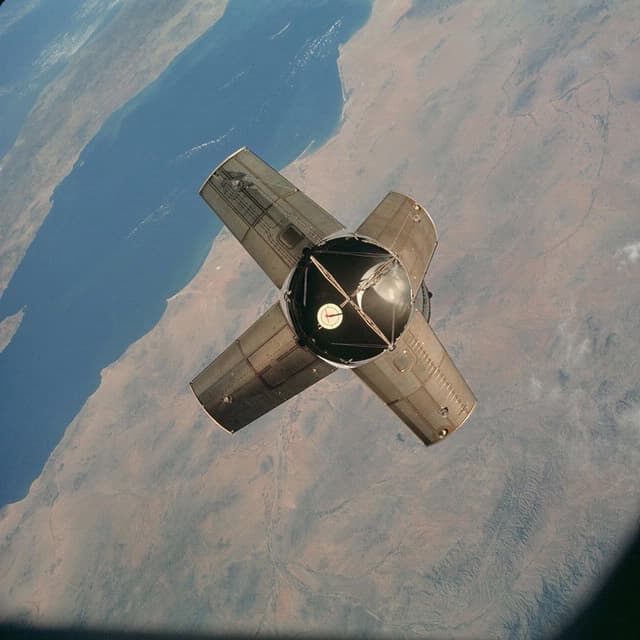
Apollo 7 was the first crewed Apollo mission and NASA's first human spaceflight after the Apollo 1 tragedy. During an eleven-day Earth-orbit mission, the crew thoroughly tested the redesigned Apollo Command and Service Module, proving it was safe for future missions to the Moon and restoring confidence in the Apollo Program.
View Mission →
Apollo 8
Launch
December 21, 1968
Status
Successful
Duration
6 days, 3 hours, 42 seconds
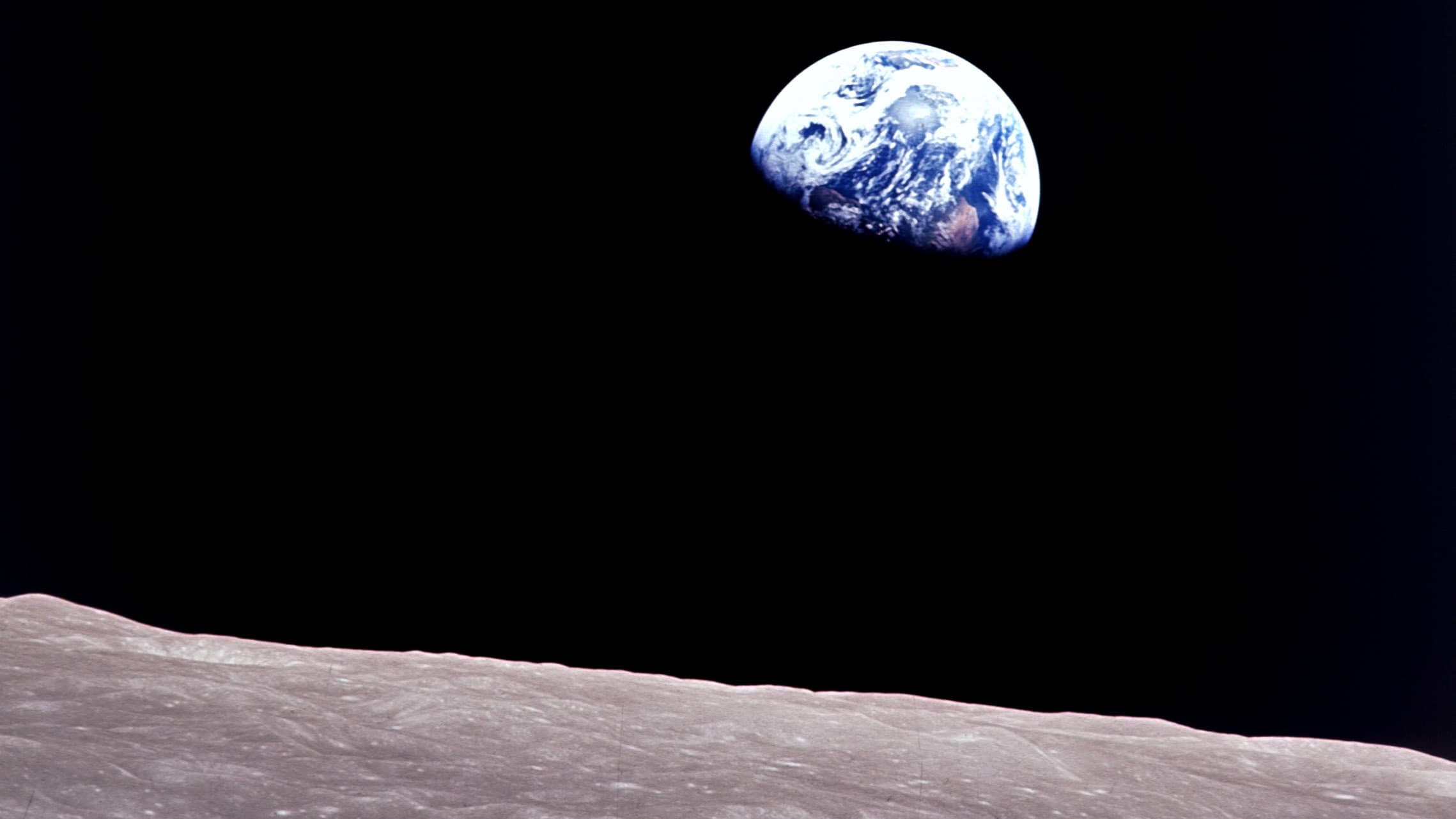
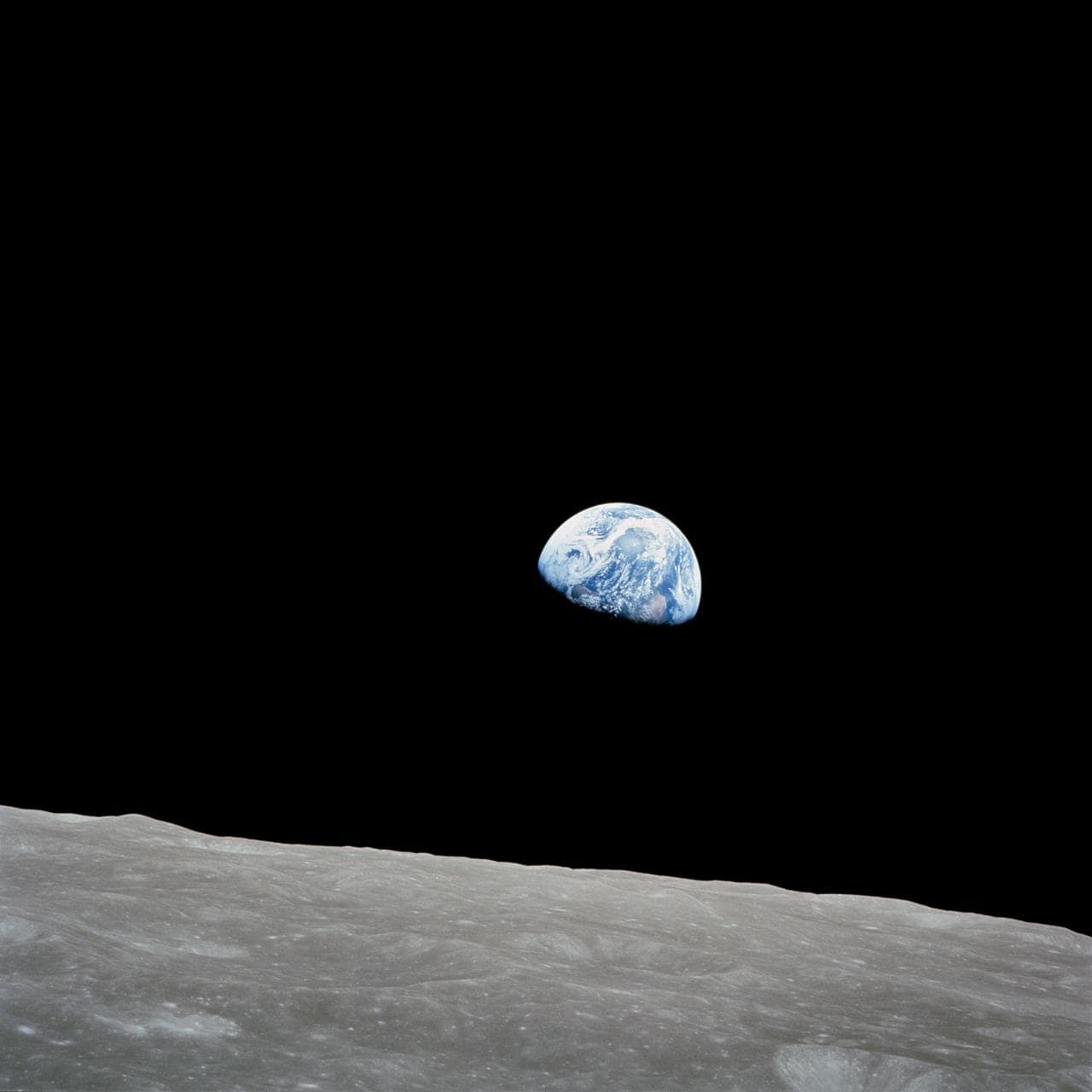
Apollo 8 became the first crewed mission to leave Earth orbit, travel to the Moon, enter lunar orbit, and safely return home. During ten revolutions around the Moon, the crew photographed the now-famous Earthrise image and broadcast a Christmas Eve message watched by hundreds of millions of people around the world.
View Mission →
Apollo 9
Launch
March 3, 1969
Status
Successful
Duration
10 days, 1 hour, 54 seconds
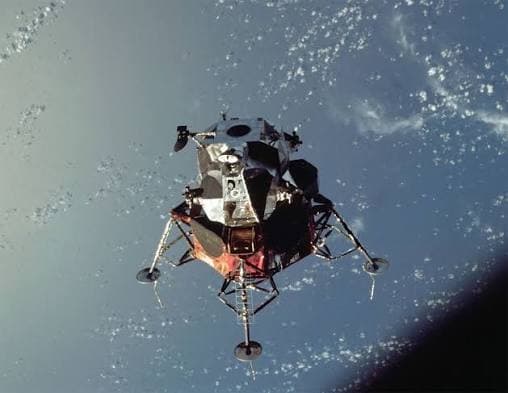
Apollo 9 was the first crewed flight of the Apollo Lunar Module. During ten days in Earth orbit, astronauts tested every major maneuver required for a Moon landing, including docking, undocking, independent Lunar Module flight, spacewalks, and rendezvous, proving the complete Apollo landing system before committing crews to lunar orbit.
View Mission →
Apollo 10
Launch
May 18, 1969
Status
Successful
Duration
8 days, 3 minutes, 23 seconds
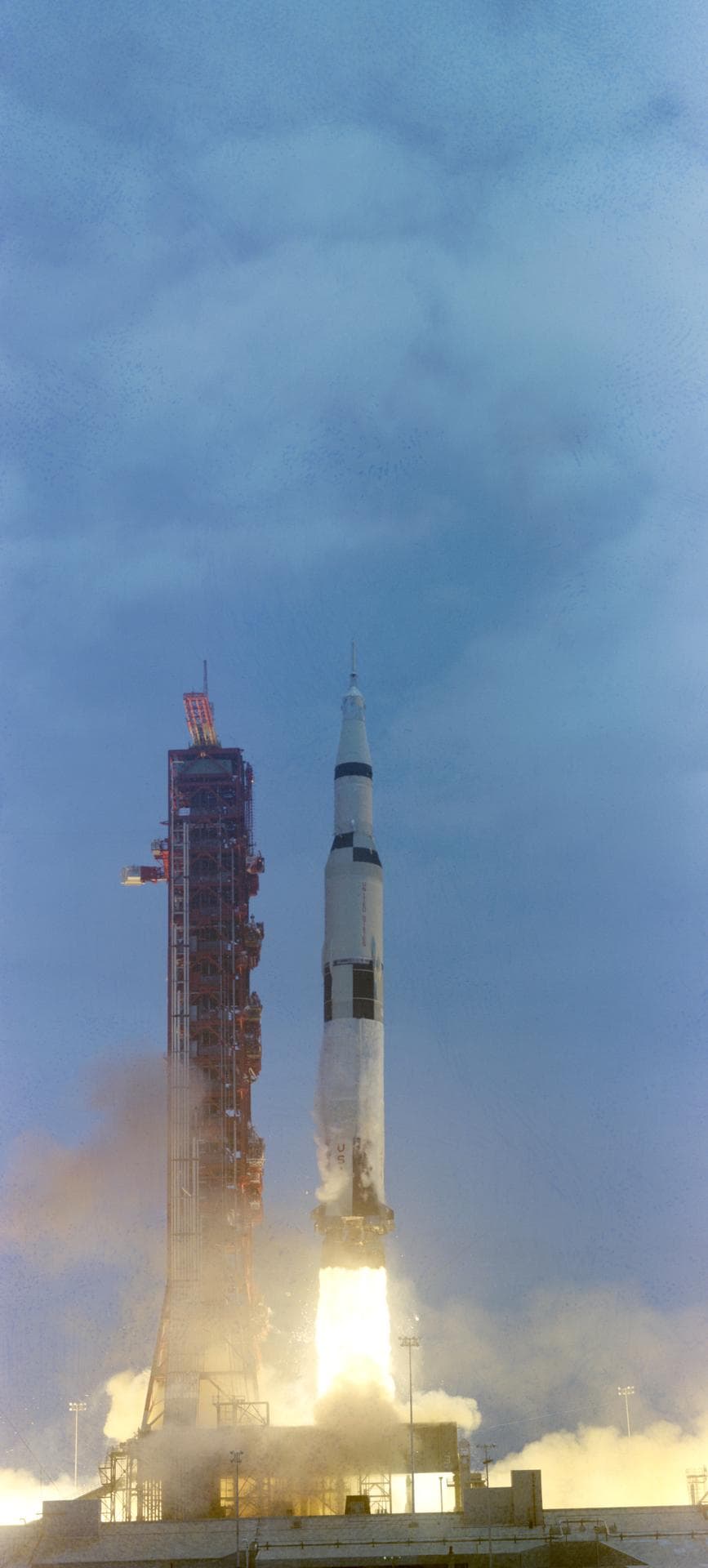
Apollo 10 was NASA's complete dress rehearsal for the first Moon landing. Every phase of a lunar landing mission was performed except the final descent to the surface. The Lunar Module descended to within about 9 miles (15 km) of the Moon before returning safely to lunar orbit.
View Mission →
Apollo 11
Launch
July 16, 1969
Status
Successful
Duration
8 days, 3 hours, 18 minutes, 35 seconds
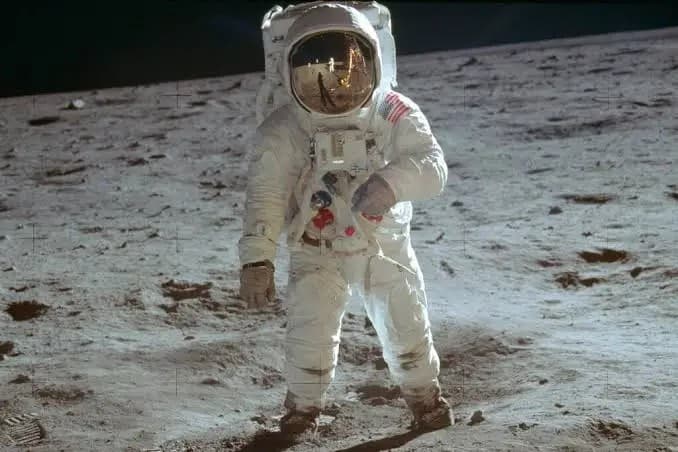
Apollo 11 fulfilled President John F. Kennedy's challenge by becoming the first mission to land humans on the Moon. Neil Armstrong and Buzz Aldrin spent over twenty-one hours on the lunar surface while Michael Collins remained in lunar orbit aboard the Command Module Columbia.
View Mission →
Apollo 12
Launch
November 14, 1969
Status
Successful
Duration
10 days, 4 hours, 36 minutes, 24 seconds
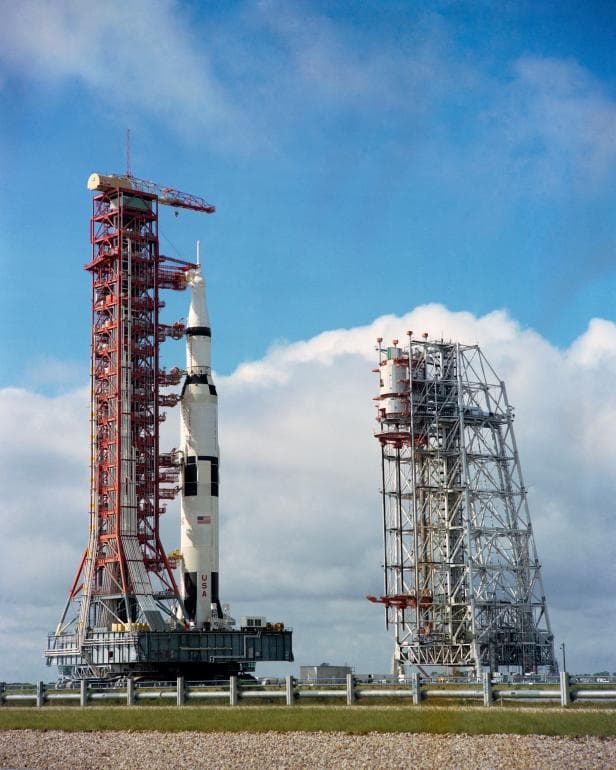
Apollo 12 demonstrated that NASA could land on the Moon with pinpoint accuracy. Despite being struck by lightning twice during launch, the mission successfully landed beside the Surveyor 3 spacecraft, performed two lunar EVAs, deployed advanced scientific experiments, and returned pieces of Surveyor 3 to Earth for analysis.
View Mission →
Apollo 13
Launch
April 11, 1970
Status
Successful (Landing Aborted)
Duration
5 days, 22 hours, 54 minutes, 41 seconds
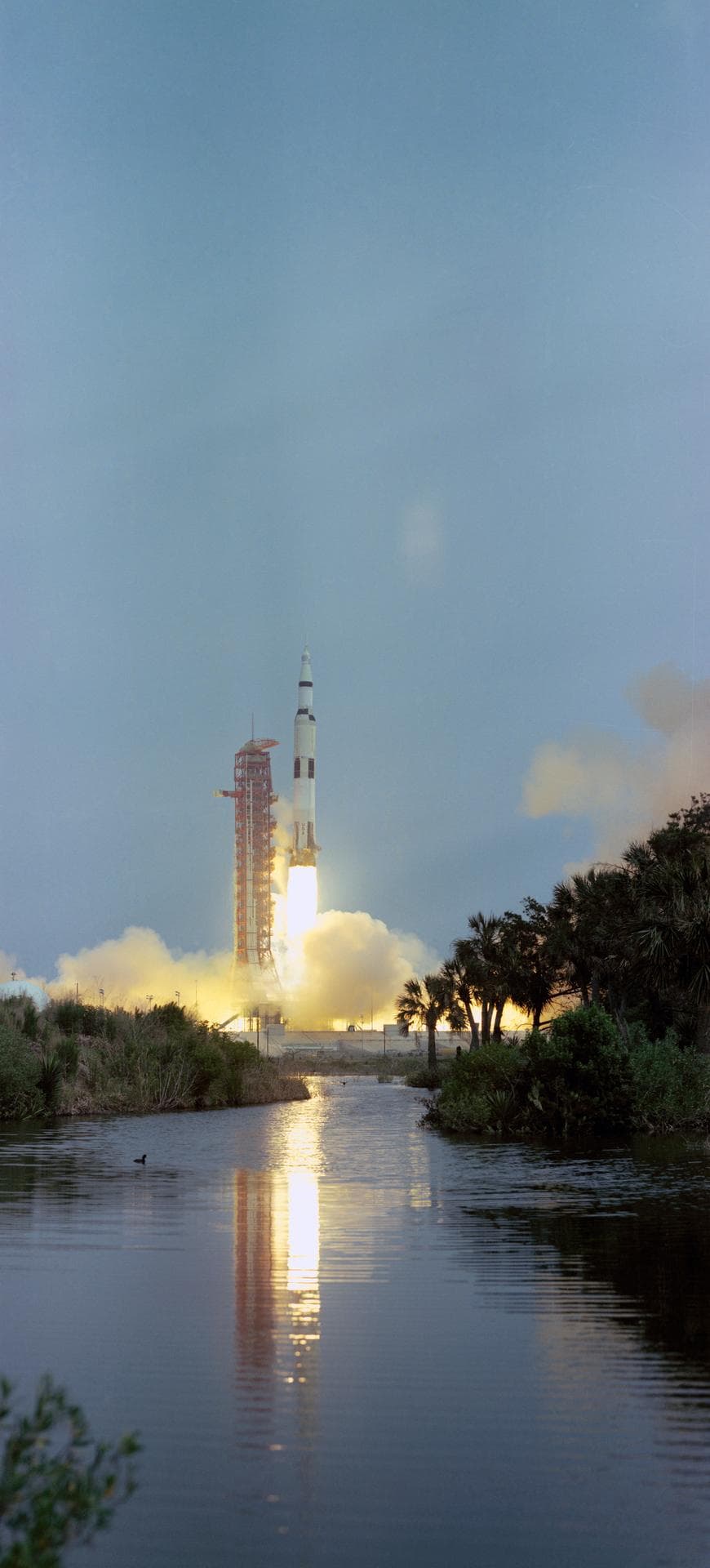
Apollo 13 was intended to become humanity's third lunar landing, but an explosion in an oxygen tank transformed it into one of the greatest rescue missions in history. Through extraordinary teamwork between the crew and Mission Control, NASA safely returned all three astronauts to Earth despite catastrophic spacecraft damage.
View Mission →
Apollo 14
Launch
January 31, 1971
Status
Successful
Duration
9 days, 23 minutes, 9 seconds
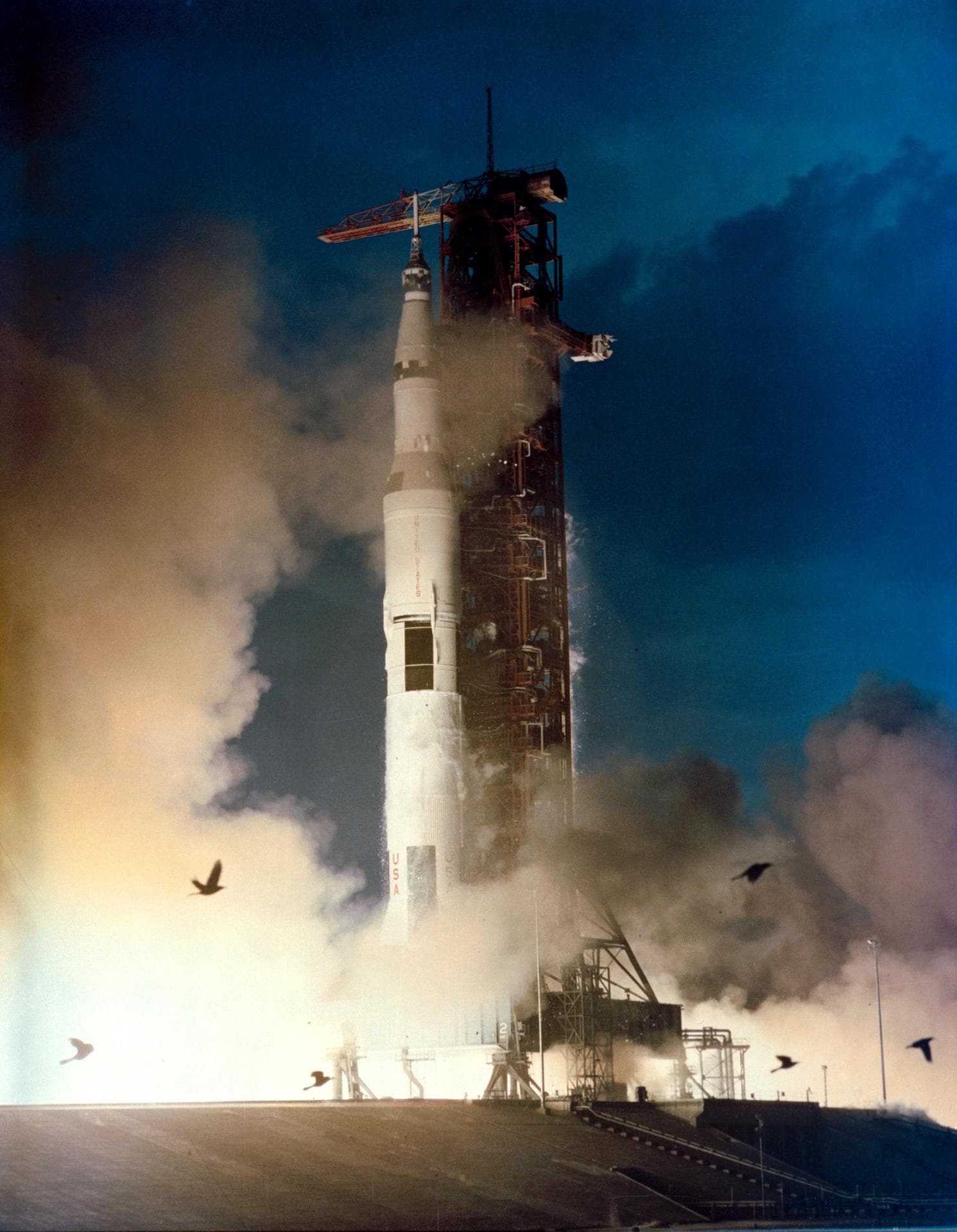
Apollo 14 returned astronauts to the Moon after the Apollo 13 accident. Despite a critical Lunar Module abort-switch malfunction just before landing, the crew safely reached the Fra Mauro Highlands, completed two successful moonwalks, deployed scientific experiments, and restored confidence in NASA's ability to conduct lunar exploration.
View Mission →
Apollo 15
Launch
July 26, 1971
Status
Successful
Duration
12 days, 7 hours, 11 minutes, 53 seconds
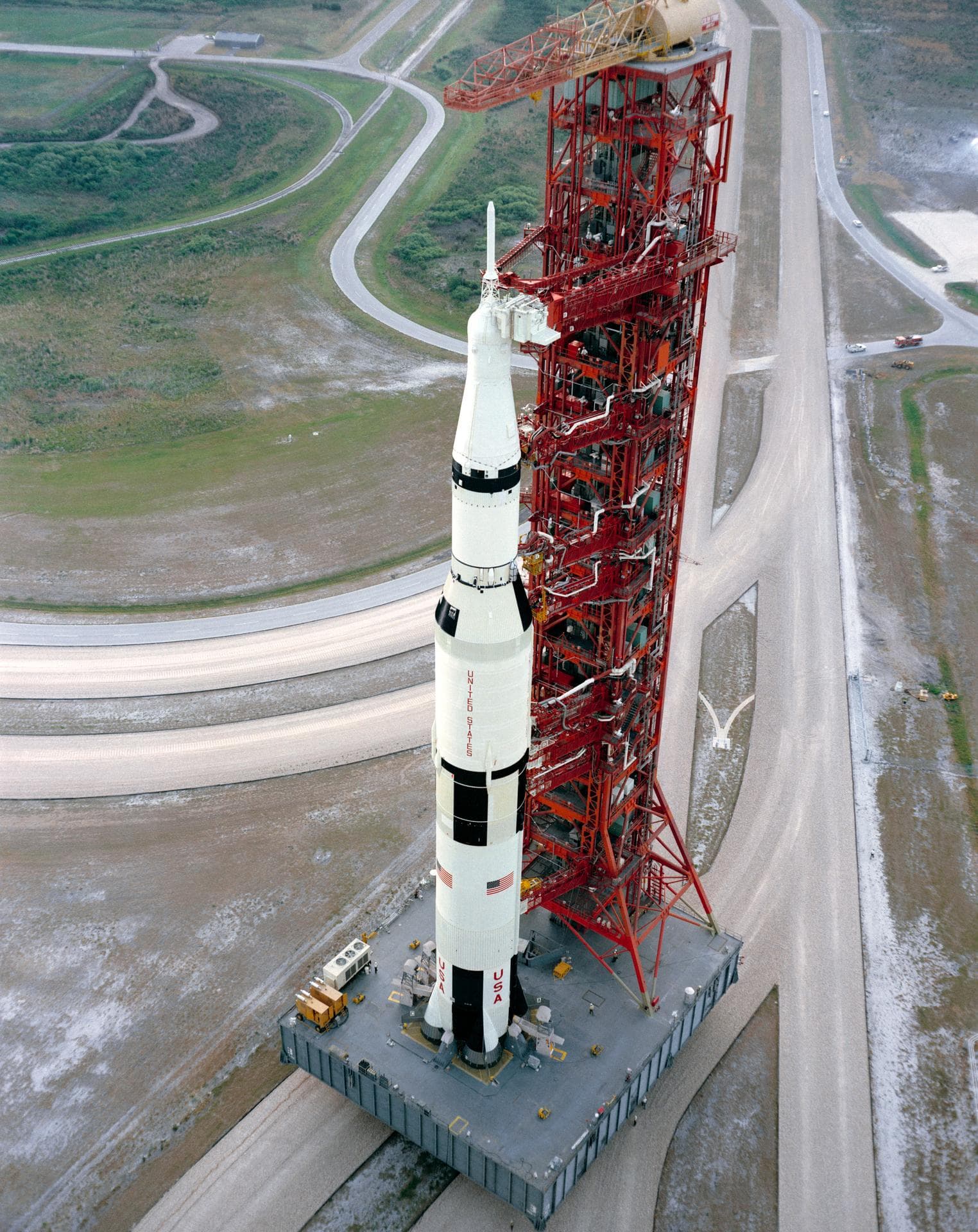
Apollo 15 was the first of NASA's extended J-missions, introducing the Lunar Roving Vehicle and dramatically expanding the scientific exploration of the Moon. The mission returned a record collection of lunar samples, deployed advanced experiments, and discovered the famous Genesis Rock.
View Mission →
Apollo 16
Launch
April 16, 1972
Status
Successful
Duration
11 days, 1 hour, 51 minutes, 5 seconds
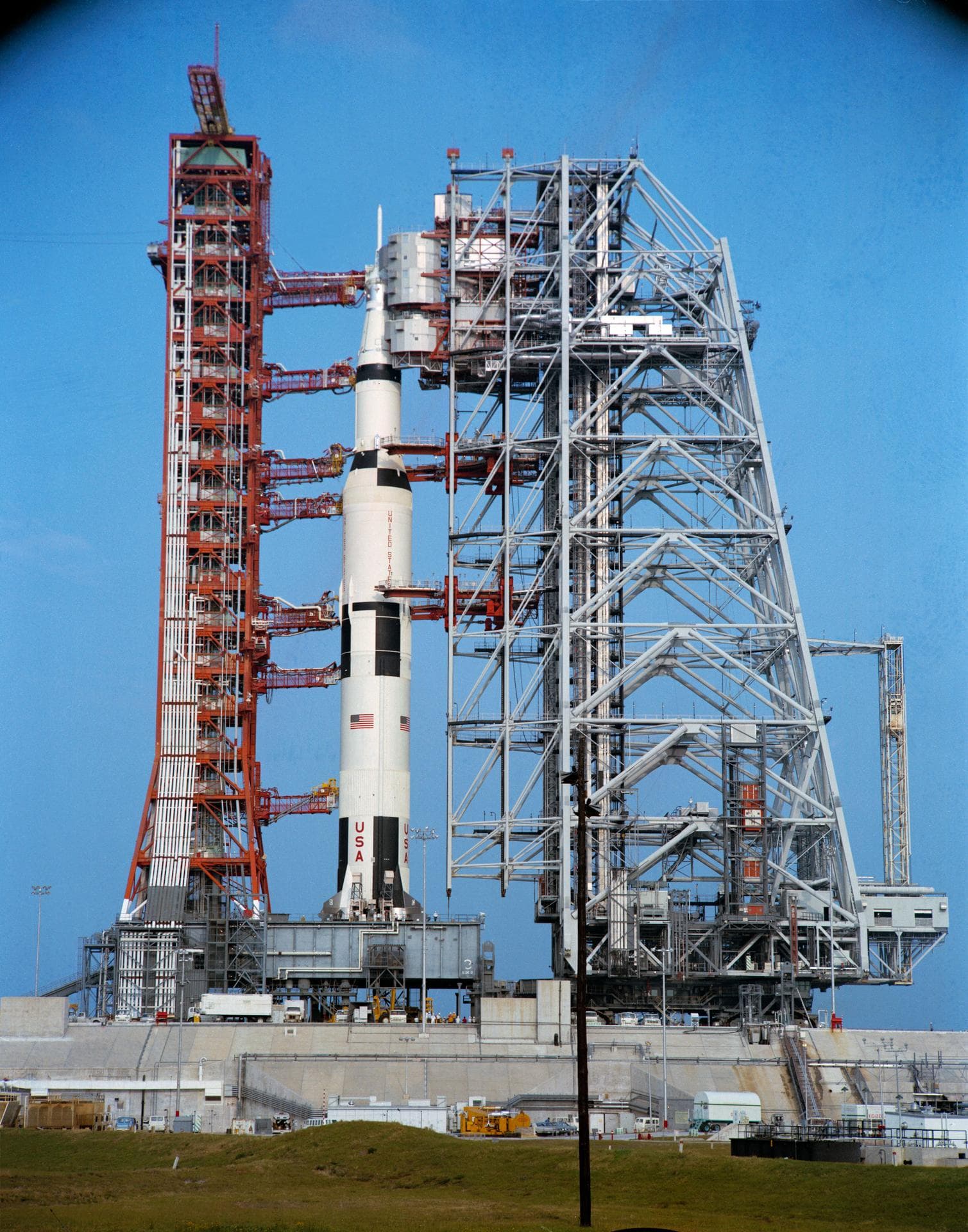
Apollo 16 became NASA's fifth successful lunar landing mission and the only Apollo mission to explore the ancient lunar highlands. Despite a mission-threatening delay caused by concerns with the Command Module's main engine, the crew completed three moonwalks, deployed advanced scientific experiments, and returned more than 95 kilograms of lunar samples.
View Mission →
Apollo 17
Launch
December 7, 1972
Status
Successful
Duration
12 days, 13 hours, 51 minutes, 59 seconds
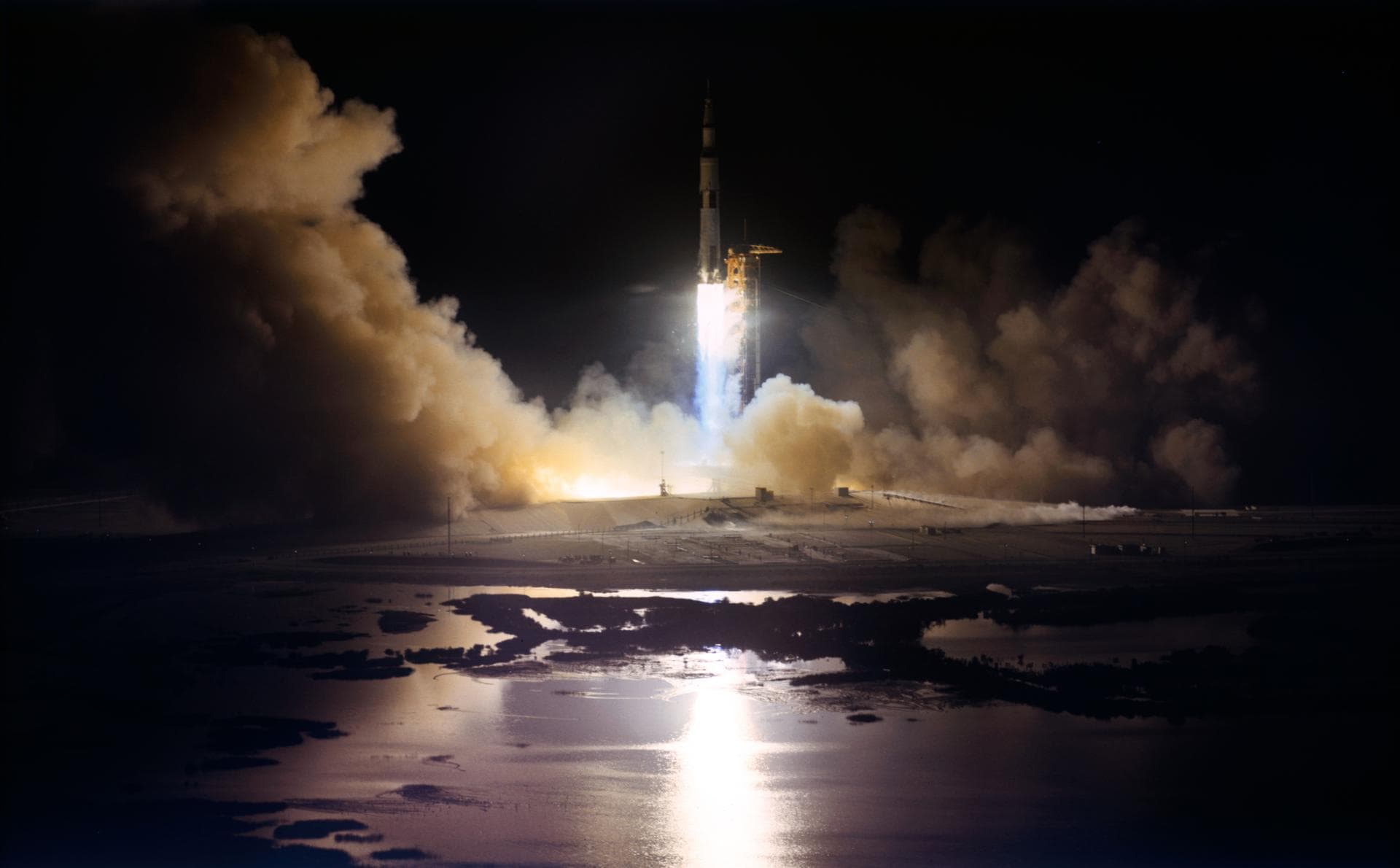
Apollo 17 was the sixth and final crewed lunar landing mission of the Apollo Program. Carrying the only professional geologist to walk on the Moon, the crew completed the longest surface stay, drove the Lunar Roving Vehicle farther than any previous mission, returned the largest collection of lunar samples, and concluded humanity's first era of lunar exploration.
View Mission →
Program Hardware
Spacecraft
The launch vehicles, capsules, modules, landers, and other systems associated with Apollo Program.
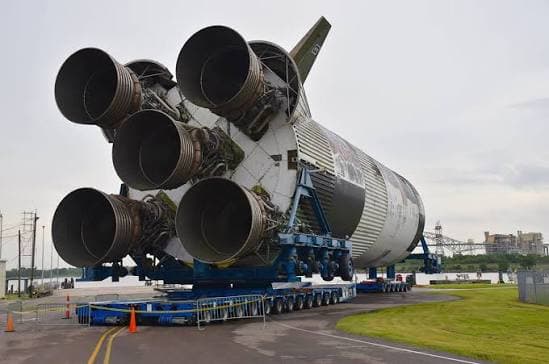 Launch Vehicle
Saturn V
The Saturn V was NASA's heavy-lift launch vehicle that powered every crewed Apollo mission to the Moon.
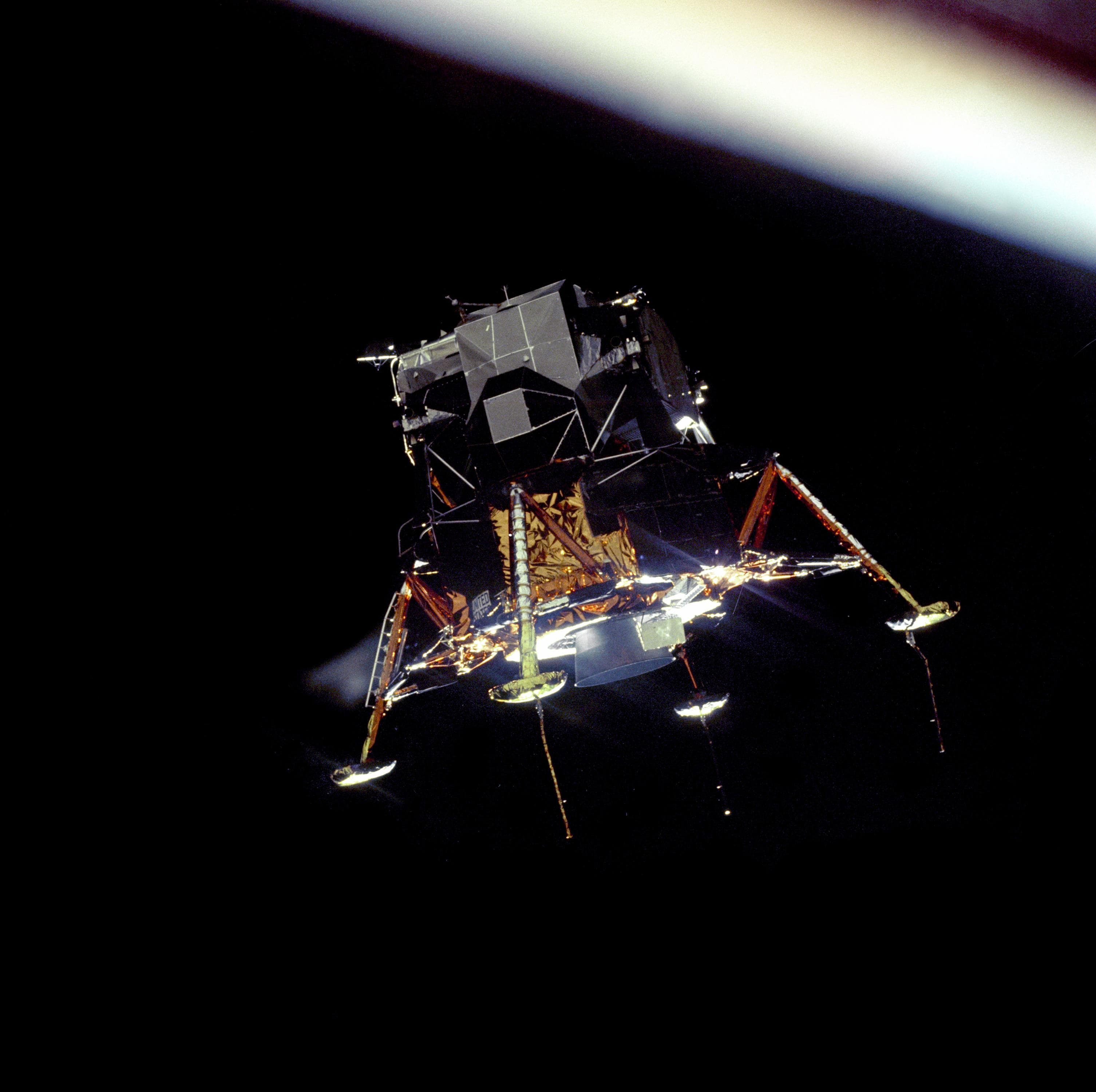 Lunar Module
Lunar Module Eagle
Eagle carried Neil Armstrong and Buzz Aldrin to the Sea of Tranquility during Apollo 11.
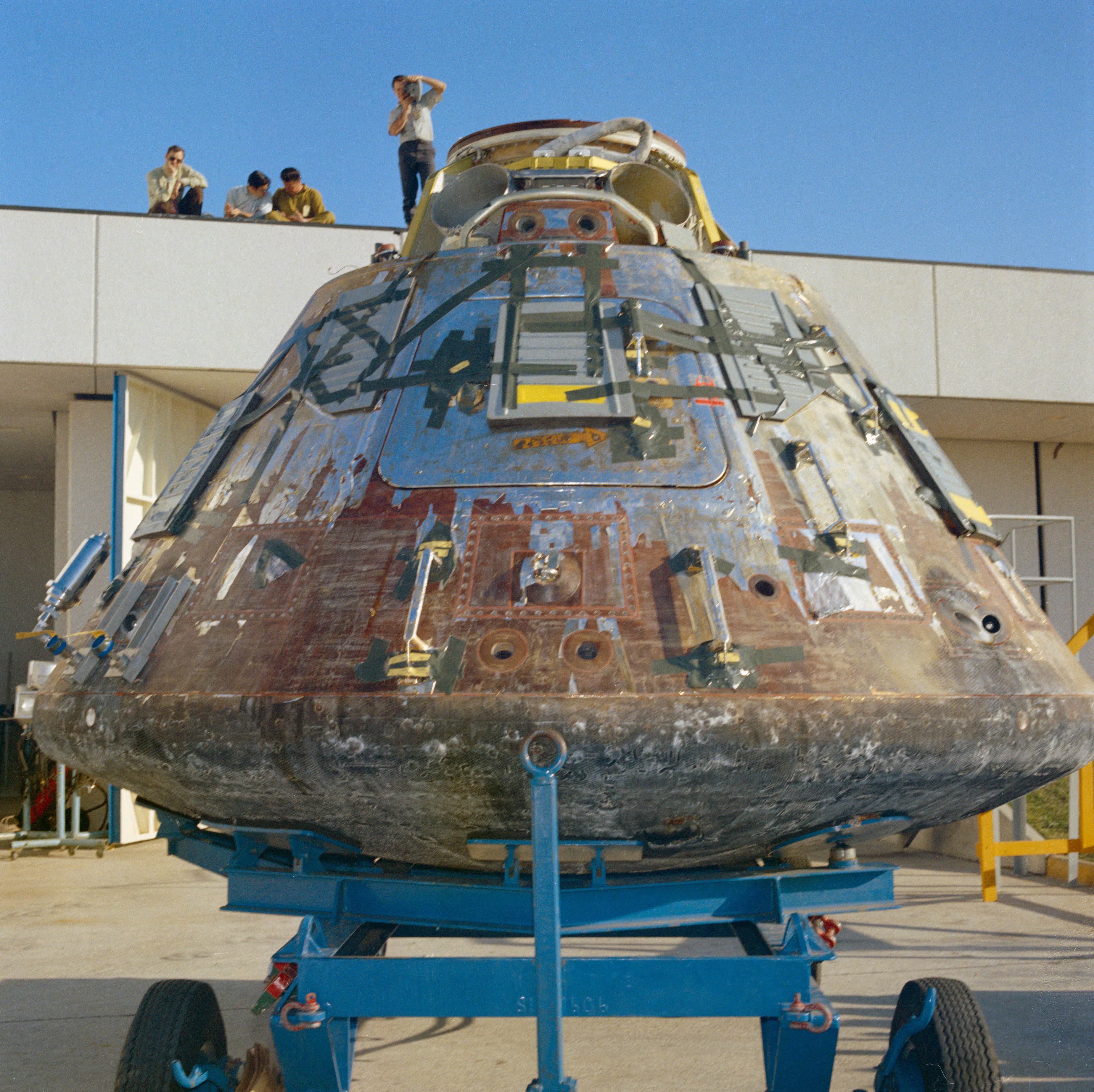 Command Module
Command Module Yankee Clipper
Yankee Clipper carried the Apollo 12 crew to lunar orbit and safely returned them to Earth.
 Lunar Module
Lunar Module Intrepid
Intrepid carried Pete Conrad and Alan Bean to the Ocean of Storms during Apollo 12.
NASA Photography
Program Images
Archive photography connected to the Apollo Program program.
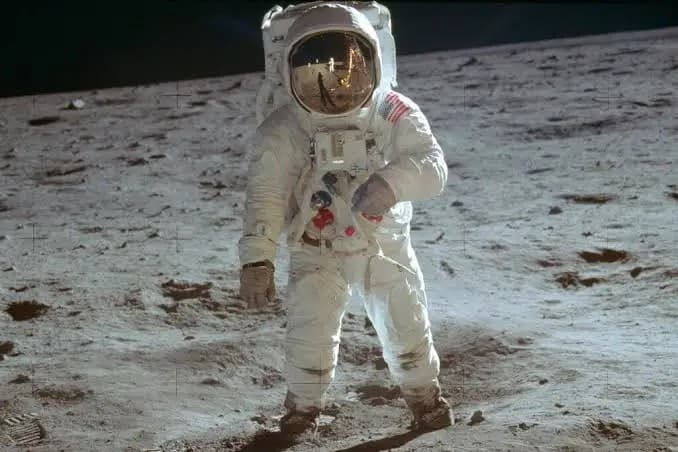
Apollo
Apollo 11 Lunar Surface
NASA ID: AS11-40-5903
Buzz Aldrin photographed on the lunar surface by Neil Armstrong during humanity's first crewed Moon landing, with Armstrong and the Lunar Module Eagle reflected in Aldrin's gold-plated visor. Taken with a chest-mounted Hasselblad camera, it is among the most recognized photographs of the twentieth century and one of only a handful of surface images that show any part of Armstrong himself.
View Image →
Apollo
Liftoff of Apollo 4
NASA ID: 6757950
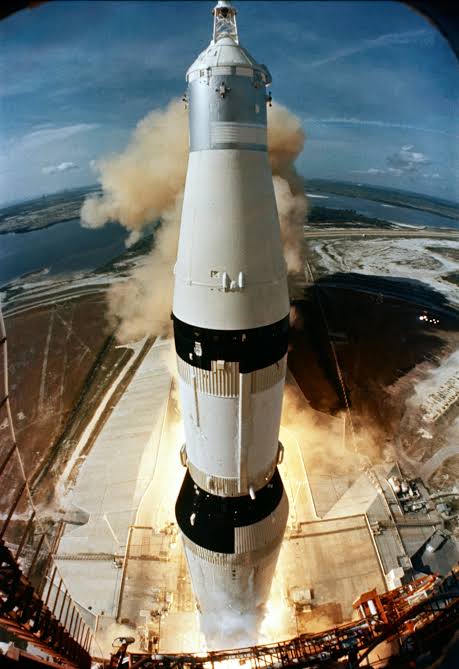
The first uncrewed test flight of the Saturn V rocket lifts off from Kennedy Space Center on Apollo 4, validating the 'all-up' testing approach that flew every stage of the massive rocket together on its very first launch. The flight was a resounding success, and its shockwave was so powerful that broadcaster Walter Cronkite, watching from several miles away, was famously heard telling his crew the ceiling tiles in the broadcast booth were shaking loose.
View Image →
Apollo 5
Liftoff of Apollo 5
NASA ID: S68-19459
Apollo 5 lifts off on the first uncrewed flight test of the Lunar Module, the spidery two-stage spacecraft that would later carry astronauts to the lunar surface. Launched atop a Saturn IB rocket, the mission tested the module's descent and ascent engines in Earth orbit, including a simulated abort, and cleared the way for the Lunar Module to fly with a crew the following year.
View Image →
Apollo
Launch of Apollo 6
NASA ID: S68-27364
Apollo 6 launches on the second and final uncrewed test flight of the Saturn V rocket, a mission that suffered a handful of in-flight anomalies, including violent 'pogo' oscillations and the premature shutdown of two engines. Engineers traced the problems to specific design flaws and corrected them before the rocket's next flight, giving NASA the confidence to put a crew aboard a Saturn V for the first time on Apollo 8.
View Image →
Apollo
Launch of Apollo 10
NASA ID: S69-34143
Apollo 10 lifts off from Pad 39B on the full dress rehearsal for the first crewed Moon landing, flying every phase of the mission except the actual touchdown. Astronauts Tom Stafford and Gene Cernan flew the Lunar Module, nicknamed Snoopy, to within about eight miles of the lunar surface before returning to dock with the Command Module, Charlie Brown — the ascent stage was deliberately underfueled so the crew could not attempt a landing even if tempted.
View Image →
Apollo
Launch of Apollo 13
NASA ID: S70-38747
Apollo 13 launches from Kennedy Space Center, beginning what was planned as the third crewed Moon landing but instead became one of spaceflight's most famous survival stories. Two days into the mission, an oxygen tank ruptured, crippling the Command Module and forcing Jim Lovell, Jack Swigert, and Fred Haise to use the Lunar Module as a makeshift lifeboat for the journey home — a crisis that mission controllers and the crew resolved together to bring all three astronauts back safely.
View Image →
Apollo
Launch of Apollo 14
NASA ID: s71-18395
Apollo 14 lifts off, returning NASA to crewed lunar landings after the Apollo 13 emergency and sending Alan Shepard — America's first astronaut a decade earlier — to walk on the Moon at age 47. Shepard and Ed Mitchell explored the Fra Mauro highlands originally targeted by Apollo 13, and Shepard closed out the mission by hitting two golf balls across the lunar surface with a makeshift club.
View Image →
Apollo
Apollo 15 Rollout to the Pad
NASA ID: S71-33781
The Apollo 15 space vehicle moves from the Vehicle Assembly Building toward Pad A, Launch Complex 39, ahead of the first of Apollo's extended 'J-missions.' The flight introduced the Lunar Roving Vehicle, letting David Scott and Jim Irwin travel miles from their landing site to explore the Hadley-Apennine region and collect an expanded range of geological samples, including the famous 'Genesis Rock.'
View Image →
Apollo
Apollo 16 on the Launch Pad
NASA ID: S72-34473
The Apollo 16 space vehicle stands on Pad A, Launch Complex 39, ahead of its mission to the lunar highlands. John Young and Charles Duke became the only Apollo crew to explore the Moon's ancient highlands rather than one of its dark volcanic maria, spending nearly three days on the surface and returning with some of the oldest lunar samples ever collected.
View Image →
Apollo
Launch of Apollo 17
NASA ID: S72-55070
Apollo 17 lights up the night sky over Kennedy Space Center on the final Apollo Moon landing mission — the only Apollo launch to occur after dark. Gene Cernan and Harrison Schmitt, the only professional geologist to walk on the Moon, spent more than three days exploring the Taurus-Littrow valley, and Cernan's final words on the surface, 'we shall return,' remain the last spoken by a human being on the Moon.
View Image →
Apollo
Earthrise
NASA ID: AS08-14-2383
Earth rises above the lunar horizon as seen from Apollo 8, the first crewed spacecraft to orbit the Moon. Taken by astronaut William Anders on Christmas Eve 1968, the image became one of the most reproduced photographs in history and is widely credited with helping inspire the modern environmental movement, including the creation of Earth Day two years later.
View Image →

Apollo
The Blue Marble
NASA ID: AS17-148-22727
A full view of Earth photographed by the Apollo 17 crew about 28,000 miles from the planet as they traveled toward the Moon. Sunlight fell directly behind the spacecraft, fully illuminating the disc of the Earth for the first time in any human-taken photograph, and 'The Blue Marble' has since become one of the most widely reproduced images ever taken.
View Image →
Apollo
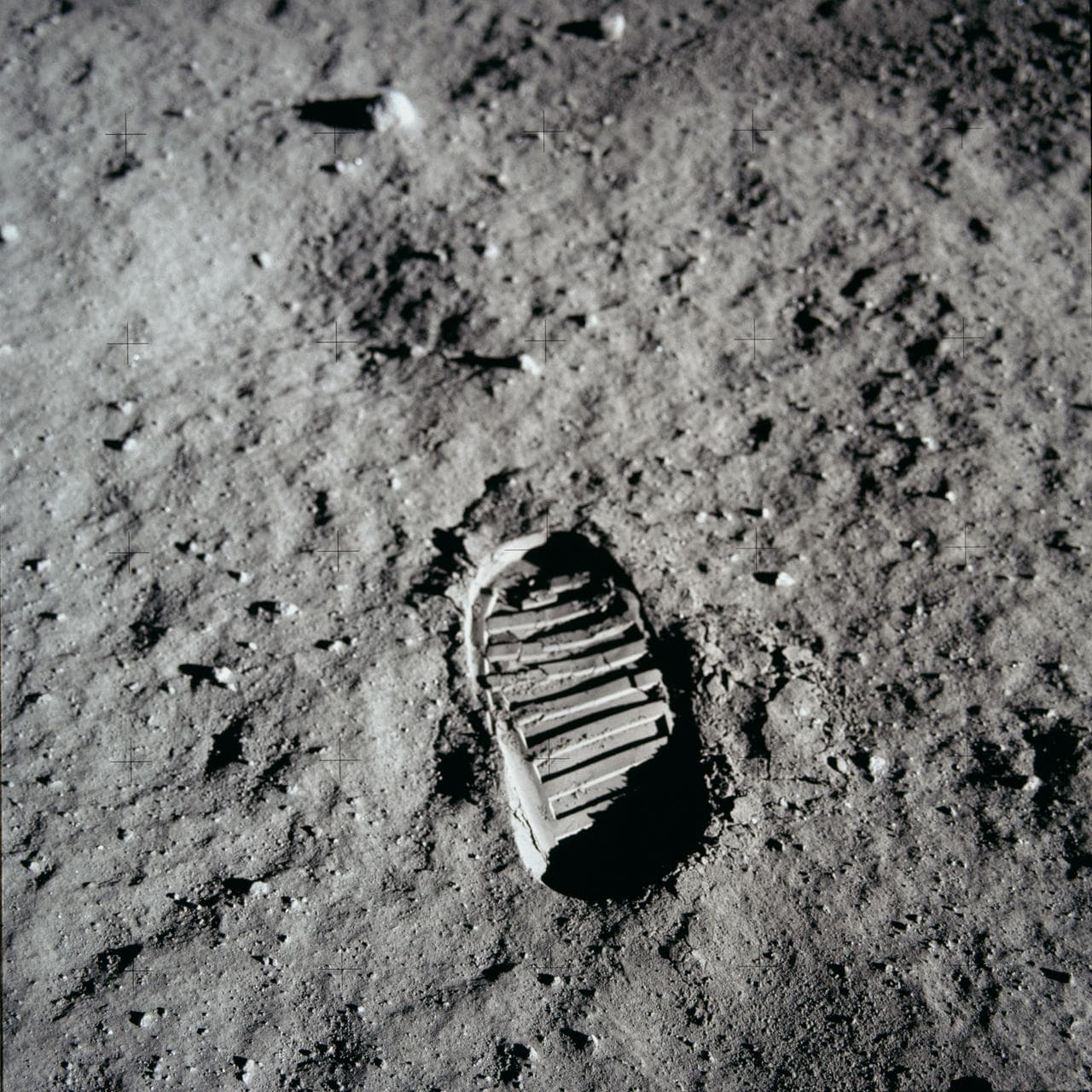
Bootprint on the Lunar Surface
NASA ID: AS11-40-5877
A close-up view of an astronaut's bootprint pressed into the lunar soil, photographed by Buzz Aldrin during Apollo 11's historic moonwalk. NASA scientists used images like this one to study the mechanical properties of lunar regolith, since the Moon's fine, tightly packed soil behaves very differently from soil on Earth.
View Image →
Apollo
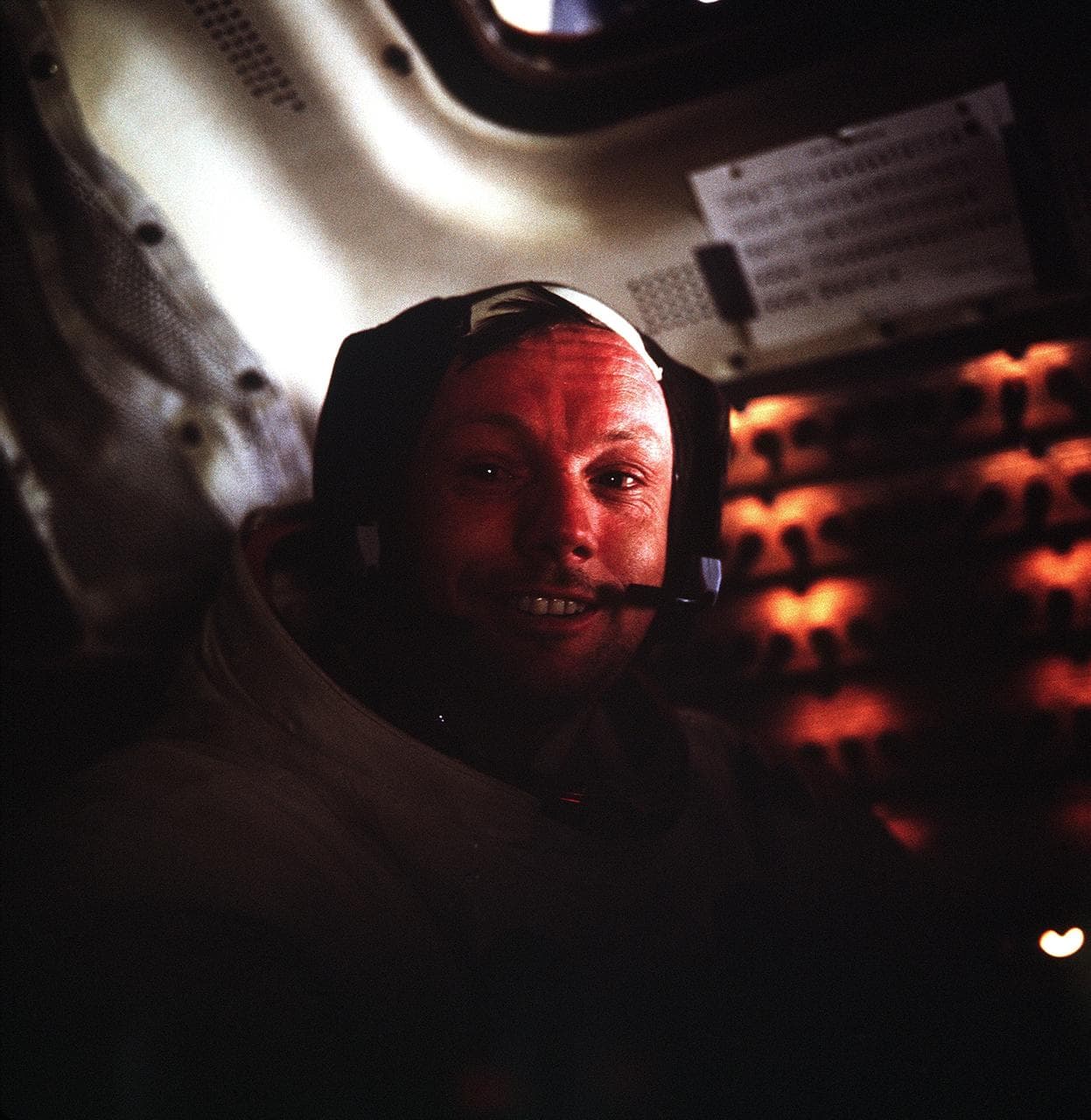
Neil Armstrong Inside the Lunar Module
NASA ID: AS11-37-5528
A rare photograph of Neil Armstrong himself, taken inside the Lunar Module Eagle after the Apollo 11 moonwalk. Because Armstrong carried the surface camera for most of the excursion, Buzz Aldrin appears in nearly every photograph taken outside the spacecraft, making images that actually show Armstrong's face extremely rare.
View Image →
Apollo
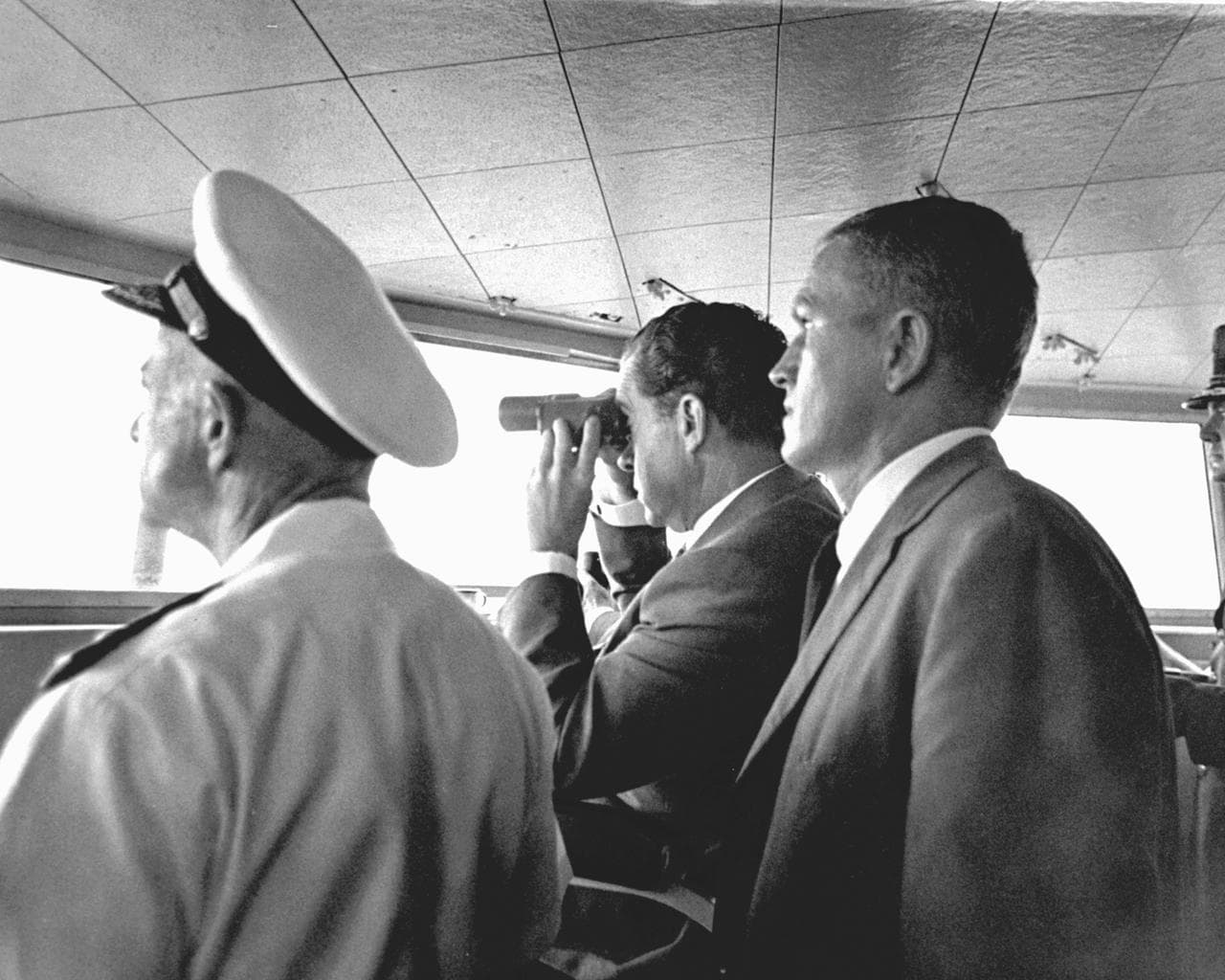
Nixon Watches Apollo 11 Recovery
NASA ID: 6900598
President Richard Nixon, aboard the USS Hornet with Apollo 8 commander Frank Borman, watches the recovery of the Apollo 11 crew following splashdown. Armstrong, Aldrin, and Collins wore biological isolation garments as they left their capsule, a precaution against the remote possibility of lunar contamination, and spent the next three weeks in quarantine before being declared safe to rejoin the public.
View Image →
Apollo
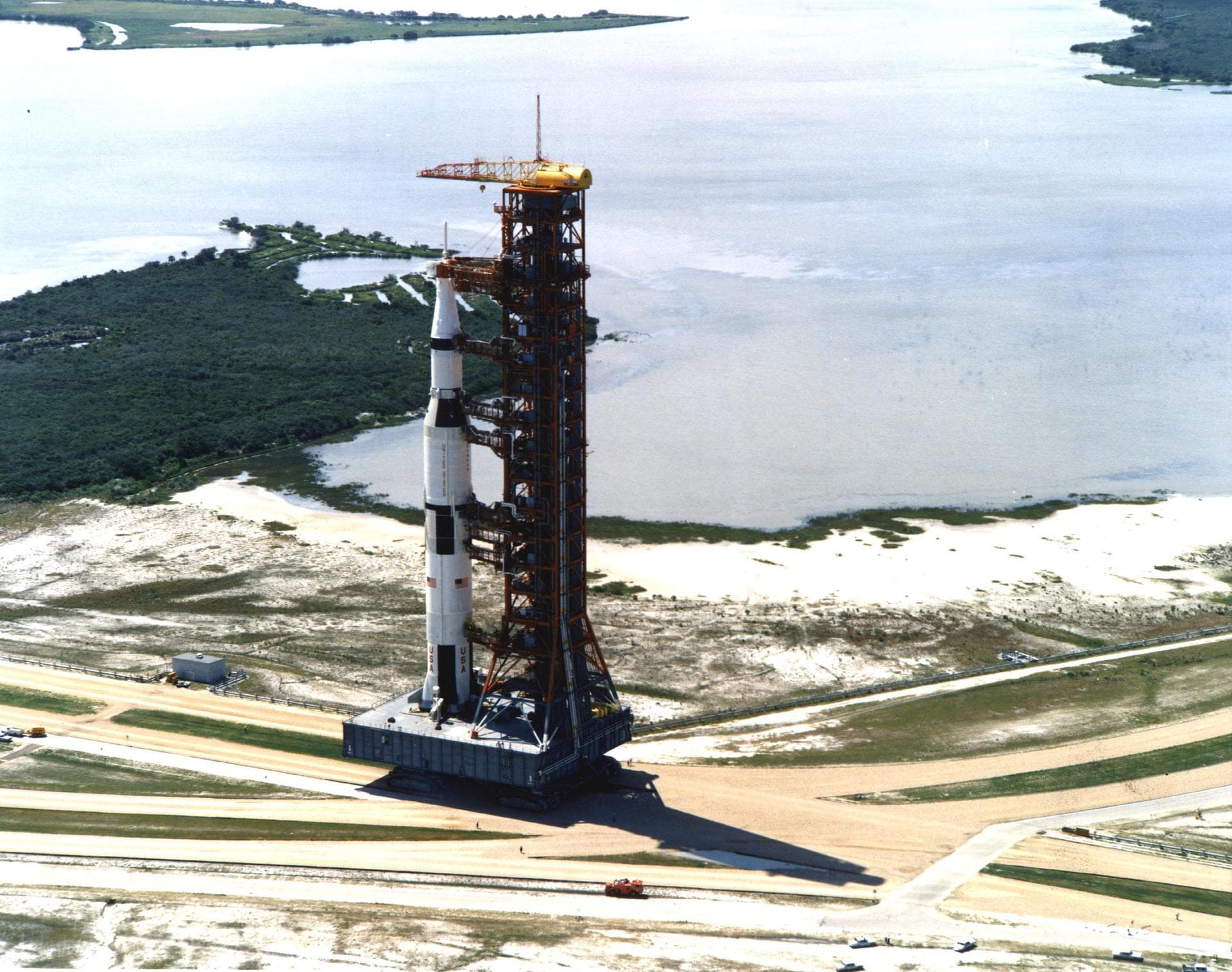
Apollo 11 Saturn V Rollout
NASA ID: 624109main_1969-05-20-2_full
Carrying the Apollo 11 Saturn V rocket and mobile launcher, the crawler-transporter inches its way along the three-and-a-half-mile journey to Launch Pad 39A. Standing 363 feet tall, the Saturn V remains the most powerful rocket ever successfully flown, and the massive tracked crawler carrying it moved at a top speed of about one mile per hour.
View Image →
Apollo
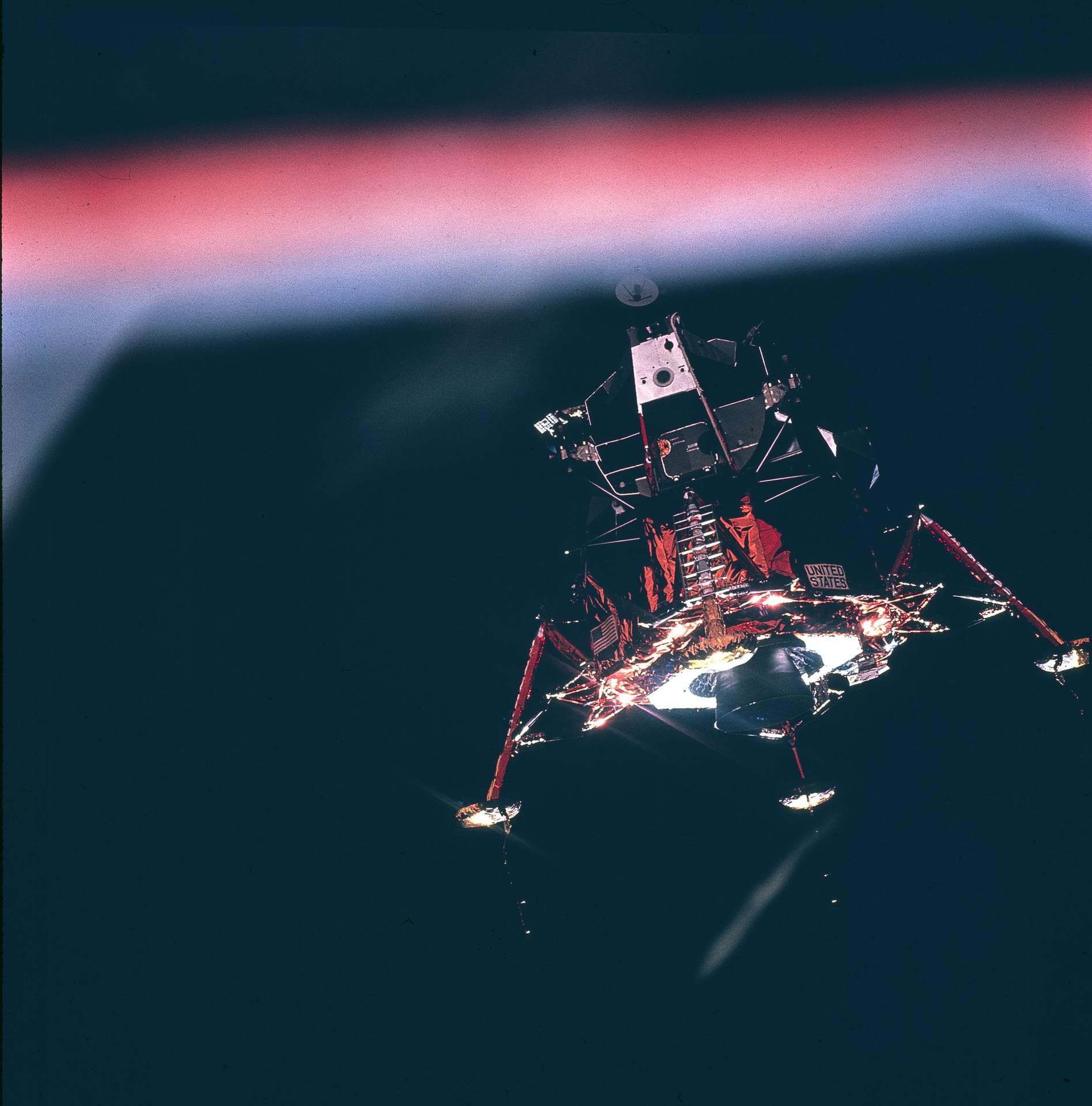
Lunar Module Eagle in Descent
NASA ID: 6900992
The Lunar Module Eagle is shown making its descent to the lunar surface, photographed from Columbia by Michael Collins. Eagle's descent stage remained on the Moon as a launch platform for the return trip, while its ascent stage later carried Neil Armstrong and Buzz Aldrin back to lunar orbit before being jettisoned into a decaying orbit around the Moon.
View Image →