Apollo
Apollo 14
Apollo 14 returned astronauts to the Moon after the Apollo 13 accident. Despite a critical Lunar Module abort-switch malfunction just before landing, the crew safely reached the Fra Mauro Highlands, completed two successful moonwalks, deployed scientific experiments, and restored confidence in NASA's ability to conduct lunar exploration.
Launch
January 31, 1971
Duration
9 days, 23 minutes, 9 seconds
Crew
3 astronauts
Mission record
Apollo archive entry · Successful
Mission Overview
The mission
Apollo 14 returned astronauts to the Moon after the Apollo 13 accident. Despite a critical Lunar Module abort-switch malfunction just before landing, the crew safely reached the Fra Mauro Highlands, completed two successful moonwalks, deployed scientific experiments, and restored confidence in NASA's ability to conduct lunar exploration.
In Depth
The Full Story
Apollo 14 was NASA's first lunar landing mission after the near-disaster of Apollo 13. Following nearly a year of investigation and extensive spacecraft redesigns, the mission carried the responsibility of proving that the Apollo Program was once again ready to land astronauts safely on the Moon.
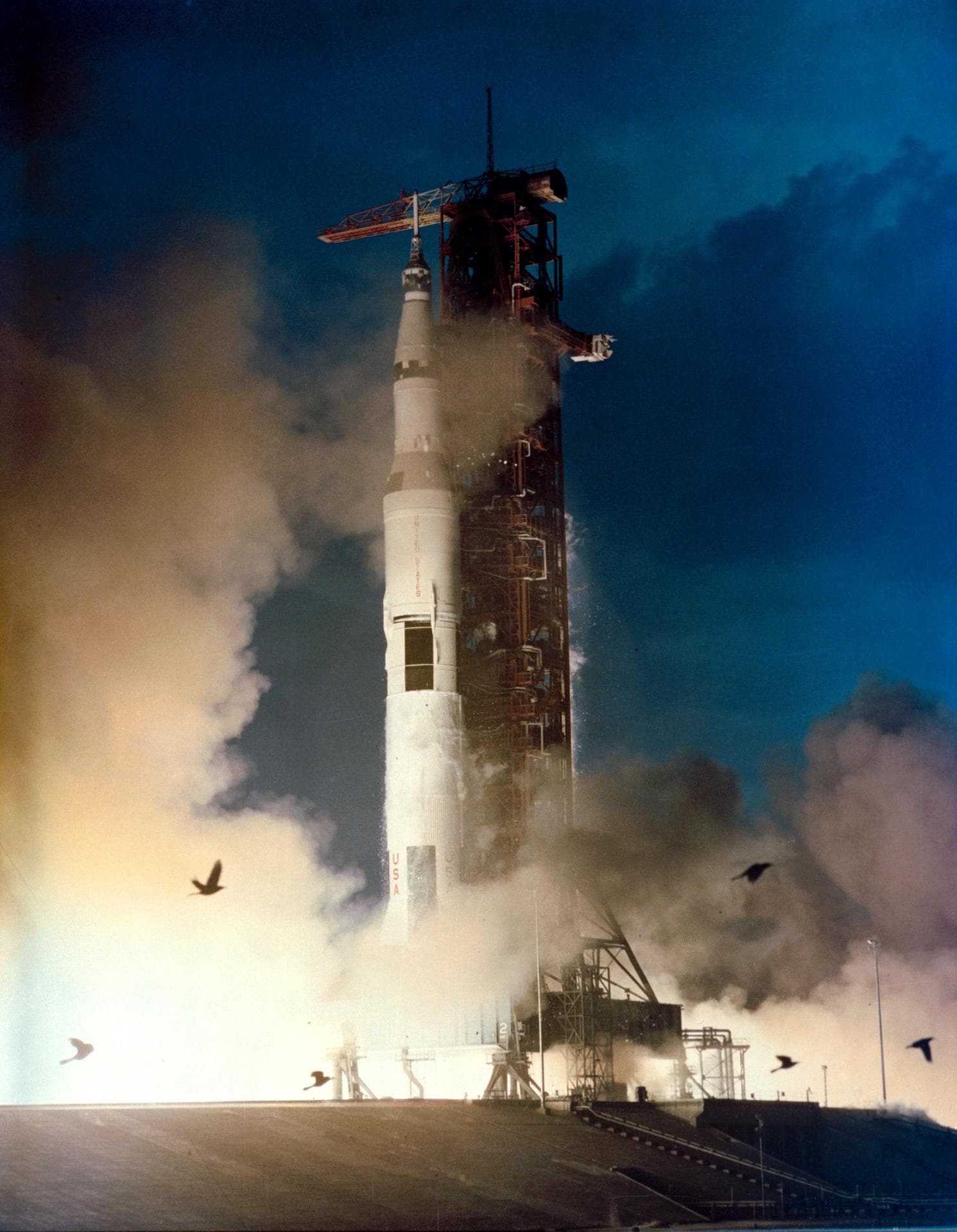
Launched on January 31, 1971, Apollo 14 carried Commander Alan Shepard, Command Module Pilot Stuart Roosa, and Lunar Module Pilot Edgar Mitchell toward the Fra Mauro Highlands, the same scientifically important destination that Apollo 13 had been forced to abandon.
Even before reaching the lunar surface, the crew faced unexpected challenges. During transposition and docking shortly after launch, the Command Module Kitty Hawk repeatedly failed to latch securely with the Lunar Module Antares, requiring multiple docking attempts before the spacecraft could continue toward the Moon.
The most serious challenge came during lunar descent. Only minutes before landing, Mission Control discovered that a faulty abort switch inside Antares was sending intermittent signals to the guidance computer. If interpreted as a genuine abort command, the computer could automatically cancel the landing. Engineers at the Manned Spacecraft Center rapidly developed a software workaround, transmitting new guidance procedures to the crew just in time to allow the descent to continue safely.
Alan Shepard manually guided Antares to a successful landing in the Fra Mauro Highlands on February 5, 1971. Over two moonwalks totaling more than nine hours, Shepard and Mitchell deployed the Apollo Lunar Surface Experiments Package (ALSEP), collected more than 42 kilograms of lunar samples, investigated Cone Crater, and conducted extensive geological fieldwork.
The mission became famous for one lighthearted moment when Shepard used a makeshift six-iron attached to a sample tool to hit two golf balls across the lunar surface, demonstrating the effects of one-sixth gravity while creating one of the most memorable images of the Apollo era.
Meanwhile, Stuart Roosa remained in lunar orbit aboard Kitty Hawk, conducting scientific observations and carrying hundreds of tree seeds that later became known as the famous 'Moon Trees.'
Apollo 14 successfully demonstrated that NASA had learned from Apollo 13, validated the spacecraft redesigns, and returned the Apollo Program to a path of increasingly ambitious scientific exploration.
Mission Details
Official Designation
Apollo 14
Mission Type
Crewed Lunar Landing
Launch Date
January 31, 1971
Landing Date
February 5, 1971
Mission Duration
9 days, 0 hours, 23 minutes, 9 seconds
Crew Size
3 Astronauts
Commander
Alan B. Shepard Jr.
Command Module Pilot
Stuart A. Roosa
Lunar Module Pilot
Edgar D. Mitchell
Command Module
Kitty Hawk
Lunar Module
Antares
Launch Vehicle
Saturn V AS-509
Landing Site
Fra Mauro Highlands
Surface Stay
33 hours, 31 minutes
Total EVA Time
9 hours, 24 minutes
Lunar Samples Returned
42.8 kg (94.4 lb)
Lunar Orbits
34
Mission Result
Successful
Historic Achievement
Returned NASA to the Moon After Apollo 13
Mission by the Numbers
Mission Statistics
Mission Type
Crewed Lunar Landing
Launch Vehicle
Saturn V AS-509
Crew
3 astronauts
Status
Successful
The People Behind the Mission
Crew
The astronauts assigned to command, operate, and carry out the mission.
Commander
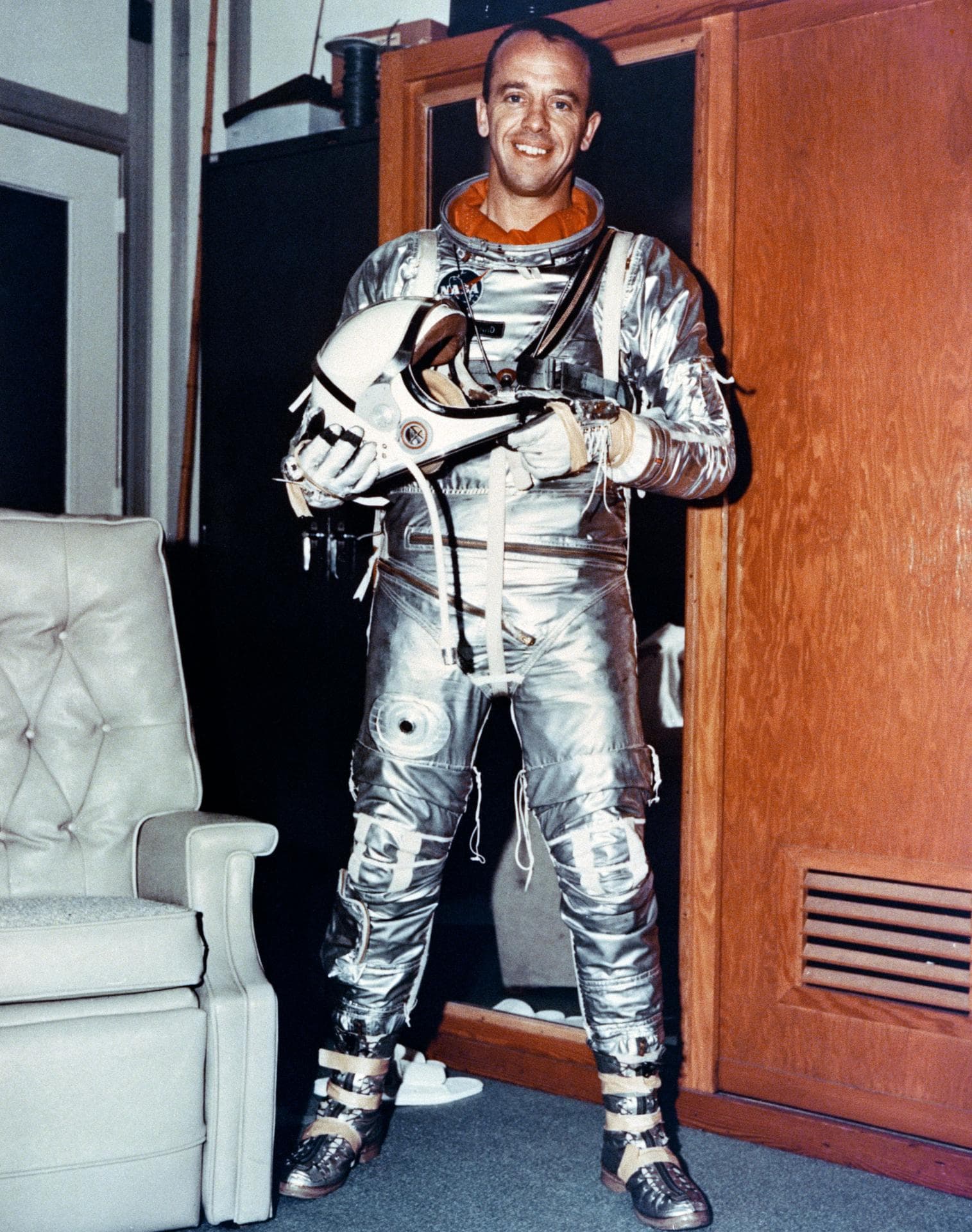
Alan Shepard
Alan Shepard piloted Freedom 7, becoming the first American in space, and later commanded Apollo 14 to the Moon.
View Astronaut →

Command Module Pilot
Stuart A. Roosa
Stuart Roosa orbited the Moon alone during Apollo 14 with hundreds of tree seeds tucked into his personal kit, seeds that grew into the 'Moon Trees' planted across the United States.
View Astronaut →

Lunar Module Pilot
Edgar D. Mitchell
Edgar Mitchell became the sixth person to walk on the Moon on Apollo 14, and returned from the mission convinced the experience had permanently changed the way he understood the universe.
View Astronaut →
Mission Goals
Mission objectives
- 01
Return astronauts safely to the lunar surface after Apollo 13.
- 02
Land in the Fra Mauro Highlands.
- 03
Demonstrate the effectiveness of Apollo 13 spacecraft redesigns.
- 04
Deploy the Apollo Lunar Surface Experiments Package (ALSEP).
- 05
Conduct two lunar surface EVAs.
- 06
Collect geological samples from Fra Mauro.
- 07
Investigate Cone Crater ejecta.
- 08
Perform detailed geological field studies.
- 09
Evaluate extended surface mobility using the Modular Equipment Transporter.
- 10
Photograph the landing region.
- 11
Conduct orbital scientific observations.
- 12
Return lunar samples safely to Earth.
- 13
Continue validating Apollo hardware for future missions.
- 14
Restore confidence in the Apollo Program.
- 15
Expand scientific understanding of the Moon's history.
Fascinating Details
Did You Know?
Key did you know? recorded for this mission.
Alan Shepard became the fifth person to walk on the Moon and the only Mercury astronaut to do so.
Apollo 14 nearly failed to land because of a faulty abort switch that repeatedly signaled the guidance computer to cancel the descent.
NASA engineers developed and uploaded a software workaround just minutes before landing, allowing Antares to continue safely.
The Command Module initially failed to achieve a hard dock with the Lunar Module after launch, requiring multiple docking attempts.
Alan Shepard famously hit two golf balls on the Moon using a modified six-iron club head attached to a sample collection tool.
Edgar Mitchell threw a sampling tool like a javelin while Shepard hit the golf balls, demonstrating the effects of one-sixth lunar gravity.
The crew used the Modular Equipment Transporter (MET), the first wheeled handcart used on the Moon.
Stuart Roosa carried hundreds of tree seeds into lunar orbit. Many later grew into the famous Moon Trees planted around the world.
Although the astronauts never reached the visible rim of Cone Crater, they successfully collected material excavated from deep beneath the lunar surface.
Apollo 14 returned nearly twice as much lunar material as Apollo 11.
The mission verified every major spacecraft redesign introduced after Apollo 13.
Apollo 14 restored public confidence in NASA's ability to safely conduct lunar landing missions.
Shepard's golf shot was performed only after all mission objectives had been completed.
Fra Mauro samples helped scientists better understand the formation of the Imbrium Basin.
Apollo 14 marked the beginning of a more science-focused era of Apollo exploration.
Mission Timeline
January 31, 1971 · 4:03 p.m. EST
Launch
Apollo 14 launched aboard Saturn V AS-509 from Kennedy Space Center, marking NASA's return to lunar exploration after the Apollo 13 accident.
Earth Orbit
Parking Orbit
Following a successful launch, Apollo 14 entered temporary Earth orbit while Mission Control verified spacecraft health before committing the crew to the Moon.
Trans-Lunar Injection
Departure for the Moon
The S-IVB third stage successfully placed Apollo 14 on its translunar trajectory toward the Fra Mauro Highlands.
Deep Space
Docking Difficulty
During transposition and docking, the Command Module Kitty Hawk repeatedly failed to achieve a secure hard dock with Lunar Module Antares. After several attempts, the docking mechanism finally latched successfully, allowing the mission to continue.
Cruise Phase
Journey to the Moon
The crew performed navigation updates, television broadcasts, spacecraft inspections, and scientific observations during the three-day journey through deep space.
February 4, 1971
Lunar Orbit Insertion
Apollo 14 entered lunar orbit, positioning the spacecraft for the first attempted landing since Apollo 12.
February 5, 1971
Antares Separates
Alan Shepard and Edgar Mitchell entered the Lunar Module Antares and separated from Stuart Roosa aboard Kitty Hawk to begin the landing sequence.
Powered Descent Initiation
Abort Switch Problem
During the descent, Mission Control detected intermittent abort signals caused by a faulty switch inside Antares. Engineers rapidly developed a software workaround that prevented the guidance computer from mistakenly aborting the landing.
February 5, 1971 · 09:18 UTC
Landing at Fra Mauro
Alan Shepard manually guided Antares to a successful landing in the Fra Mauro Highlands, completing NASA's first lunar landing since Apollo 12 and restoring confidence in the Apollo Program after Apollo 13.
Surface Operations
Preparing for EVA-1
Shepard and Mitchell configured Antares for surface operations, activated their Portable Life Support Systems, and prepared to begin the first moonwalk.
First EVA
ALSEP Deployment
The astronauts deployed the Apollo Lunar Surface Experiments Package (ALSEP), installing scientific instruments that would continue transmitting valuable data long after the crew departed.
Fra Mauro Exploration
Collecting Geological Samples
Shepard and Mitchell explored the Fra Mauro formation, collecting rock and soil samples believed to have been excavated during the massive Imbrium impact billions of years ago.
Second EVA
Journey Toward Cone Crater
Using the Modular Equipment Transporter (MET), the astronauts hauled tools and sampling equipment toward Cone Crater in search of deep lunar material.
Cone Crater
Highland Geology Investigation
Although they unknowingly stopped just short of the crater rim because of the deceptive rolling terrain, Shepard and Mitchell successfully collected valuable ejecta that originated from deep beneath the lunar surface.
Second EVA
Alan Shepard's Golf Shot
Before ending the final moonwalk, Alan Shepard attached a modified six-iron club head to a sampling tool and struck two golf balls across the lunar surface, creating one of the Apollo Program's most iconic moments.
Orbital Operations
Kitty Hawk Science Mission
While Shepard and Mitchell explored the Moon, Stuart Roosa remained in lunar orbit aboard Kitty Hawk, conducting photography, scientific observations, and carrying hundreds of tree seeds that later became known as the famous Moon Trees.
End of Surface Stay
Preparing for Departure
After more than 33 hours on the Moon and over nine hours of EVA activity, the crew secured more than 42 kilograms of lunar samples before preparing Antares for ascent.
February 6, 1971
Lunar Liftoff
Antares successfully lifted off from the lunar surface, leaving its descent stage behind before beginning rendezvous operations with Kitty Hawk.
Lunar Orbit
Rendezvous and Docking
Shepard and Mitchell docked with Stuart Roosa, transferred themselves and their lunar samples into Kitty Hawk, and jettisoned the Lunar Module ascent stage.
February 7, 1971
Trans-Earth Injection
Apollo 14 departed lunar orbit and began its return journey after successfully completing NASA's return to lunar exploration.
February 9, 1971
Splashdown
Apollo 14 safely splashed down in the South Pacific, concluding a mission that restored confidence in the Apollo Program and paved the way for increasingly ambitious scientific exploration.
Mission Complete
Apollo Returns
Apollo 14 demonstrated that NASA had successfully corrected the issues identified after Apollo 13, proving the agency was once again ready to conduct safe and productive lunar landing missions.
Mission Legacy
Legacy
Apollo 14 represented NASA's successful return to the Moon after the near-disaster of Apollo 13. The mission validated redesigned spacecraft systems, improved operational procedures, and restored confidence in the Apollo Program.
The successful handling of the Lunar Module's abort-switch malfunction demonstrated both the flexibility of Apollo's onboard guidance software and the remarkable problem-solving ability of Mission Control. Engineers developed, tested, and transmitted a software workaround within hours, allowing the landing to proceed safely.
Scientifically, Apollo 14 expanded humanity's understanding of the Fra Mauro Highlands and the enormous Imbrium impact basin. The samples returned remain valuable for studying the Moon's earliest geological history and the effects of giant impact events.
The mission also marked Apollo's transition toward increasingly sophisticated field geology. Rather than simply landing on the Moon, astronauts were now conducting carefully planned scientific expeditions using specialized equipment and detailed sampling strategies.
Although Alan Shepard's golf shot became one of Apollo's most recognizable moments, Apollo 14's greatest achievement was proving that NASA could learn from failure, adapt under pressure, and continue pushing human exploration farther than ever before.
Mission Photo Archive
Related Stories
Apollo
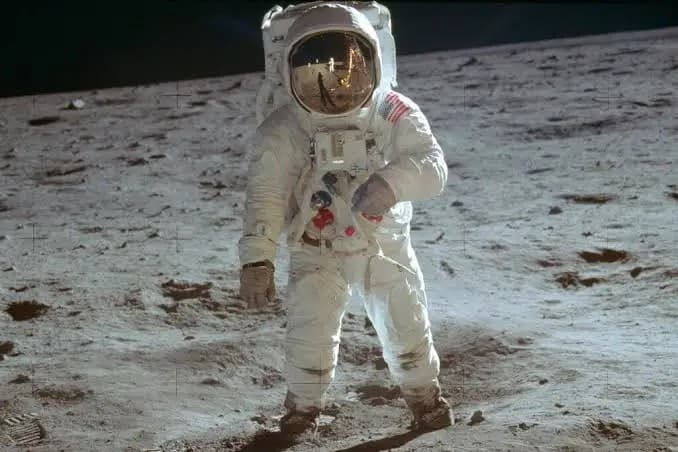
The Moon Photos That Still Feel Impossible
Before social media, astronauts brought back images that changed how humanity saw itself forever.
Read Article →
Artemis
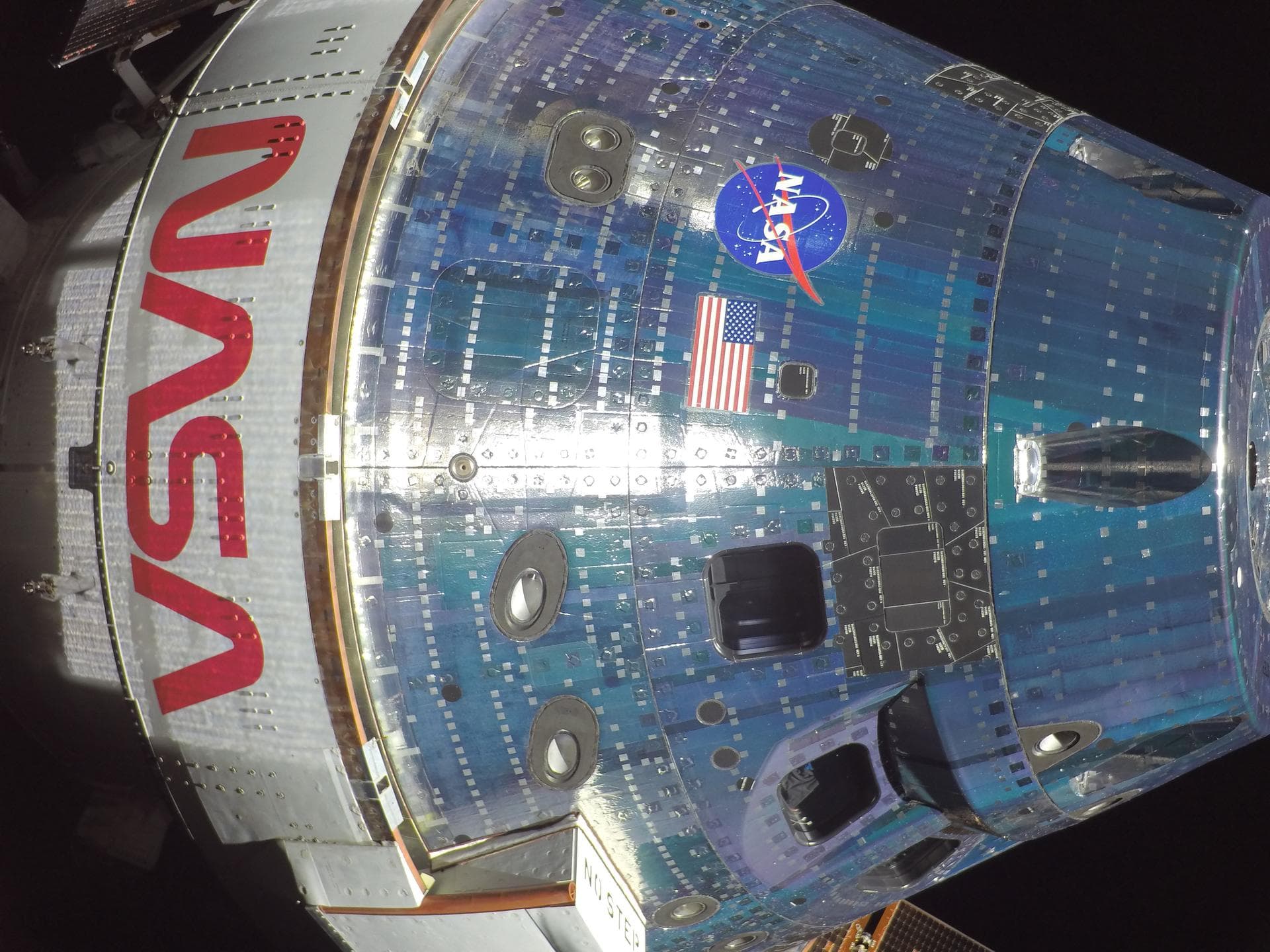
Why Artemis Will Change Lunar Exploration
NASA's return to the Moon is designed to become more sustainable, more international, and more ambitious than Apollo.
Read Article →
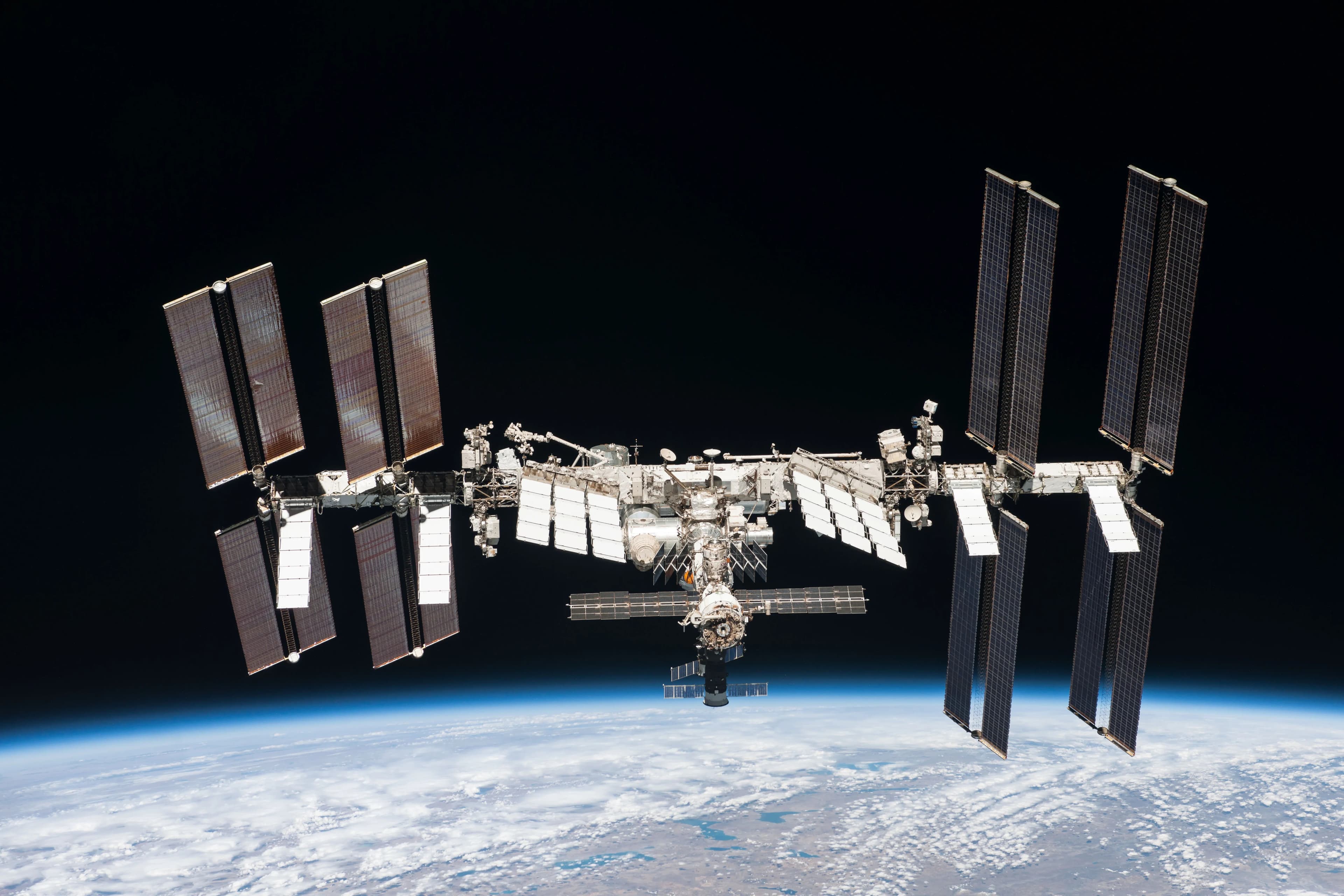
ISS
Life 250 Miles Above Earth
Inside the daily routine of astronauts living and working aboard the International Space Station.
Read Article →