Apollo
Apollo 11
Apollo 11 fulfilled President John F. Kennedy's challenge by becoming the first mission to land humans on the Moon. Neil Armstrong and Buzz Aldrin spent over twenty-one hours on the lunar surface while Michael Collins remained in lunar orbit aboard the Command Module Columbia.
Launch
July 16, 1969
Duration
8 days, 3 hours, 18 minutes, 35 seconds
Crew
3 astronauts
Mission record
Apollo archive entry · Successful
Mission Overview
The mission
Apollo 11 fulfilled President John F. Kennedy's challenge by becoming the first mission to land humans on the Moon. Neil Armstrong and Buzz Aldrin spent over twenty-one hours on the lunar surface while Michael Collins remained in lunar orbit aboard the Command Module Columbia.
In Depth
The Full Story
Apollo 11 was the culmination of one of the most ambitious engineering projects ever attempted by humanity. Just eight years after President John F. Kennedy challenged the United States to land a man on the Moon and return him safely to Earth before the end of the decade, Apollo 11 transformed that vision into reality.
Launched on July 16, 1969, atop Saturn V AS-506 from Kennedy Space Center, Apollo 11 carried Commander Neil Armstrong, Command Module Pilot Michael Collins, and Lunar Module Pilot Buzz Aldrin toward the Moon.
Following a flawless launch and successful Trans-Lunar Injection burn, the crew spent three days traveling nearly a quarter of a million miles through deep space before entering lunar orbit on July 19. While Michael Collins remained aboard the Command Module Columbia, Armstrong and Aldrin transferred into the Lunar Module Eagle and prepared for humanity's first landing on another world.
On July 20, Eagle separated from Columbia and began its powered descent toward the Sea of Tranquility. During the final minutes of the landing, the guidance computer generated several unexpected program alarms caused by data overload. Mission Control quickly determined the computer remained capable of landing safely and instructed the crew to continue.
As Eagle descended below planned altitude, Armstrong realized the onboard computer was guiding the spacecraft toward a hazardous boulder field. Taking manual control, he carefully flew Eagle farther downrange while fuel reserves continued to decrease. With less than thirty seconds of usable propellant remaining, Eagle touched down safely at 20:17 UTC.
Armstrong's calm report, "Houston, Tranquility Base here. The Eagle has landed," immediately became one of the most famous radio transmissions in history.
Several hours later, Neil Armstrong descended the Lunar Module ladder and became the first human to walk on the Moon. Moments after stepping onto the surface, he spoke the immortal words, "That's one small step for [a] man, one giant leap for mankind."
Buzz Aldrin soon joined Armstrong on the surface, where together they spent approximately two and a half hours conducting scientific experiments, collecting lunar samples, photographing the landing site, and deploying the Early Apollo Scientific Experiments Package. They also planted the American flag and unveiled a plaque commemorating humanity's first landing on another celestial body.
After more than twenty-one hours on the lunar surface, Eagle's ascent stage lifted off, successfully rendezvousing with Columbia in lunar orbit. The crew then began the journey home, safely reentering Earth's atmosphere on July 24 before splashing down in the Pacific Ocean.
Apollo 11 forever changed humanity's understanding of what was possible. It remains one of civilization's defining achievements.
Mission Details
Official Designation
Apollo 11
Mission Type
First Crewed Lunar Landing
Launch Date
July 16, 1969
Landing Date
July 20, 1969
Mission Duration
8 days, 3 hours, 18 minutes, 35 seconds
Crew Size
3 Astronauts
Commander
Neil A. Armstrong
Command Module Pilot
Michael Collins
Lunar Module Pilot
Edwin E. 'Buzz' Aldrin Jr.
Command Module
CSM-107 'Columbia'
Lunar Module
LM-5 'Eagle'
Launch Vehicle
Saturn V AS-506
Launch Site
Launch Complex 39A
Landing Site
Sea of Tranquility (Mare Tranquillitatis)
Surface Stay
21 hours, 36 minutes
Moonwalk Duration
2 hours, 31 minutes
Lunar Samples Returned
21.55 kg (47.5 lb)
Lunar Orbits
30
Mission Result
Successful
Historic Achievement
First Humans to Walk on the Moon
Mission by the Numbers
Mission Statistics
Mission Type
First Crewed Lunar Landing
Launch Vehicle
Saturn V AS-506
Crew
3 astronauts
Status
Successful
The People Behind the Mission
Crew
The astronauts assigned to command, operate, and carry out the mission.
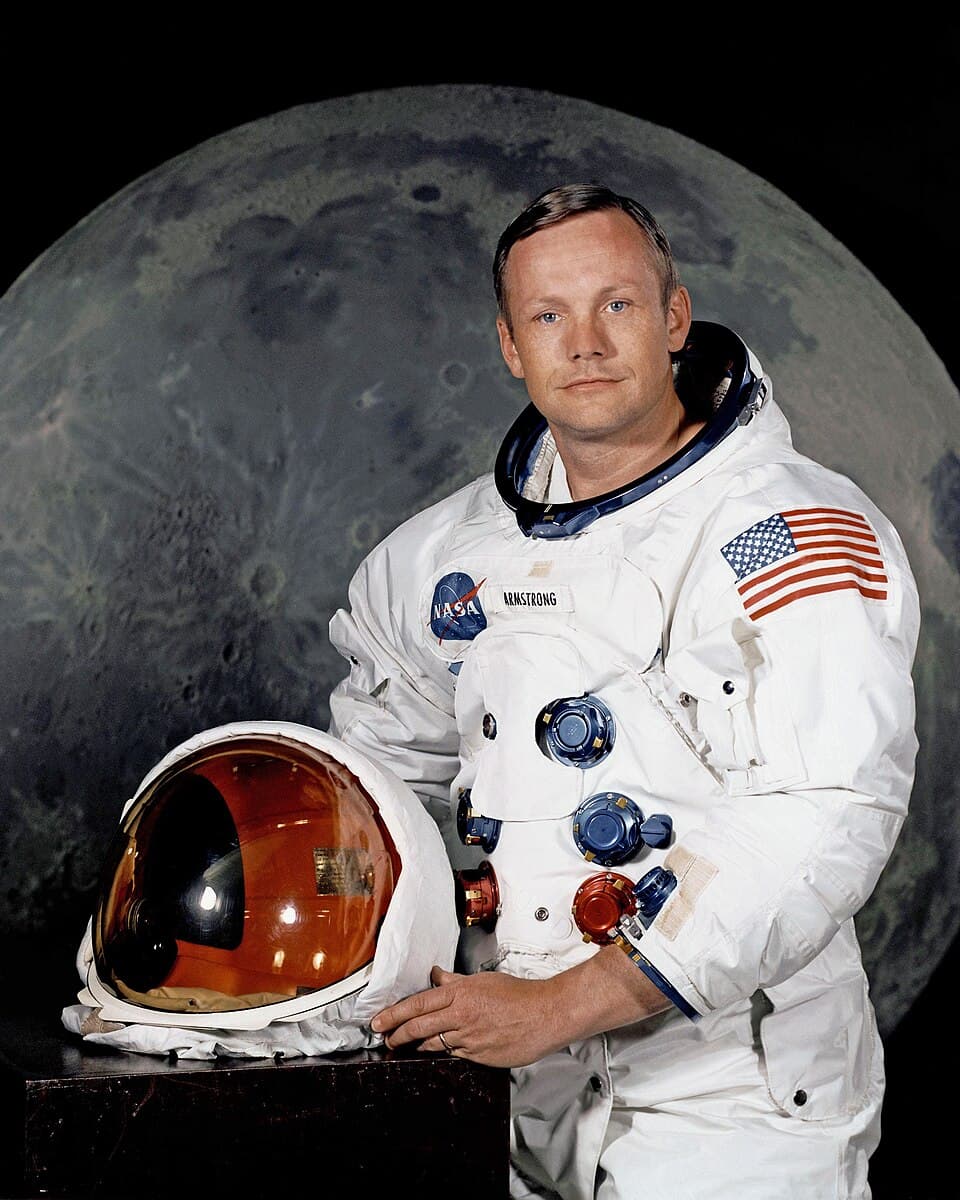
Commander
Neil Armstrong
Neil Armstrong was the commander of Apollo 11 and became the first human to walk on the Moon.
View Astronaut →
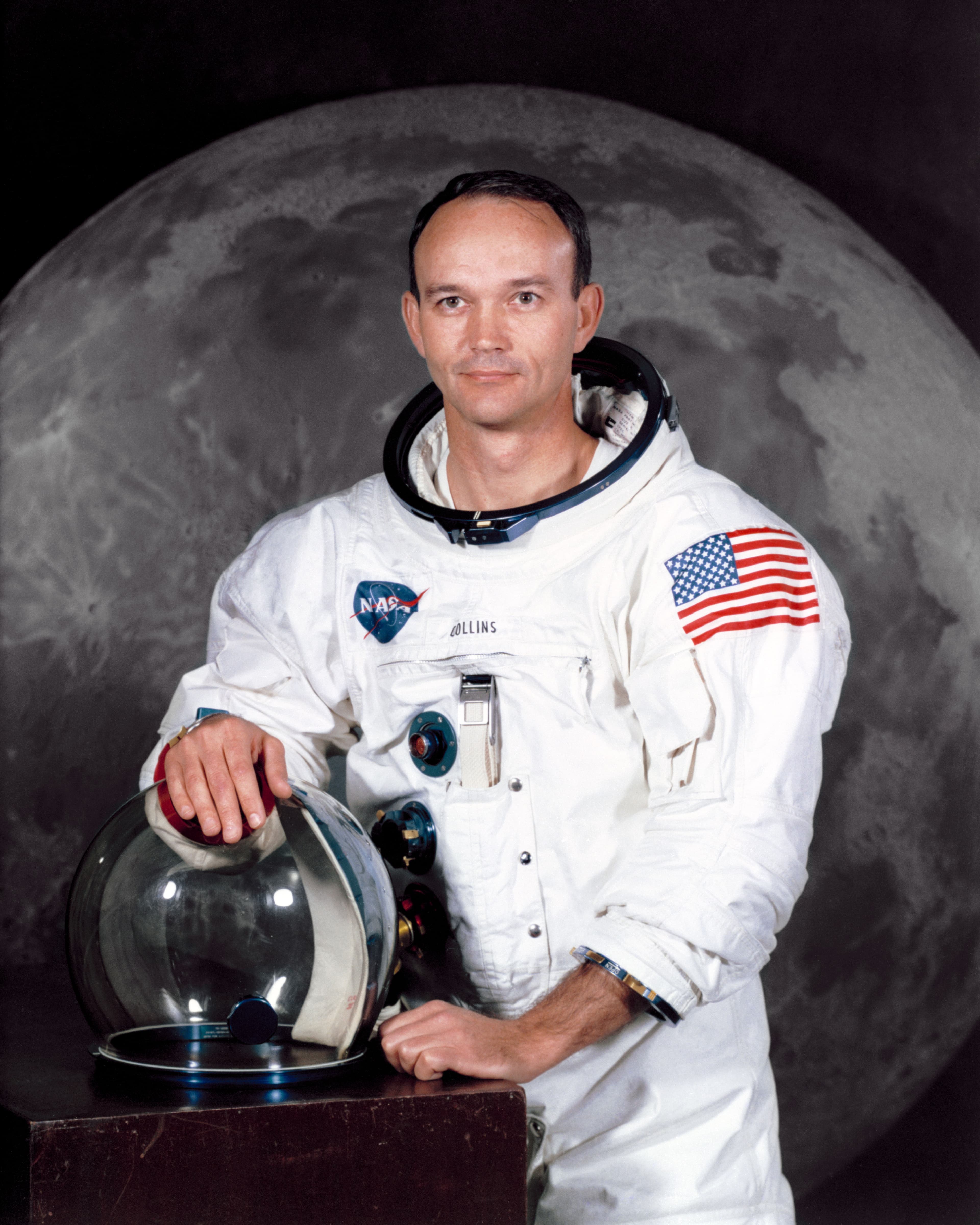
Command Module Pilot
Michael Collins
Michael Collins was the Command Module Pilot of Apollo 11 and orbited the Moon alone while Armstrong and Aldrin landed on the surface.
View Astronaut →
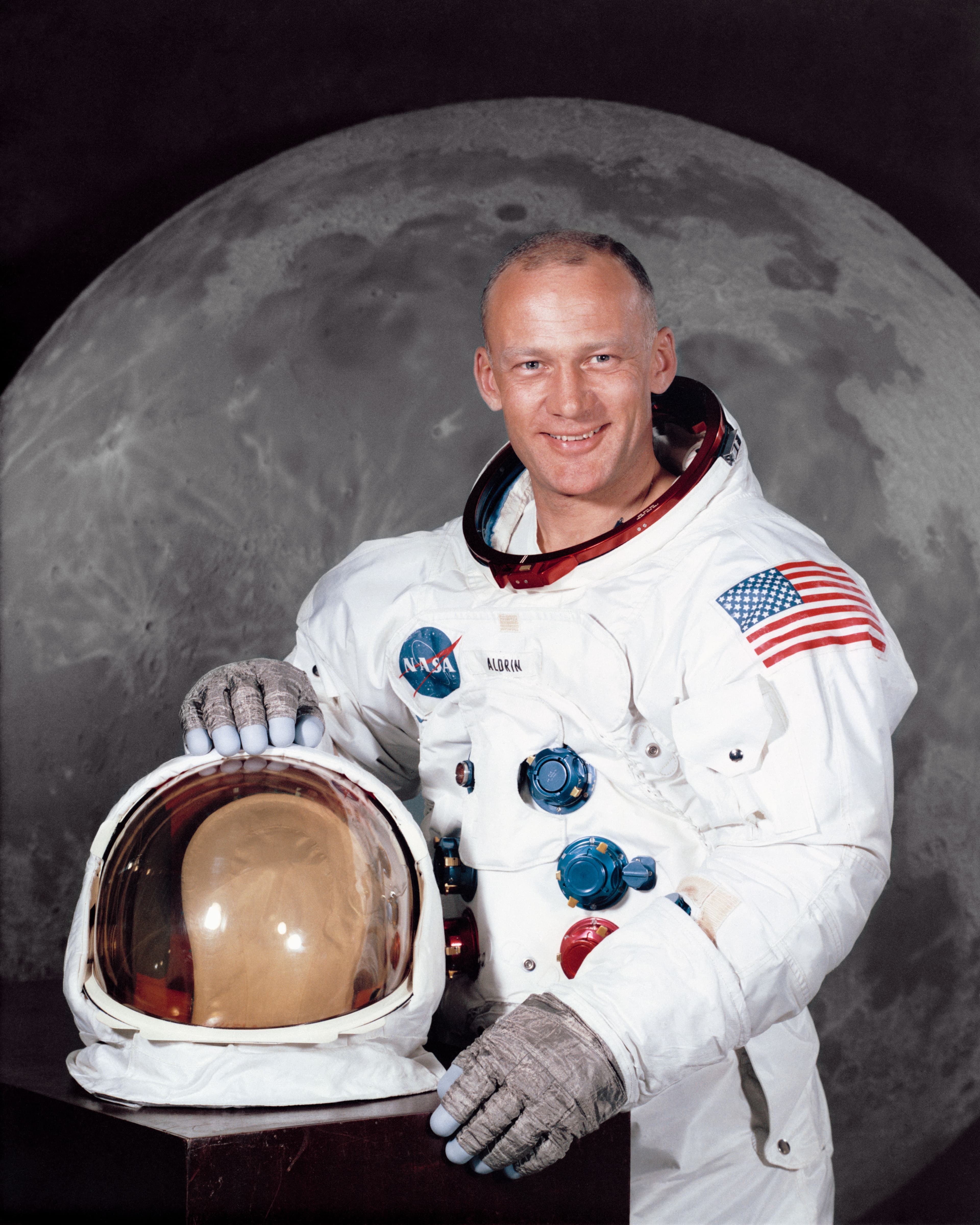
Lunar Module Pilot
Buzz Aldrin
Buzz Aldrin was the Lunar Module Pilot on Apollo 11 and became the second person to walk on the Moon.
View Astronaut →
Mission Goals
Mission objectives
- 01
Perform the first crewed landing on the Moon.
- 02
Safely transport astronauts to lunar orbit.
- 03
Demonstrate Lunar Module descent and landing.
- 04
Conduct the first human exploration of another celestial body.
- 05
Collect lunar rock and soil samples.
- 06
Deploy scientific experiments on the Moon.
- 07
Photograph the landing site and surrounding terrain.
- 08
Evaluate astronaut mobility in one-sixth gravity.
- 09
Demonstrate Lunar Module ascent from the Moon.
- 10
Perform lunar orbit rendezvous.
- 11
Dock Eagle with Columbia.
- 12
Return lunar samples safely to Earth.
- 13
Safely recover the crew after splashdown.
- 14
Fulfill President Kennedy's lunar landing goal.
- 15
Demonstrate humanity's ability to land and return safely from another world.
Fascinating Details
Did You Know?
Key did you know? recorded for this mission.
More than 600 million people watched Apollo 11's Moon landing, making it the largest live television audience in history at the time.
Neil Armstrong manually flew Eagle away from a dangerous boulder field during the final seconds before landing.
Eagle landed with less than thirty seconds of usable fuel remaining.
The famous 1201 and 1202 computer alarms were caused by the guidance computer receiving more data than it could process, yet it intelligently prioritized essential landing tasks.
Michael Collins orbited the Moon alone while Armstrong and Aldrin explored the surface, becoming one of the most isolated humans in history.
Apollo 11 returned 21.55 kilograms (47.5 pounds) of lunar rocks and soil to Earth.
The astronauts left behind scientific experiments that continued transmitting data long after they departed.
The plaque attached to Eagle's descent stage reads, 'We came in peace for all mankind.'
The American flag planted during Apollo 11 was likely blown over by Eagle's ascent engine during liftoff.
Armstrong and Aldrin traveled less than 300 feet (about 90 meters) from Eagle during their historic moonwalk.
The Lunar Module ascent stage remains in lunar orbit only briefly before eventually impacting the Moon.
Apollo 11 achieved President Kennedy's goal just eight years after he announced it before Congress.
The Saturn V used for Apollo 11 remains the most powerful rocket ever to successfully fly astronauts beyond Earth orbit.
The mission transformed science, engineering, computing, and international perceptions of human capability.
Apollo 11 remains one of humanity's greatest technological achievements.
Mission Timeline
May 25, 1961
Kennedy's Challenge
President John F. Kennedy challenged the nation to land a man on the Moon and return him safely to Earth before the decade was over.
July 16, 1969 · 9:32 a.m. EDT
Launch
Apollo 11 launched aboard Saturn V AS-506 from Launch Complex 39A, beginning humanity's first attempt to land on the Moon.
Earth Orbit
Parking Orbit
Apollo 11 entered temporary Earth orbit while engineers verified spacecraft systems before committing the crew to the Moon.
Trans-Lunar Injection
Departure from Earth
The S-IVB third stage reignited successfully, accelerating Apollo 11 toward the Moon at more than 24,000 miles per hour.
Deep Space
Transposition and Docking
Michael Collins maneuvered Columbia to dock with Eagle before extracting the Lunar Module from the S-IVB stage.
July 19, 1969
Lunar Orbit Insertion
Apollo 11 fired the Service Propulsion System behind the Moon, becoming the fifth crewed mission to enter lunar orbit.
July 20, 1969
Eagle Separates
Neil Armstrong and Buzz Aldrin undocked Eagle from Columbia while Michael Collins remained in lunar orbit.
Powered Descent Initiation
Landing Begins
Eagle began its powered descent toward the Sea of Tranquility using the same landing profile rehearsed during Apollo 10.
Final Approach
1201 & 1202 Computer Alarms
During the final descent, Eagle's Apollo Guidance Computer generated several 1201 and 1202 executive overflow alarms. Guidance Officer Steve Bales and MIT engineers confirmed the computer remained capable of completing the landing, allowing Mission Control to issue the now-famous call: 'Go on that alarm.'
Final Descent
Manual Landing
Seeing that the guidance computer was steering Eagle toward a large boulder field, Neil Armstrong assumed semi-manual control and carefully flew the spacecraft farther downrange while Buzz Aldrin continuously called out altitude, velocity, and remaining fuel.
July 20, 1969 · 20:17 UTC
The Eagle Has Landed
With less than thirty seconds of usable landing fuel remaining, Eagle touched down safely in the Sea of Tranquility. Armstrong radioed Mission Control, 'Houston, Tranquility Base here. The Eagle has landed.'
Surface Operations
Preparing for EVA
The crew completed post-landing checklists, configured Eagle for surface operations, and prepared their life-support systems before opening the hatch.
July 21, 1969 · 02:56 UTC
First Human Steps on the Moon
Neil Armstrong climbed down Eagle's ladder and became the first human to walk on another celestial body, marking one of the defining moments in human history.
Minutes Later
Buzz Aldrin Joins Armstrong
Buzz Aldrin descended the ladder and became the second person to walk on the Moon. Together, the astronauts explored the landing site for approximately two and a half hours.
Lunar EVA
Scientific Exploration
Armstrong and Aldrin collected lunar rocks and soil, deployed scientific experiments, photographed the landing site, evaluated movement in one-sixth gravity, planted the American flag, and unveiled a commemorative plaque left on the Lunar Module.
After 21 Hours on the Surface
Lunar Liftoff
The ascent stage of Eagle lifted off from the Moon, leaving its descent stage behind on the surface before beginning rendezvous operations with Columbia.
Lunar Orbit
Rendezvous and Docking
Neil Armstrong and Buzz Aldrin successfully rendezvoused and docked with Michael Collins aboard Columbia. The lunar samples and crew transferred back into the Command Module before Eagle's ascent stage was jettisoned.
July 22, 1969
Trans-Earth Injection
Apollo 11 fired the Service Propulsion System, leaving lunar orbit and beginning the three-day journey home.
July 24, 1969
Reentry
Columbia safely reentered Earth's atmosphere at nearly 25,000 miles per hour before deploying its parachutes for splashdown.
July 24, 1969
Splashdown and Recovery
Apollo 11 splashed down safely in the Pacific Ocean, where the crew was recovered by USS Hornet. As a precaution against possible lunar contamination, the astronauts were transported into quarantine shortly after recovery.
Mission Complete
Humanity Enters a New Era
Apollo 11 fulfilled President Kennedy's 1961 challenge and demonstrated that humans could safely travel to another world, explore it, and return home.
Mission Legacy
Legacy
Apollo 11 represents one of the defining achievements of human civilization.
The mission demonstrated that thousands of engineers, scientists, technicians, astronauts, and support personnel working toward a common objective could accomplish what had once seemed impossible. It fulfilled President John F. Kennedy's national challenge, validated the technologies developed throughout the Apollo Program, and forever changed humanity's relationship with space.
Beyond its political significance, Apollo 11 revolutionized engineering, computing, telecommunications, materials science, navigation, and systems management. Many technologies pioneered during Apollo influenced later advances in aerospace, medicine, electronics, and computer engineering.
The lunar samples collected by Armstrong and Aldrin transformed planetary science by revealing the Moon's age, composition, volcanic history, and relationship to Earth's formation. Scientific analysis of those samples continues more than half a century later, with modern laboratory techniques still producing new discoveries.
Apollo 11 also inspired generations of scientists, engineers, pilots, educators, and explorers around the world. For millions of people watching in 1969, the landing proved that human ambition could overcome extraordinary technical challenges.
Perhaps Apollo 11's greatest legacy is that it expanded humanity's horizon. For the first time in history, human footprints existed on another world. Every crewed mission beyond Earth orbit, from Artemis to future journeys to Mars, traces its heritage directly back to the success of Apollo 11.
The first Moon landing was not the end of exploration. It was the beginning of humanity becoming a spacefaring civilization.
Mission Photo Archive
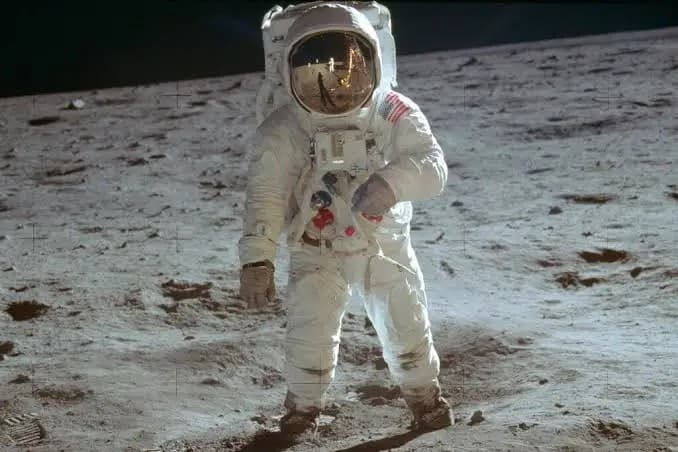
NASA ID: AS11-40-5903
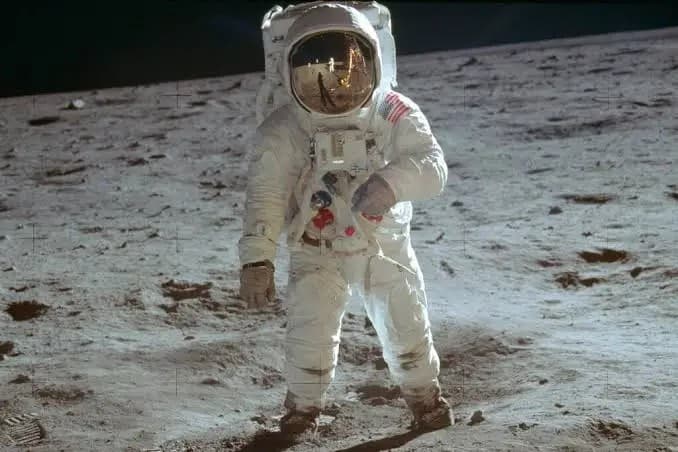
Apollo 11 Lunar Surface
Buzz Aldrin photographed on the lunar surface by Neil Armstrong during humanity's first crewed Moon landing, with Armstrong and the Lunar Module Eagle reflected in Aldrin's gold-plated visor. Taken with a chest-mounted Hasselblad camera, it is among the most recognized photographs of the twentieth century and one of only a handful of surface images that show any part of Armstrong himself.
View Image →
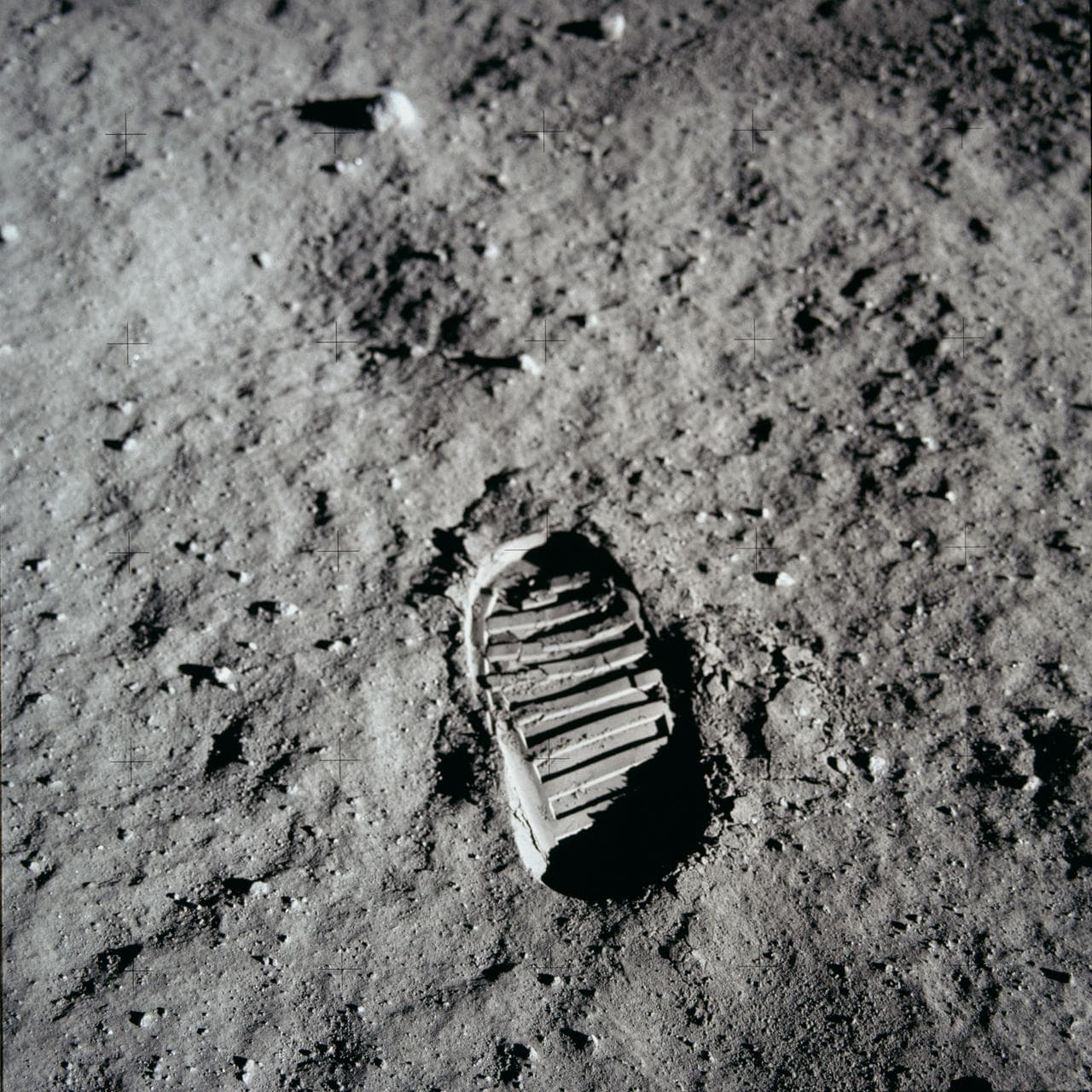
NASA ID: AS11-40-5877
Bootprint on the Lunar Surface
A close-up view of an astronaut's bootprint pressed into the lunar soil, photographed by Buzz Aldrin during Apollo 11's historic moonwalk. NASA scientists used images like this one to study the mechanical properties of lunar regolith, since the Moon's fine, tightly packed soil behaves very differently from soil on Earth.
View Image →
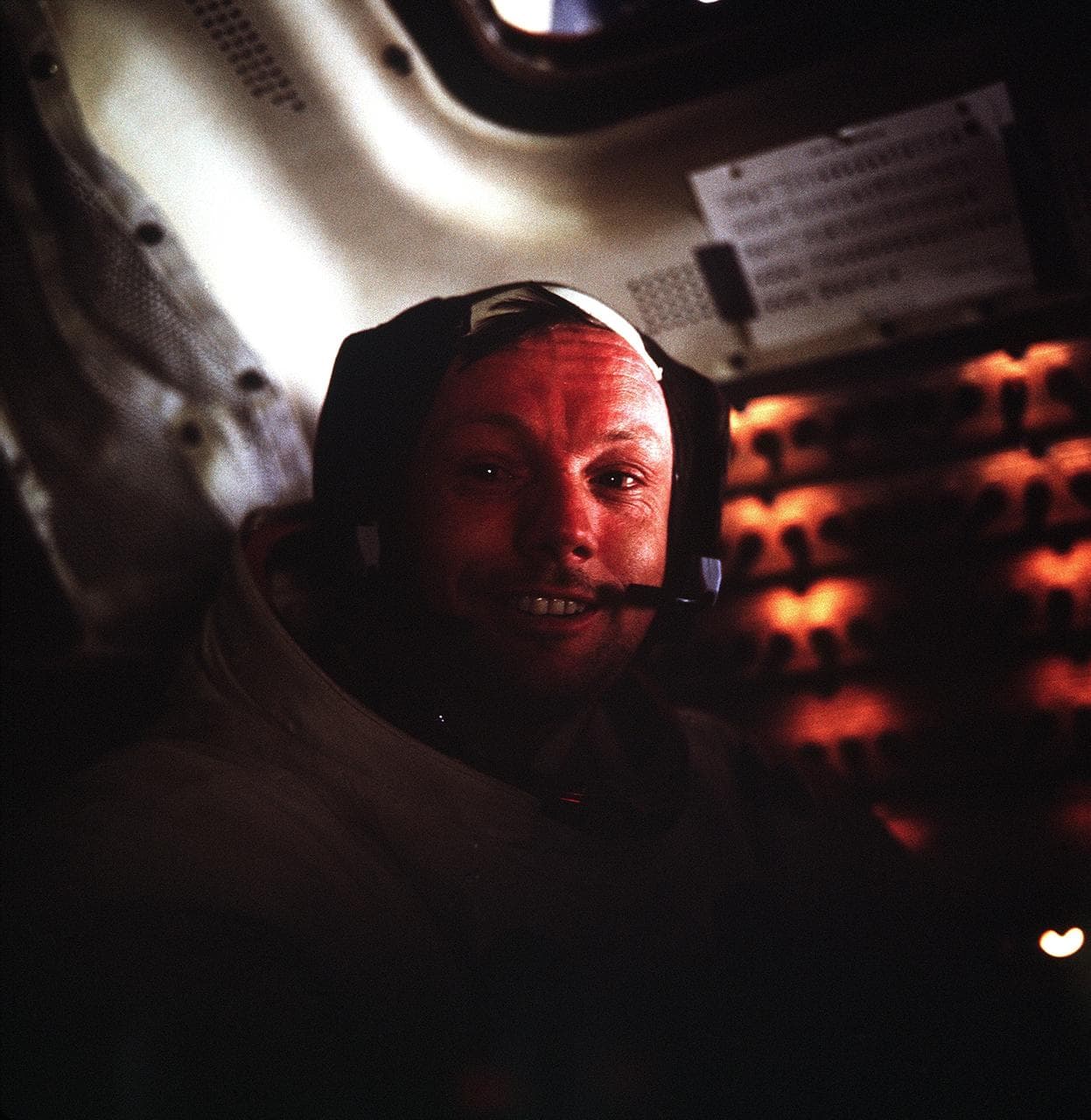
NASA ID: AS11-37-5528
Neil Armstrong Inside the Lunar Module
A rare photograph of Neil Armstrong himself, taken inside the Lunar Module Eagle after the Apollo 11 moonwalk. Because Armstrong carried the surface camera for most of the excursion, Buzz Aldrin appears in nearly every photograph taken outside the spacecraft, making images that actually show Armstrong's face extremely rare.
View Image →
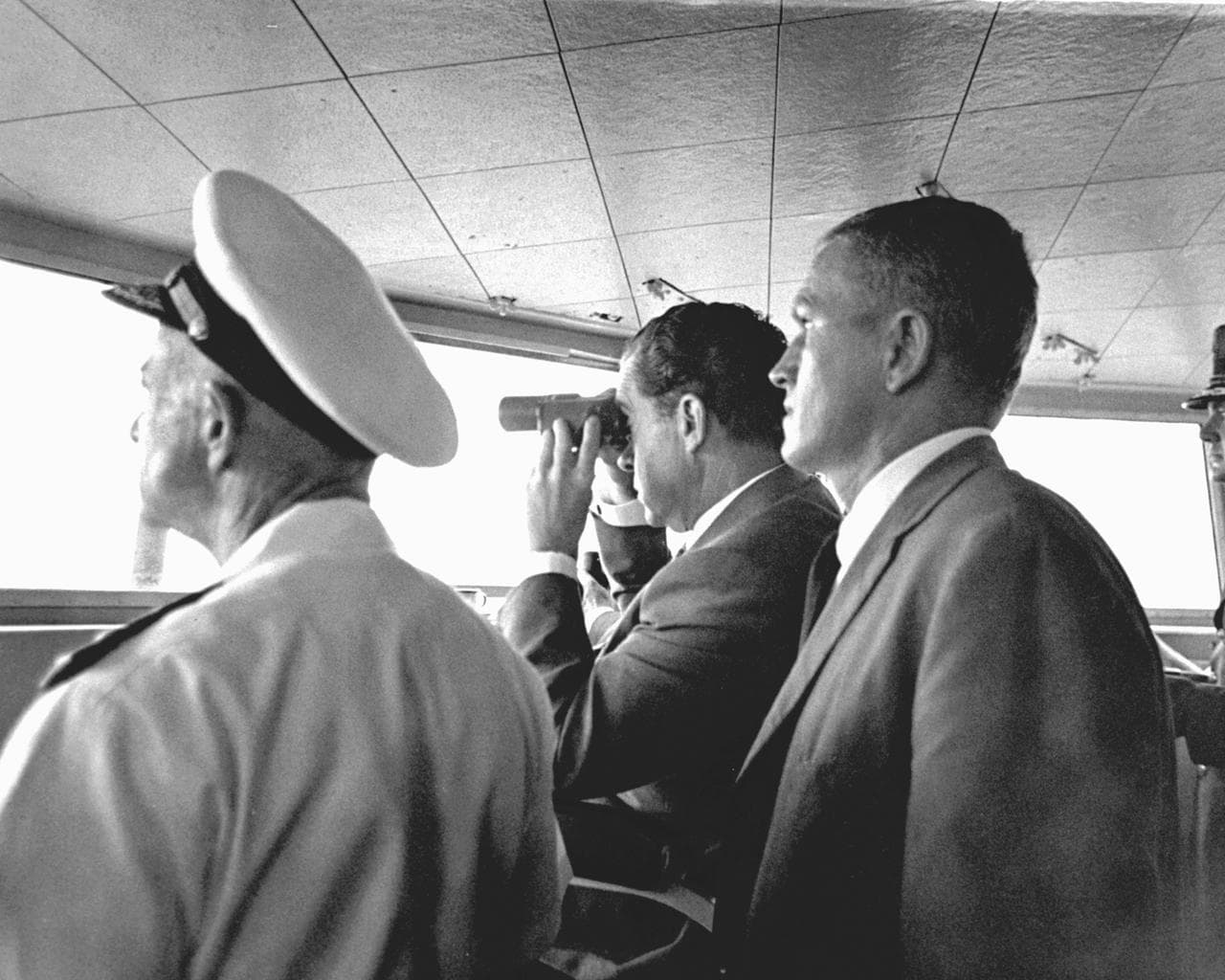
NASA ID: 6900598
Nixon Watches Apollo 11 Recovery
President Richard Nixon, aboard the USS Hornet with Apollo 8 commander Frank Borman, watches the recovery of the Apollo 11 crew following splashdown. Armstrong, Aldrin, and Collins wore biological isolation garments as they left their capsule, a precaution against the remote possibility of lunar contamination, and spent the next three weeks in quarantine before being declared safe to rejoin the public.
View Image →
NASA ID: 624109main_1969-05-20-2_full
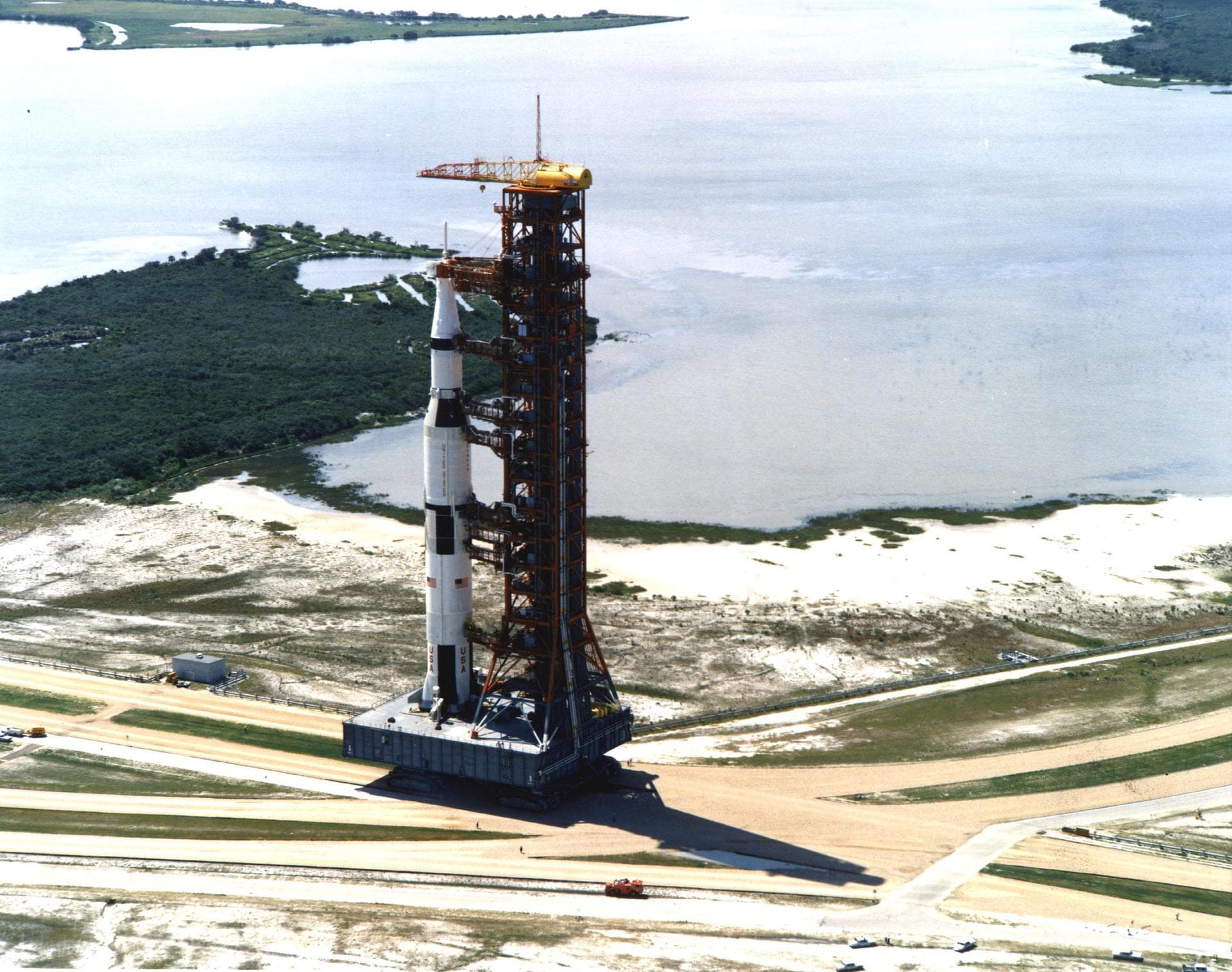
Apollo 11 Saturn V Rollout
Carrying the Apollo 11 Saturn V rocket and mobile launcher, the crawler-transporter inches its way along the three-and-a-half-mile journey to Launch Pad 39A. Standing 363 feet tall, the Saturn V remains the most powerful rocket ever successfully flown, and the massive tracked crawler carrying it moved at a top speed of about one mile per hour.
View Image →
NASA ID: 6900992
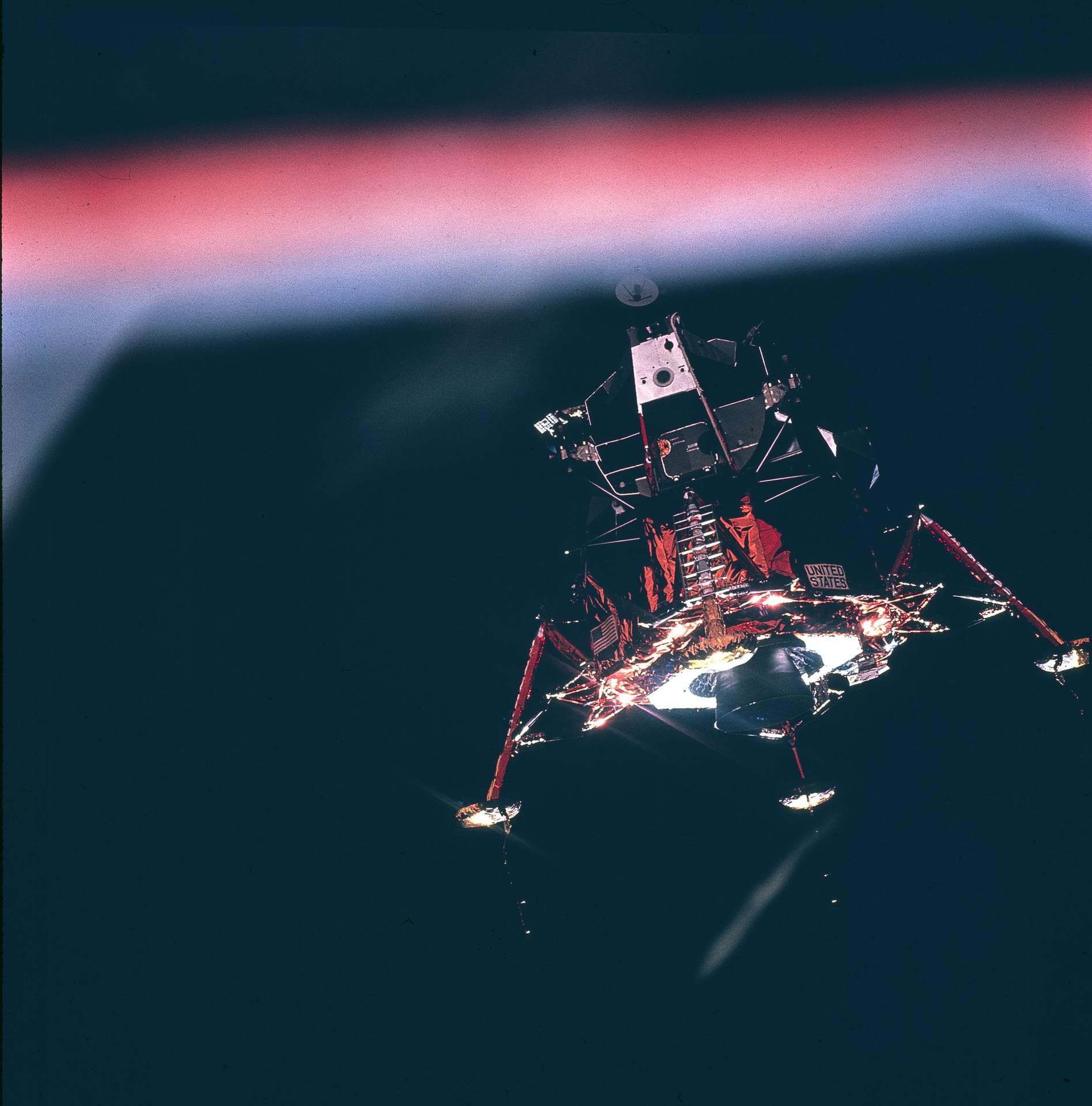
Lunar Module Eagle in Descent
The Lunar Module Eagle is shown making its descent to the lunar surface, photographed from Columbia by Michael Collins. Eagle's descent stage remained on the Moon as a launch platform for the return trip, while its ascent stage later carried Neil Armstrong and Buzz Aldrin back to lunar orbit before being jettisoned into a decaying orbit around the Moon.
View Image →
Related Stories
Apollo
The Moon Photos That Still Feel Impossible
Before social media, astronauts brought back images that changed how humanity saw itself forever.
Read Article →
Artemis
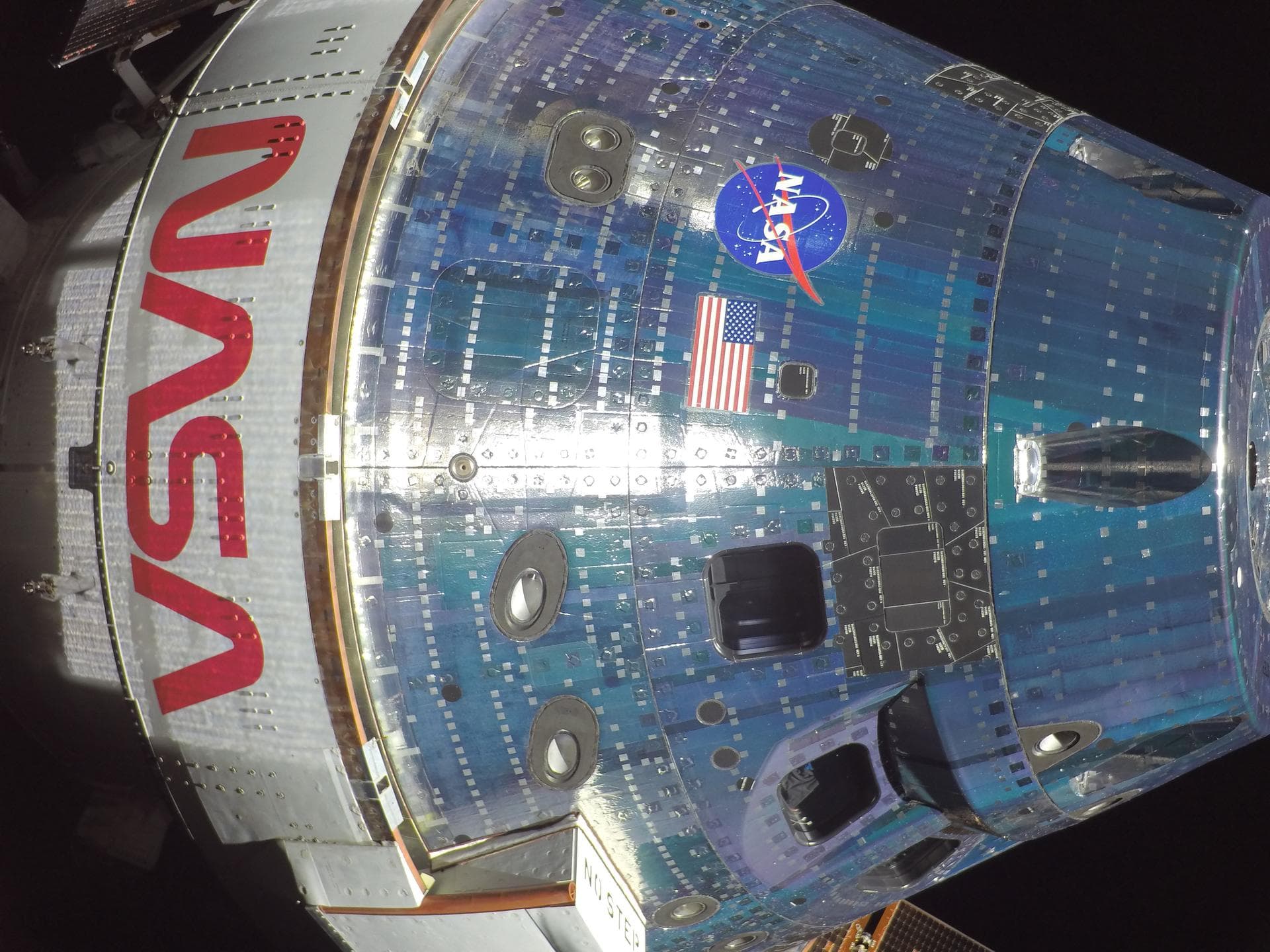
Why Artemis Will Change Lunar Exploration
NASA's return to the Moon is designed to become more sustainable, more international, and more ambitious than Apollo.
Read Article →
ISS
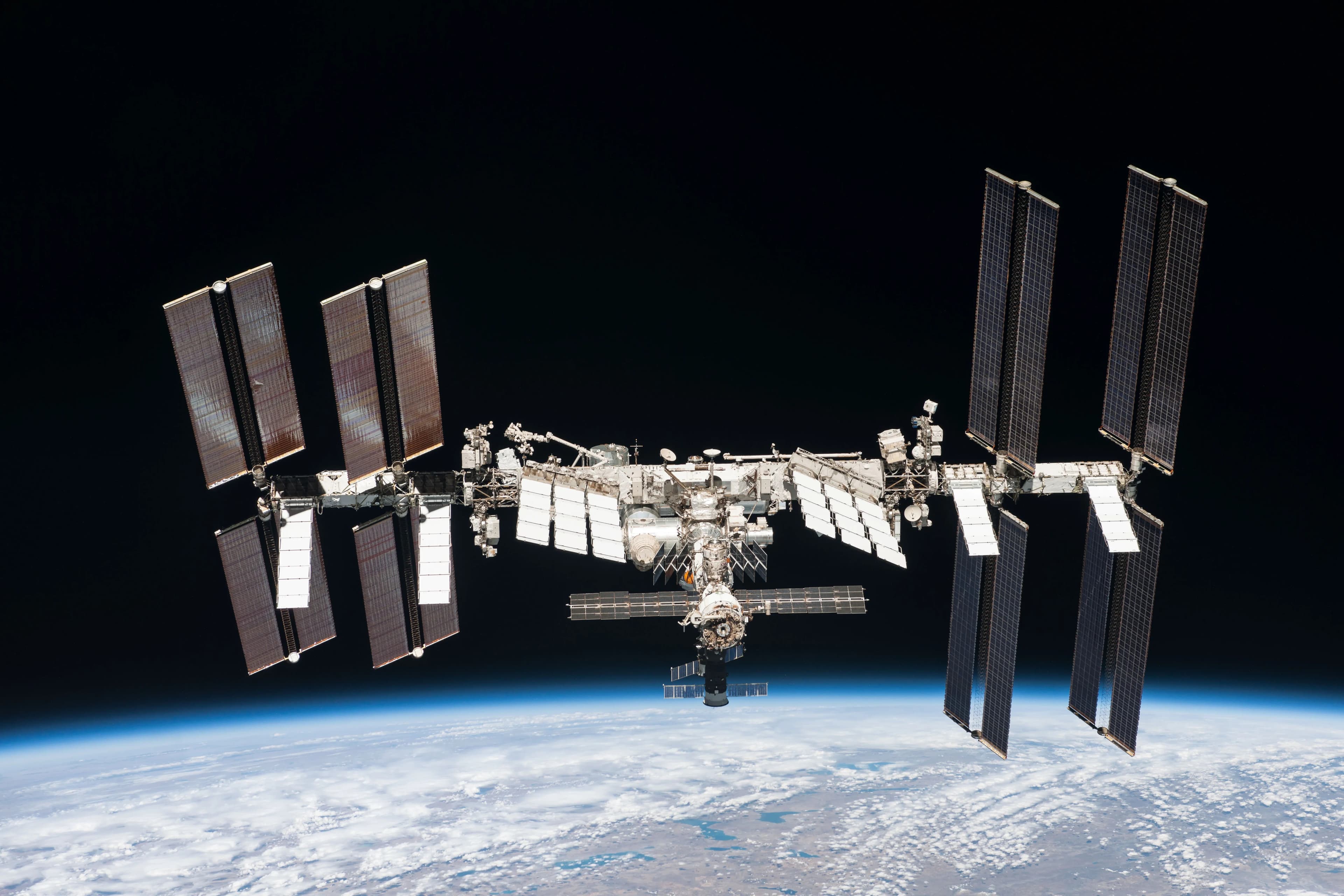
Life 250 Miles Above Earth
Inside the daily routine of astronauts living and working aboard the International Space Station.
Read Article →