Apollo
Apollo 17
Apollo 17 was the sixth and final crewed lunar landing mission of the Apollo Program. Carrying the only professional geologist to walk on the Moon, the crew completed the longest surface stay, drove the Lunar Roving Vehicle farther than any previous mission, returned the largest collection of lunar samples, and concluded humanity's first era of lunar exploration.
Launch
December 7, 1972
Duration
12 days, 13 hours, 51 minutes, 59 seconds
Crew
3 astronauts
Mission record
Apollo archive entry · Successful
Mission Overview
The mission
Apollo 17 was the sixth and final crewed lunar landing mission of the Apollo Program. Carrying the only professional geologist to walk on the Moon, the crew completed the longest surface stay, drove the Lunar Roving Vehicle farther than any previous mission, returned the largest collection of lunar samples, and concluded humanity's first era of lunar exploration.
In Depth
The Full Story
Apollo 17 marked the final chapter of NASA's Apollo lunar landing program and represented the peak of human exploration on the Moon. Designed as the most ambitious scientific expedition ever attempted on another world, the mission combined years of operational experience with increasingly sophisticated geological objectives.
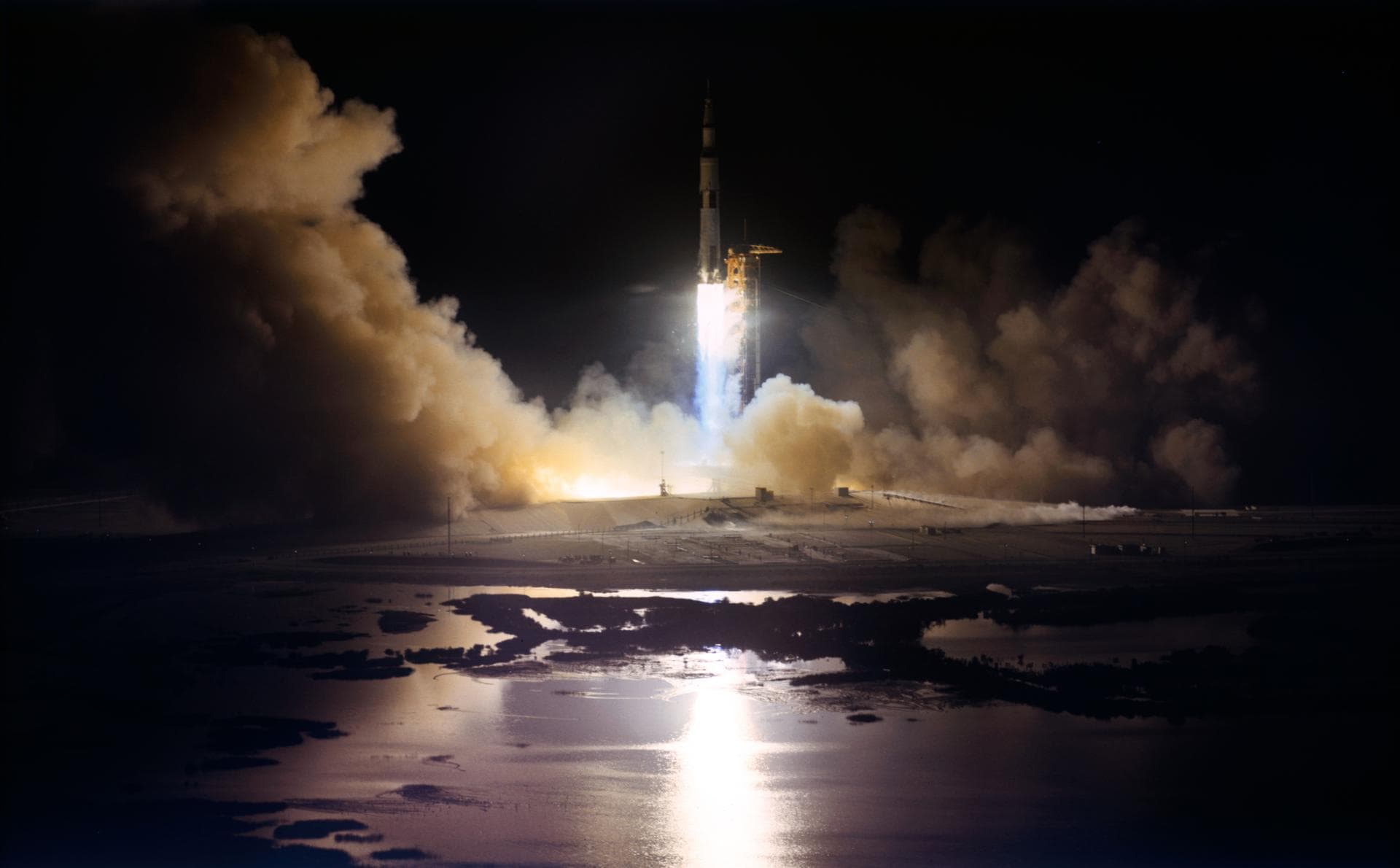
Launched during the night of December 7, 1972, Apollo 17 carried Commander Eugene Cernan, Command Module Pilot Ronald Evans, and Lunar Module Pilot Harrison "Jack" Schmitt toward the Taurus-Littrow Valley, one of the Moon's most geologically diverse regions.
Originally, the Lunar Module Pilot position had been assigned to another test pilot. Following pressure from the scientific community, NASA replaced the assignment with professional geologist Harrison Schmitt, making Apollo 17 the only lunar landing mission to include a trained field geologist on the lunar surface.
After entering lunar orbit, Cernan and Schmitt descended aboard the Lunar Module Challenger while Evans remained in orbit aboard the Command Module America conducting an extensive scientific mapping mission using the Scientific Instrument Module (SIM) bay.
Apollo 17 completed three record-setting moonwalks totaling more than twenty-two hours across the Taurus-Littrow Valley. Using the Lunar Roving Vehicle, the astronauts explored mountains, landslides, volcanic deposits, and impact craters while collecting more than 110 kilograms of rocks and soil, the largest sample return of the Apollo Program.
Among the mission's most significant discoveries was the famous Orange Soil, evidence of ancient volcanic eruptions that occurred billions of years ago. Together with samples collected throughout the valley, these findings transformed scientists' understanding of lunar volcanism and the Moon's geological evolution.
During the journey to the Moon, the crew also captured one of history's most recognizable photographs. The image later known as "The Blue Marble" became one of the most influential photographs ever taken, offering humanity an unprecedented full-disk view of Earth suspended in space.
Apollo 17 concluded the Apollo Program on December 19, 1972. As Eugene Cernan climbed the Lunar Module ladder for the final time, he became the last human to leave footprints on the Moon, a distinction that remains unchanged more than fifty years later.
Mission Details
Official Designation
Apollo 17
Mission Type
Extended Crewed Lunar Exploration (J-Mission)
Launch Date
December 7, 1972
Landing Date
December 11, 1972
Mission Duration
12 days, 13 hours, 51 minutes, 59 seconds
Crew Size
3 Astronauts
Commander
Eugene A. Cernan
Command Module Pilot
Ronald E. Evans
Lunar Module Pilot
Harrison H. Schmitt
Command Module
America
Lunar Module
Challenger
Launch Vehicle
Saturn V AS-512
Landing Site
Taurus-Littrow Valley
Surface Stay
75 hours, 0 minutes
Total EVA Time
22 hours, 4 minutes
Lunar Rover Distance
35.9 km (22.3 mi)
Lunar Samples Returned
110.5 kg (243.6 lb)
Lunar Orbits
75
Historic Achievement
Final Human Mission to the Moon
Mission Result
Successful
Mission by the Numbers
Mission Statistics
Mission Type
Extended Crewed Lunar Exploration
Launch Vehicle
Saturn V AS-512
Crew
3 astronauts
Status
Successful
The People Behind the Mission
Crew
The astronauts assigned to command, operate, and carry out the mission.
Commander
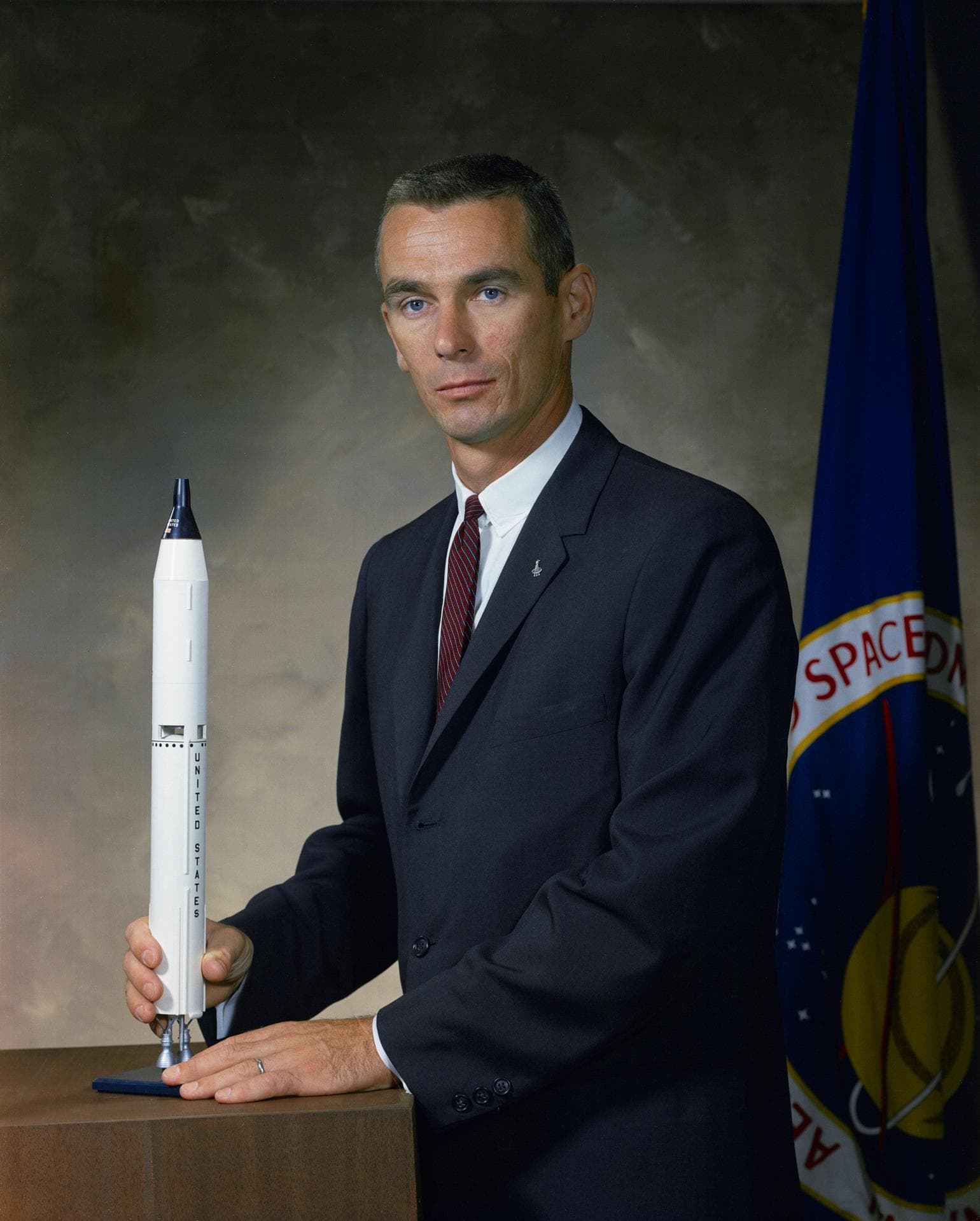
Gene Cernan
Gene Cernan flew a grueling spacewalk on Gemini 9A, flew to the Moon on Apollo 10, and commanded Apollo 17, becoming the last person to walk on the Moon.
View Astronaut →

Command Module Pilot
Ronald E. Evans
Ronald Evans orbited the Moon alone for three days during Apollo 17, then stepped into deep space on the trip home, becoming one of only three people ever to perform a spacewalk between the Earth and the Moon.
View Astronaut →

Lunar Module Pilot
Harrison H. Schmitt
Harrison Schmitt was the only professional geologist to walk on the Moon, and used that training on Apollo 17 to identify orange volcanic soil that rewrote what scientists understood about the Moon's history.
View Astronaut →
Mission Goals
Mission objectives
- 01
Complete the sixth crewed lunar landing.
- 02
Conduct the final Apollo lunar exploration mission.
- 03
Explore the Taurus-Littrow Valley.
- 04
Carry the first professional geologist to the Moon.
- 05
Complete three extended lunar EVAs.
- 06
Operate the Lunar Roving Vehicle.
- 07
Deploy the Apollo Lunar Surface Experiments Package (ALSEP).
- 08
Investigate volcanic and impact geology.
- 09
Collect representative lunar rock and soil samples.
- 10
Study landslides, mountain massifs, and volcanic deposits.
- 11
Conduct orbital scientific mapping using the Scientific Instrument Module.
- 12
Perform a deep-space EVA during the return journey.
- 13
Return the largest collection of lunar samples in Apollo history.
- 14
Expand understanding of lunar evolution.
- 15
Conclude the Apollo lunar exploration program.
Fascinating Details
Did You Know?
Key did you know? recorded for this mission.
Apollo 17 was the only Apollo mission launched at night.
Harrison Schmitt remains the only professional geologist to walk on the Moon.
Eugene Cernan is still the last human to leave footprints on the lunar surface.
Apollo 17 returned the largest collection of lunar rocks and soil of any Apollo mission.
The mission completed the longest total stay on the Moon during the Apollo Program.
The Lunar Rover traveled farther on Apollo 17 than on any previous mission.
The discovery of Orange Soil provided strong evidence of ancient explosive volcanic eruptions on the Moon.
The famous Blue Marble photograph was taken during Apollo 17's journey to the Moon and became one of the most recognized images in history.
Ronald Evans spent more than six days alone in lunar orbit while his crewmates explored the surface.
Evans performed the third and final deep-space EVA of the Apollo Program.
Gene Cernan wrote his daughter Tracy's initials in the lunar dust, where they may remain for millions of years.
Apollo 17 deployed one of the final Apollo Lunar Surface Experiments Packages, which continued transmitting scientific data until 1977.
Many of the samples collected during Apollo 17 are still being studied using technologies that did not exist when they were brought back.
Apollo 17 remains the most scientifically productive lunar landing mission ever flown.
No human has returned to the Moon since Apollo 17 departed in December 1972.
Mission Timeline
December 7, 1972 · 12:33 a.m. EST
Launch
Apollo 17 launched aboard Saturn V AS-512 from Kennedy Space Center, becoming the only night launch of the Apollo Program.
Earth Orbit
Parking Orbit
Following a flawless ascent, Apollo 17 entered temporary Earth orbit before Mission Control approved the translunar injection burn.
Trans-Lunar Injection
Departure for the Moon
The S-IVB third stage accelerated Apollo 17 onto its trajectory toward the Taurus-Littrow Valley.
Deep Space
The Blue Marble
While traveling toward the Moon, the crew photographed the fully illuminated Earth. The resulting image, later named 'The Blue Marble,' became one of the most famous photographs ever taken.
Cruise Phase
Journey Through Deep Space
The crew completed navigation updates, television broadcasts, spacecraft inspections, and scientific observations during the three-day journey to the Moon.
December 10, 1972
Lunar Orbit Insertion
Apollo 17 entered lunar orbit, allowing Ronald Evans to begin orbital mapping while preparations for the landing continued.
December 11, 1972
Challenger Separates
Eugene Cernan and Harrison Schmitt entered the Lunar Module Challenger and undocked from Ronald Evans aboard the Command Module America.
Powered Descent
Landing Begins
Challenger began its powered descent toward Taurus-Littrow, one of the most scientifically valuable landing sites selected during Apollo.
December 11, 1972
Landing at Taurus-Littrow
Challenger landed successfully in the Taurus-Littrow Valley, beginning the final human exploration of the Moon during the Apollo era.
Surface Operations
Preparing for EVA-1
Eugene Cernan and Harrison Schmitt configured Challenger for surface operations, activated their Portable Life Support Systems, and prepared for the first moonwalk of humanity's final Apollo landing mission.
EVA-1
Deploying the Lunar Rover
The astronauts deployed the Lunar Roving Vehicle (LRV), allowing them to travel farther than any previous Apollo crew while exploring the Taurus-Littrow Valley.
First Moonwalk
ALSEP Deployment
Cernan and Schmitt installed the Apollo Lunar Surface Experiments Package (ALSEP), deploying instruments that would continue monitoring the Moon for years after the mission ended.
Taurus-Littrow Valley
Initial Geological Survey
The crew began investigating boulders, mountain slopes, and ancient impact deposits surrounding the landing site, documenting one of the Moon's most complex geological regions.
Second EVA
Discovery of Orange Soil
While exploring Shorty Crater, Harrison Schmitt discovered the famous Orange Soil, evidence of explosive volcanic eruptions that occurred billions of years ago. The discovery became one of the Apollo Program's most important geological findings.
Station 6
Tracy's Rock
The astronauts investigated a massive split boulder later nicknamed Tracy's Rock, collecting samples that helped reveal the history of the surrounding mountains.
Third EVA
Record Rover Traverse
Using the Lunar Rover, Cernan and Schmitt completed the longest traverse of the Apollo Program, exploring multiple geological stations while collecting an unprecedented quantity of lunar samples.
Final Surface Activities
Closing Experiments
Before departing, the astronauts completed panoramic photography, documented the landing site, gathered final core samples, and prepared Challenger for ascent.
The Final Footsteps
Leaving the Moon
As Eugene Cernan climbed the Lunar Module ladder, he spoke humanity's final words from the lunar surface, expressing hope that future generations would one day return in peace and hope for all mankind.
December 14, 1972
Lunar Liftoff
Challenger successfully lifted off from Taurus-Littrow, ending humanity's most recent visit to the lunar surface.
Lunar Orbit
Docking with America
Cernan and Schmitt rendezvoused with Ronald Evans aboard America, transferring themselves, equipment, and the largest collection of lunar samples ever returned.
Trans-Earth Injection
Journey Home
Apollo 17 departed lunar orbit after deploying a scientific subsatellite to continue studying the Moon from orbit.
Deep Space EVA
Film Retrieval
Ronald Evans performed a deep-space EVA during the return journey, retrieving film cassettes from the Scientific Instrument Module (SIM) bay while nearly 300,000 kilometers from Earth.
December 19, 1972
Splashdown
Apollo 17 safely splashed down in the Pacific Ocean, concluding both the mission and the Apollo lunar landing program.
Mission Complete
The End of Apollo
Apollo 17 concluded humanity's first era of lunar exploration after six successful Moon landings, leaving footprints that remain undisturbed more than five decades later.
Mission Legacy
Legacy
Apollo 17 represented the culmination of everything NASA learned during the Apollo Program. Every lesson from Apollo 11 through Apollo 16 was applied to create the most capable and scientifically productive lunar expedition ever undertaken.
The inclusion of professional geologist Harrison Schmitt transformed the mission into a true field science expedition. His expertise allowed the crew to identify subtle geological features, recognize unusual samples such as the famous Orange Soil, and maximize the scientific return from every rover traverse.
Apollo 17 established records that still stand today, including the longest lunar surface stay, the greatest distance traveled on the Moon, the longest total EVA time, and the largest collection of lunar samples ever returned to Earth. The mission fundamentally expanded humanity's understanding of lunar volcanism, impact processes, and the geological evolution of the Moon.
Beyond its scientific achievements, Apollo 17 also produced one of history's most influential photographs: The Blue Marble. The image offered humanity a breathtaking view of our entire planet suspended in the darkness of space and became an enduring symbol of Earth's fragility and unity.
When Eugene Cernan stepped off the Moon for the final time, he expressed hope that humanity would return in peace and hope for all mankind. More than fifty years later, Apollo 17 remains the last chapter of humanity's first journey to another world, while serving as the foundation for the Artemis missions that aim to begin the next.
Mission Photo Archive
NASA ID: S72-55070
Launch of Apollo 17
Apollo 17 lights up the night sky over Kennedy Space Center on the final Apollo Moon landing mission — the only Apollo launch to occur after dark. Gene Cernan and Harrison Schmitt, the only professional geologist to walk on the Moon, spent more than three days exploring the Taurus-Littrow valley, and Cernan's final words on the surface, 'we shall return,' remain the last spoken by a human being on the Moon.
View Image →

NASA ID: AS17-148-22727
The Blue Marble
A full view of Earth photographed by the Apollo 17 crew about 28,000 miles from the planet as they traveled toward the Moon. Sunlight fell directly behind the spacecraft, fully illuminating the disc of the Earth for the first time in any human-taken photograph, and 'The Blue Marble' has since become one of the most widely reproduced images ever taken.
View Image →
Related Stories
Apollo
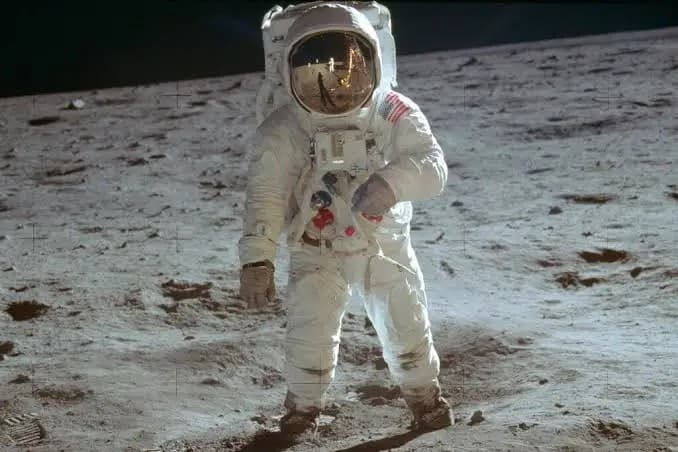
The Moon Photos That Still Feel Impossible
Before social media, astronauts brought back images that changed how humanity saw itself forever.
Read Article →
Artemis
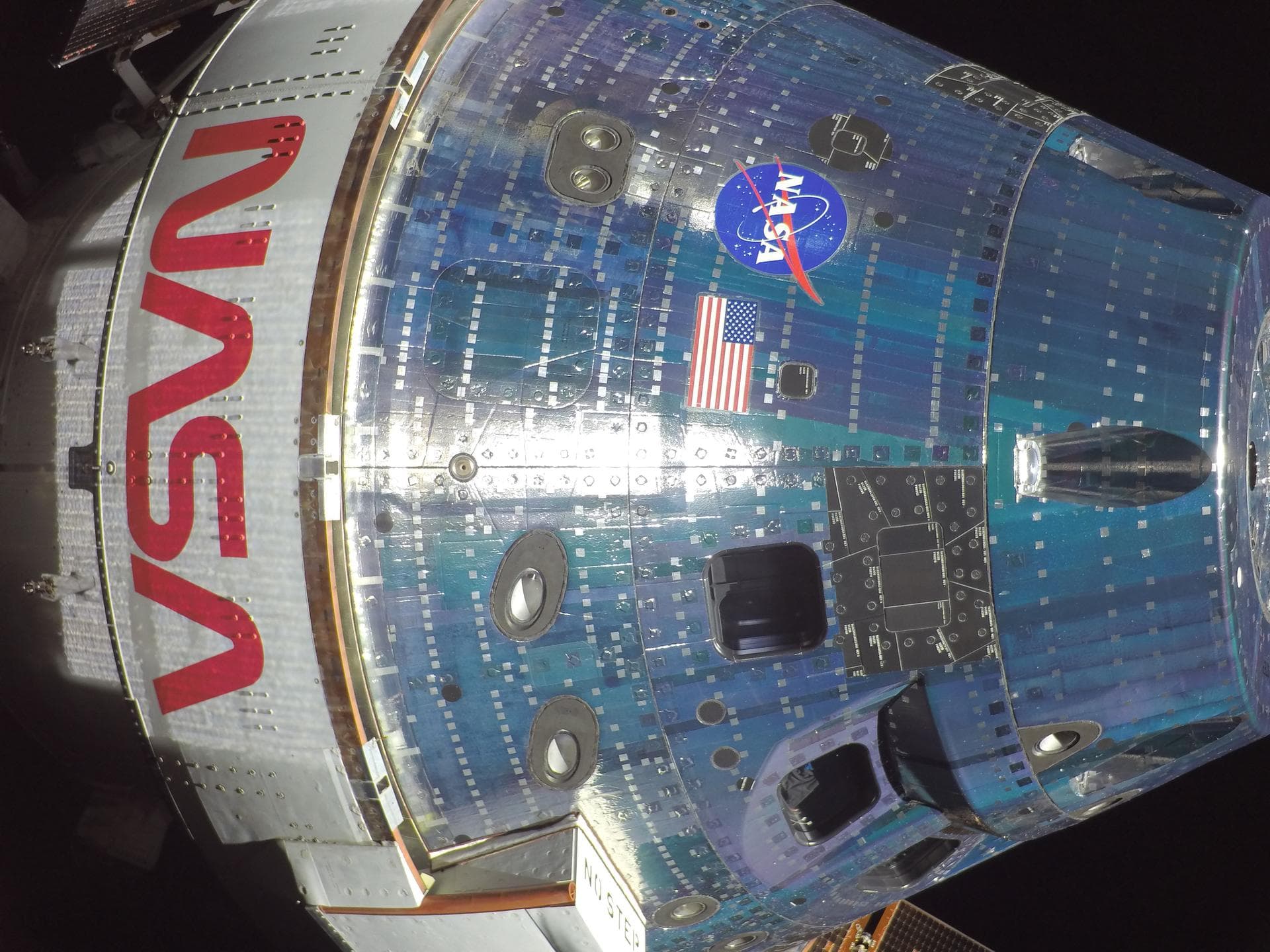
Why Artemis Will Change Lunar Exploration
NASA's return to the Moon is designed to become more sustainable, more international, and more ambitious than Apollo.
Read Article →
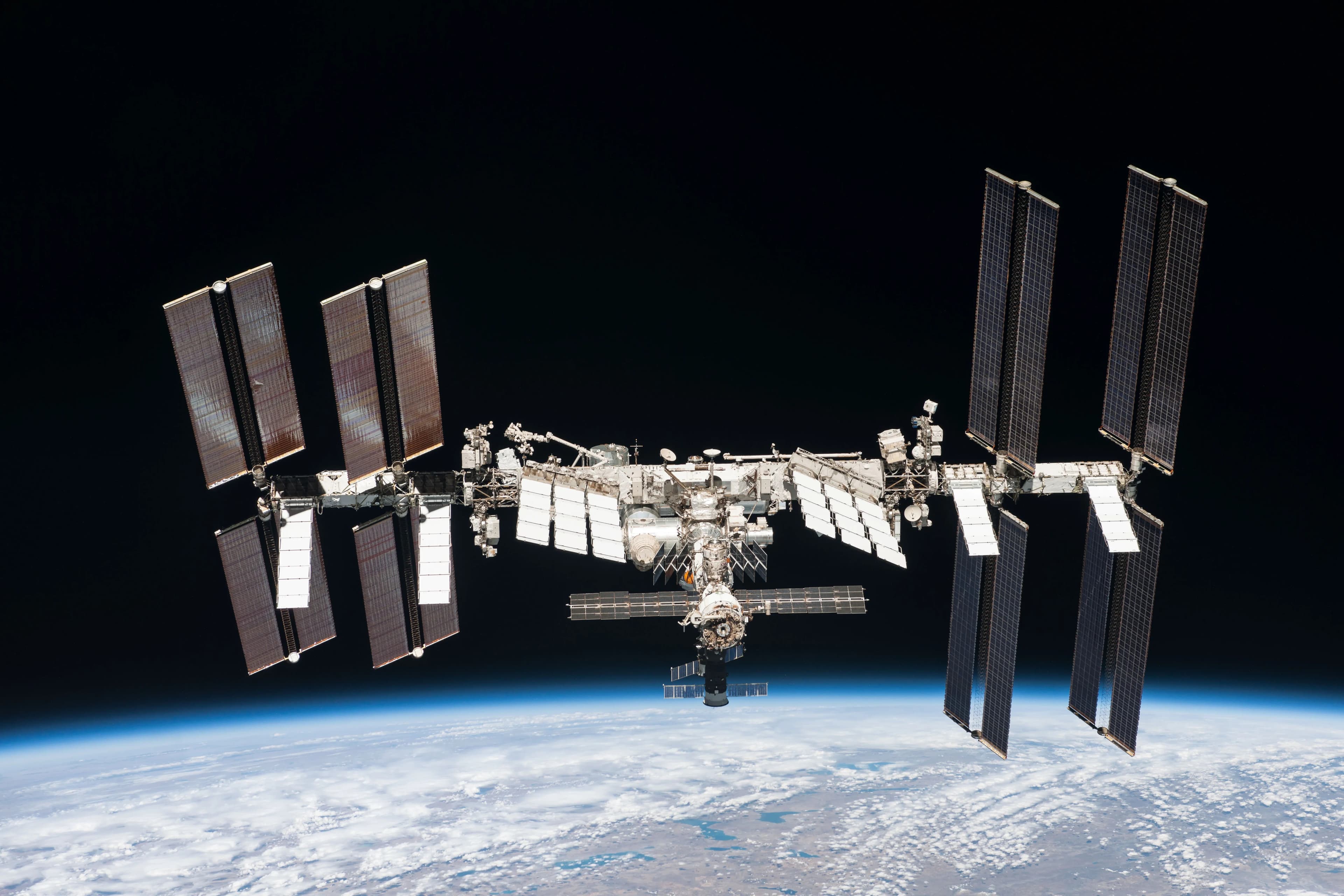
ISS
Life 250 Miles Above Earth
Inside the daily routine of astronauts living and working aboard the International Space Station.
Read Article →