1958–1963
Project Mercury
America's first human spaceflight program, proving astronauts could survive and work in space.
6
Missions
8
Spacecraft
13
Images
6
Completed
Historical archive
Missions, spacecraft, imagery, and milestones from the Project Mercury program.
Program Overview
The program
America's first human spaceflight program, proving astronauts could survive and work in space.
Program Timeline
Program Flights
Missions
Explore every Project Mercury mission currently preserved in the OrbitingTruths archive.
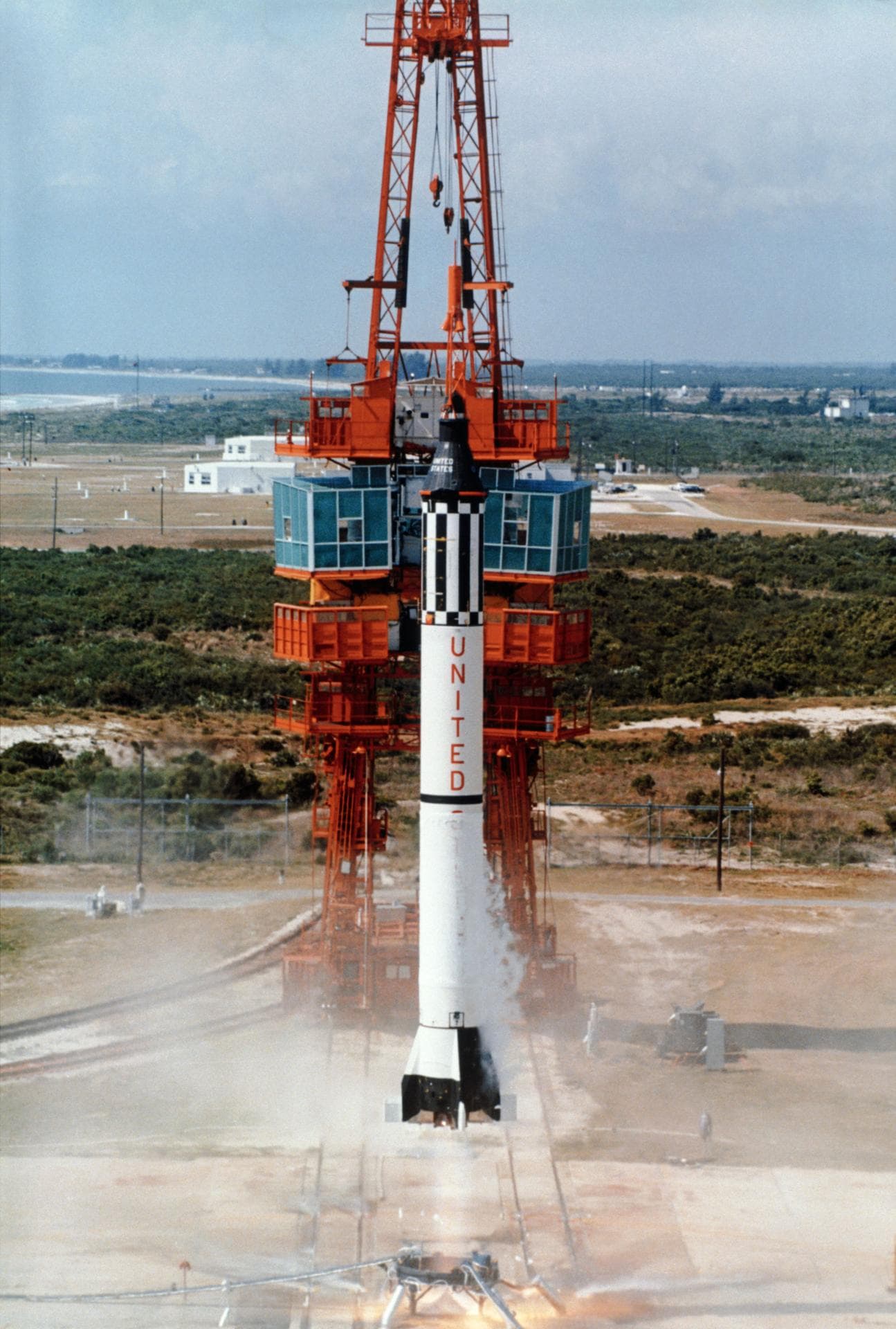
Freedom 7
Launch
May 5, 1961
Status
Successful
Duration
15 minutes, 28 seconds
Freedom 7 made Alan Shepard the first American in space, a 15-minute suborbital flight that came just three weeks after the Soviet Union launched the first human into orbit and helped set the stage for President Kennedy's challenge to land astronauts on the Moon.
View Mission →
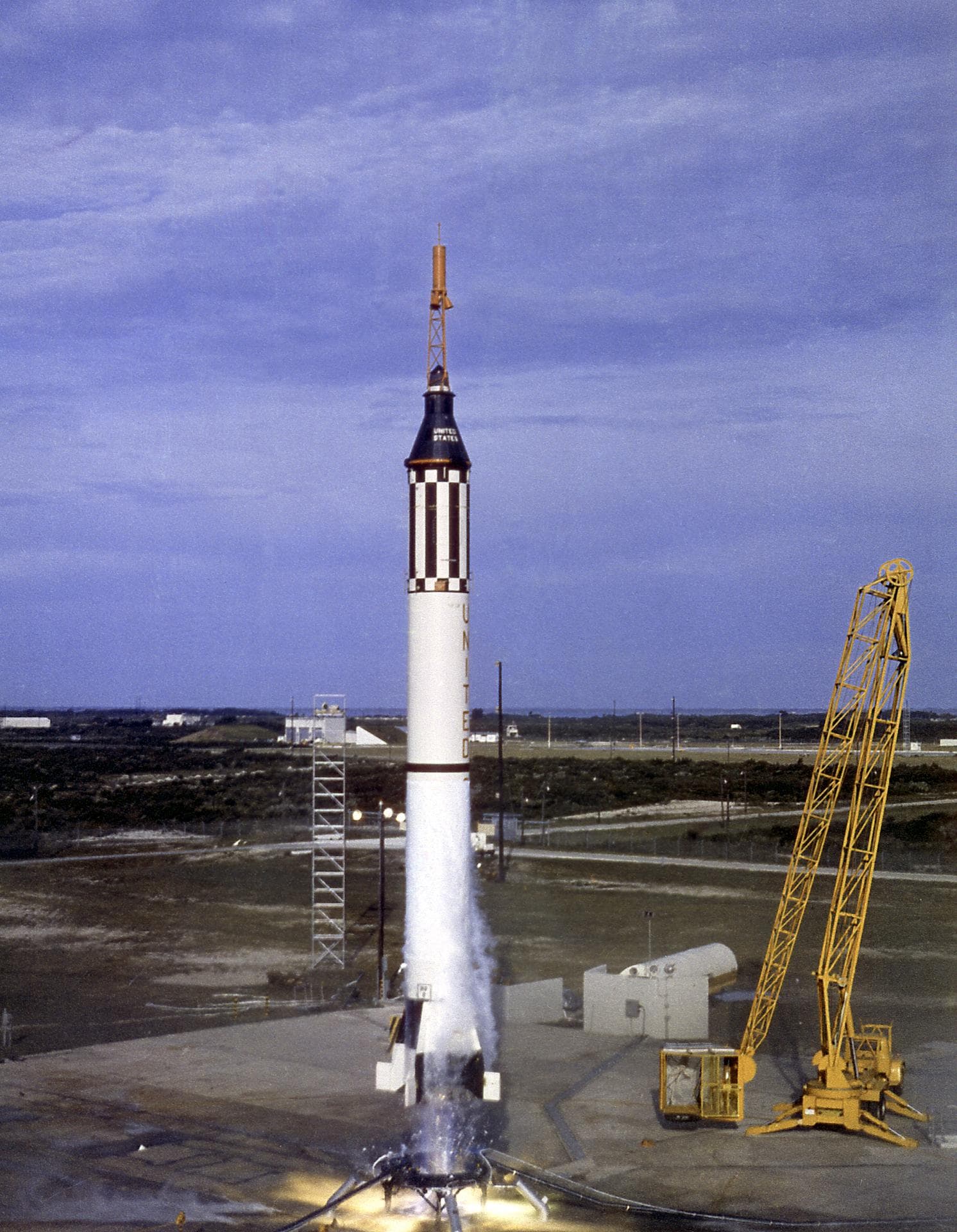
Liberty Bell 7
Launch
July 21, 1961
Status
Successful
Duration
15 minutes, 37 seconds
Liberty Bell 7 made Gus Grissom the second American in space on a suborbital flight nearly identical to Freedom 7, but the mission became famous for a dramatic near-disaster after splashdown when the capsule's hatch blew open prematurely and the spacecraft sank.
View Mission →
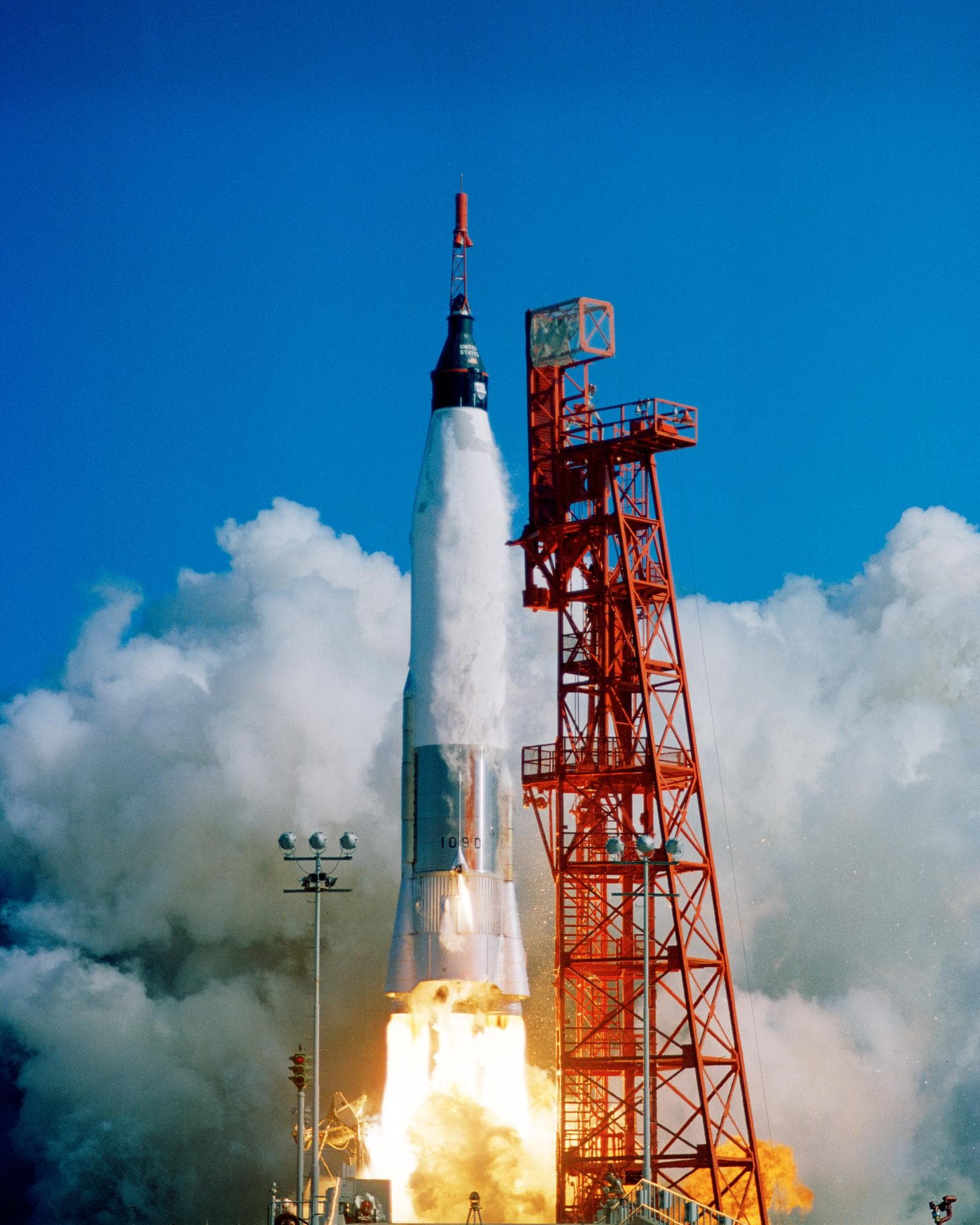
Friendship 7
Launch
February 20, 1962
Status
Successful
Duration
4 hours, 55 minutes, 23 seconds
Friendship 7 made John Glenn the first American to orbit Earth, completing three orbits in under five hours despite a tense reentry caused by a false sensor warning about the spacecraft's heat shield.
View Mission →
Aurora 7
Launch
May 24, 1962
Status
Successful
Duration
4 hours, 56 minutes, 5 seconds
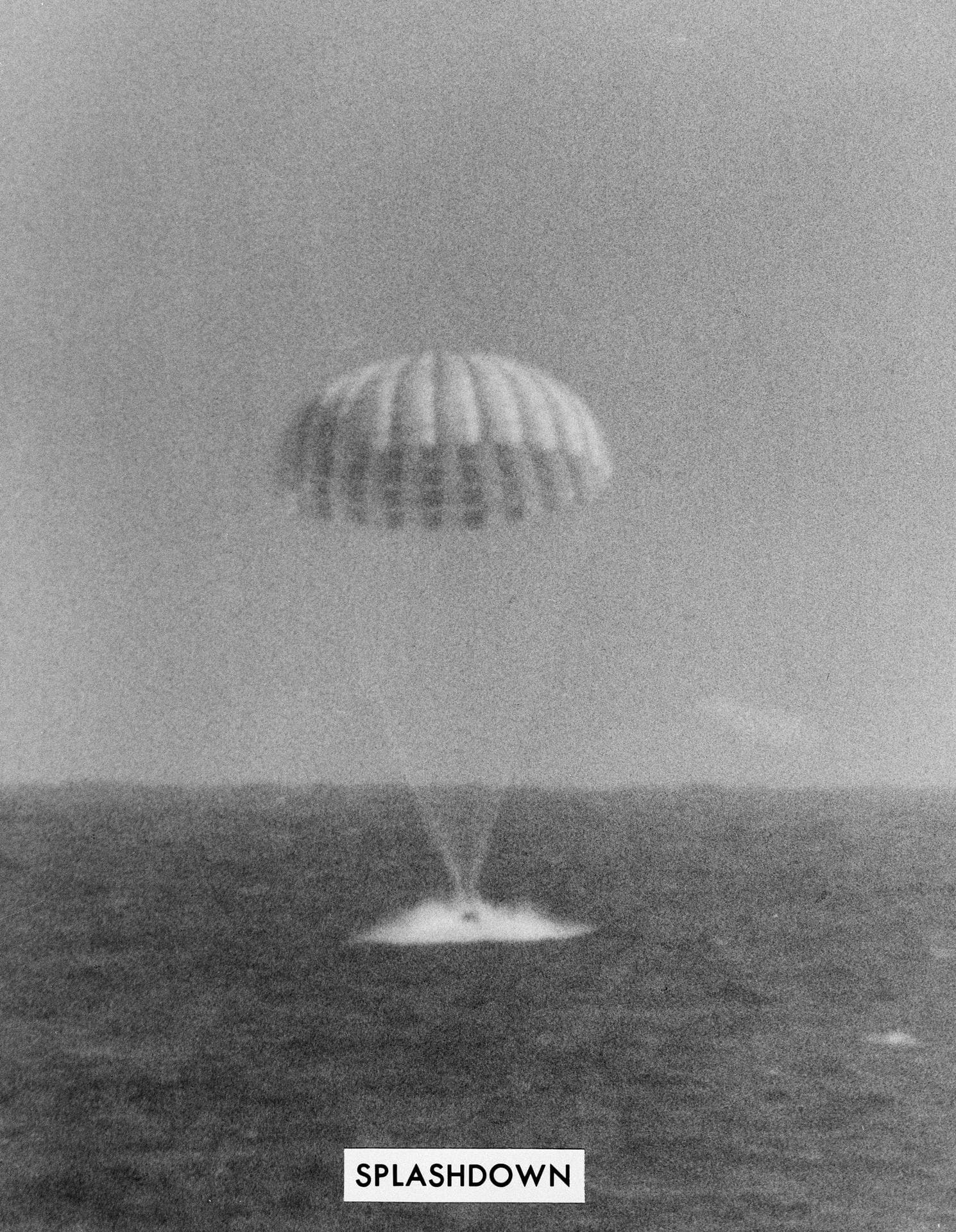
Aurora 7 repeated John Glenn's three-orbit flight with Scott Carpenter at the controls, but a late and off-angle retrofire caused the capsule to splash down roughly 250 miles off target, leaving Carpenter adrift and out of contact for nearly forty minutes.
View Mission →
Sigma 7
Launch
October 3, 1962
Status
Successful
Duration
9 hours, 13 minutes, 11 seconds
Sigma 7 was a near-flawless six-orbit engineering test flight in which Wally Schirra deliberately conserved fuel and flew a highly disciplined mission, splashing down within a few miles of his target in the Pacific Ocean.
View Mission →
Faith 7
Launch
May 15, 1963
Status
Successful
Duration
34 hours, 19 minutes, 49 seconds
Faith 7 was the longest and final flight of Project Mercury, sending Gordon Cooper on 22 orbits of Earth over more than 34 hours, during which he became the first American to sleep in space and executed a flawless manual reentry after a series of electrical failures.
View Mission →
Program Hardware
Spacecraft
The launch vehicles, capsules, modules, landers, and other systems associated with Project Mercury.
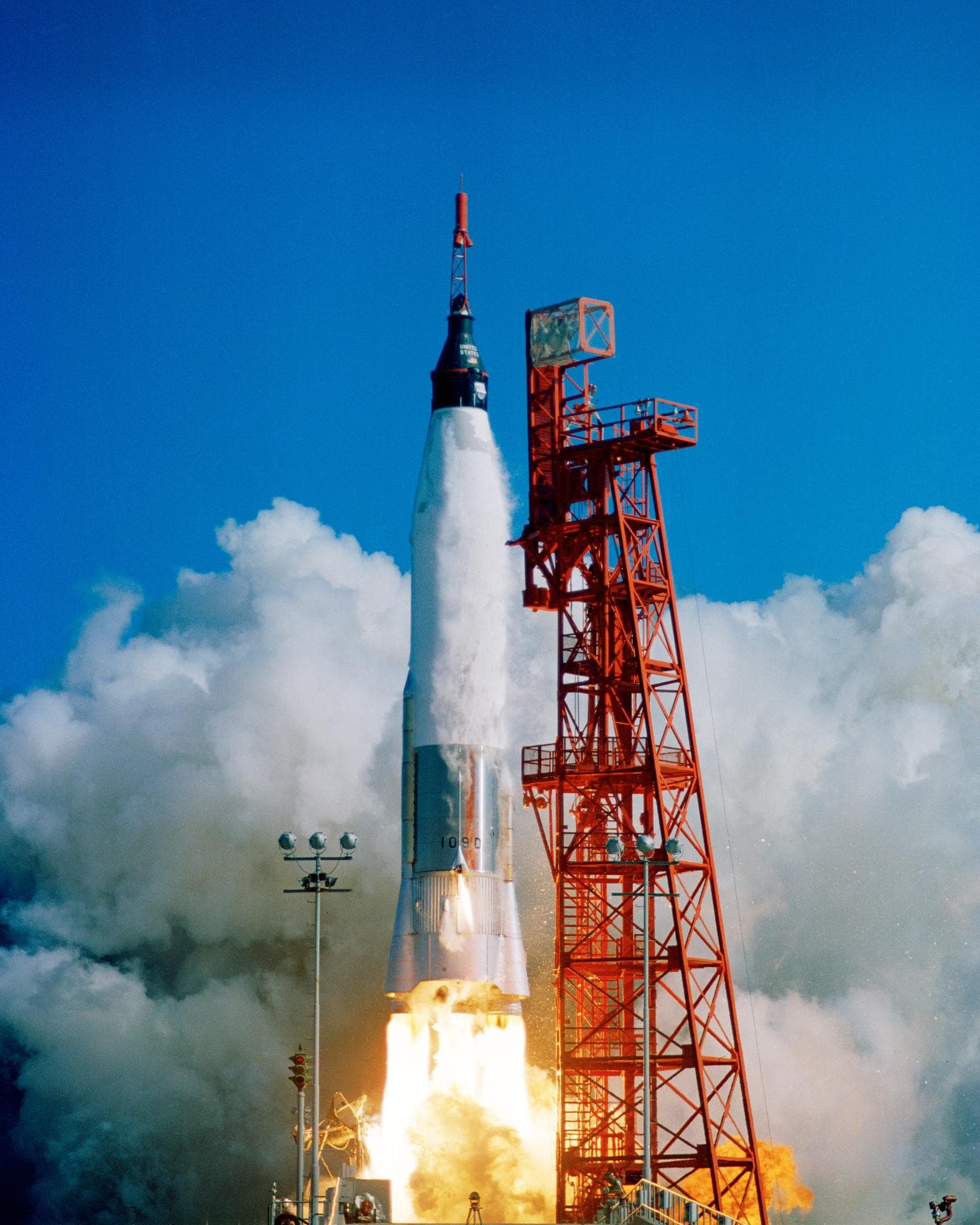
 Launch Vehicle
Mercury-Redstone
A modified Redstone ballistic missile used to launch the first two crewed Mercury flights on suborbital trajectories.
 Launch Vehicle
Mercury-Atlas
A modified Atlas D missile with enough power to launch a Mercury capsule into orbit, used for all four American crewed orbital Mercury flights.
 Mercury Capsule
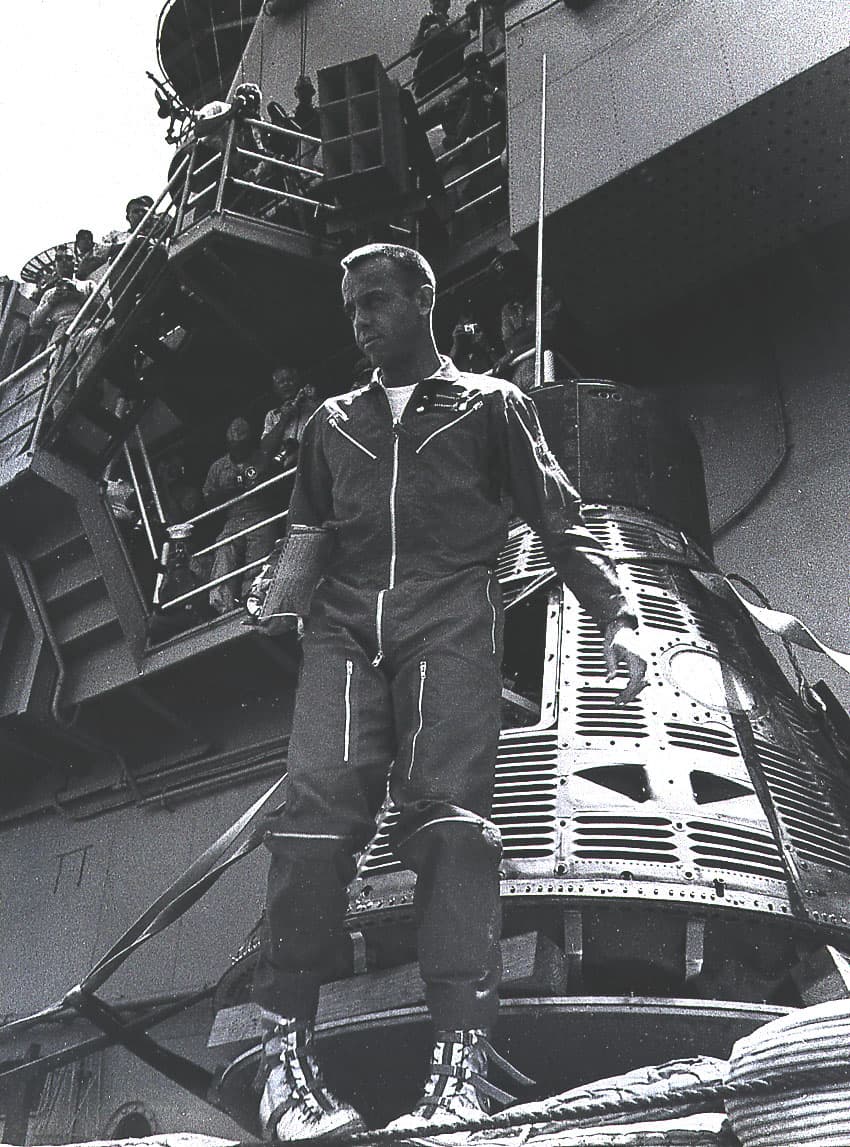
Freedom 7
Freedom 7 carried Alan Shepard on a 15-minute suborbital flight, making him the first American in space.
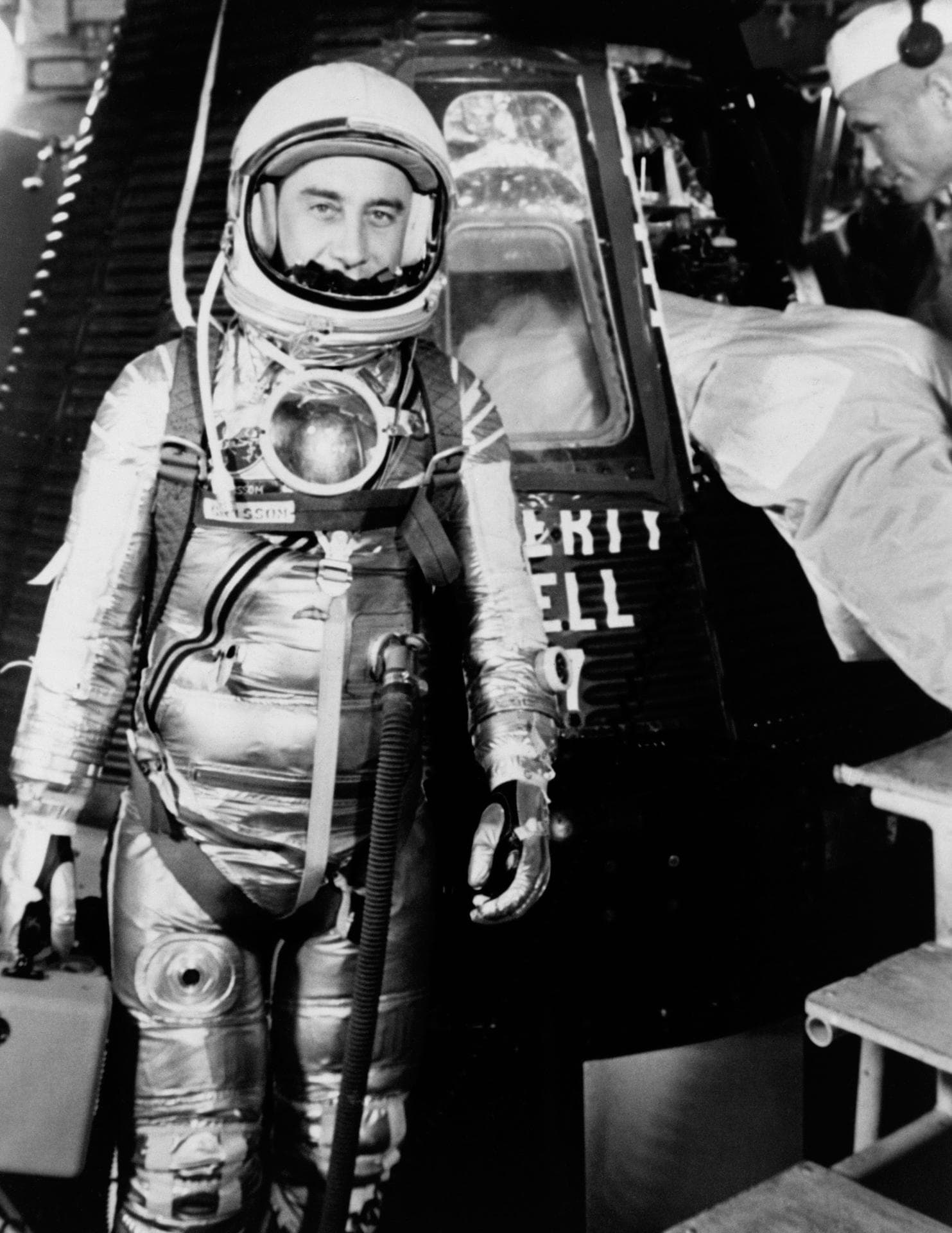 Mercury Capsule
Liberty Bell 7
Liberty Bell 7 carried Gus Grissom on the second American suborbital flight before its hatch blew open after splashdown, sinking the capsule.
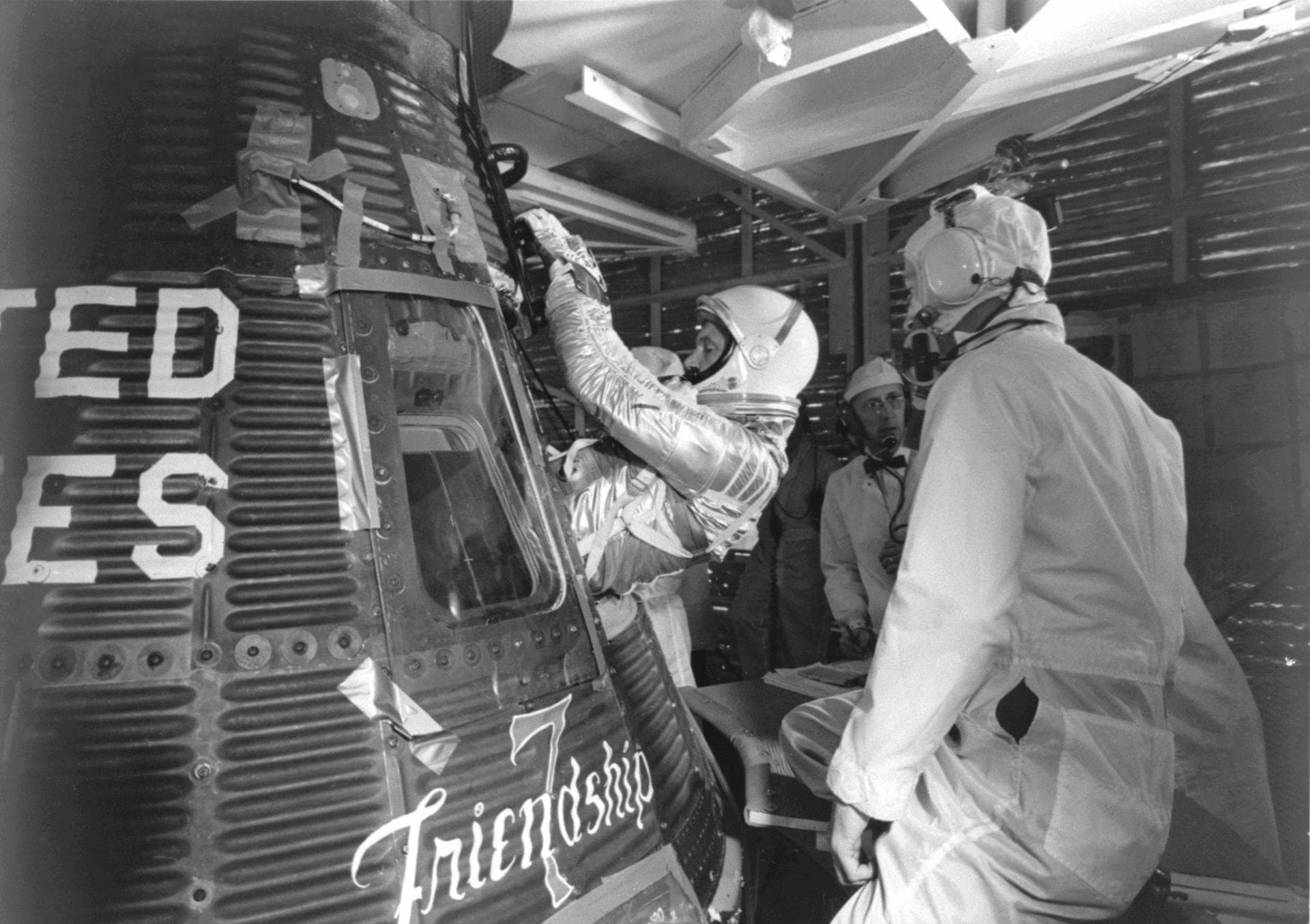 Mercury Capsule
Friendship 7
Friendship 7 carried John Glenn on three orbits of Earth, making him the first American to orbit the planet.
 Mercury Capsule
Aurora 7
Aurora 7 carried Scott Carpenter on three orbits of Earth before a fuel shortage caused a long-distance splashdown overshoot.
 Mercury Capsule
Sigma 7
Sigma 7 carried Wally Schirra on a near-flawless six-orbit flight focused on spacecraft engineering performance.
 Mercury Capsule
Faith 7
Faith 7 carried Gordon Cooper on 22 orbits of Earth, the longest and final flight of Project Mercury.
NASA Photography
Program Images
Archive photography connected to the Project Mercury program.
Mercury
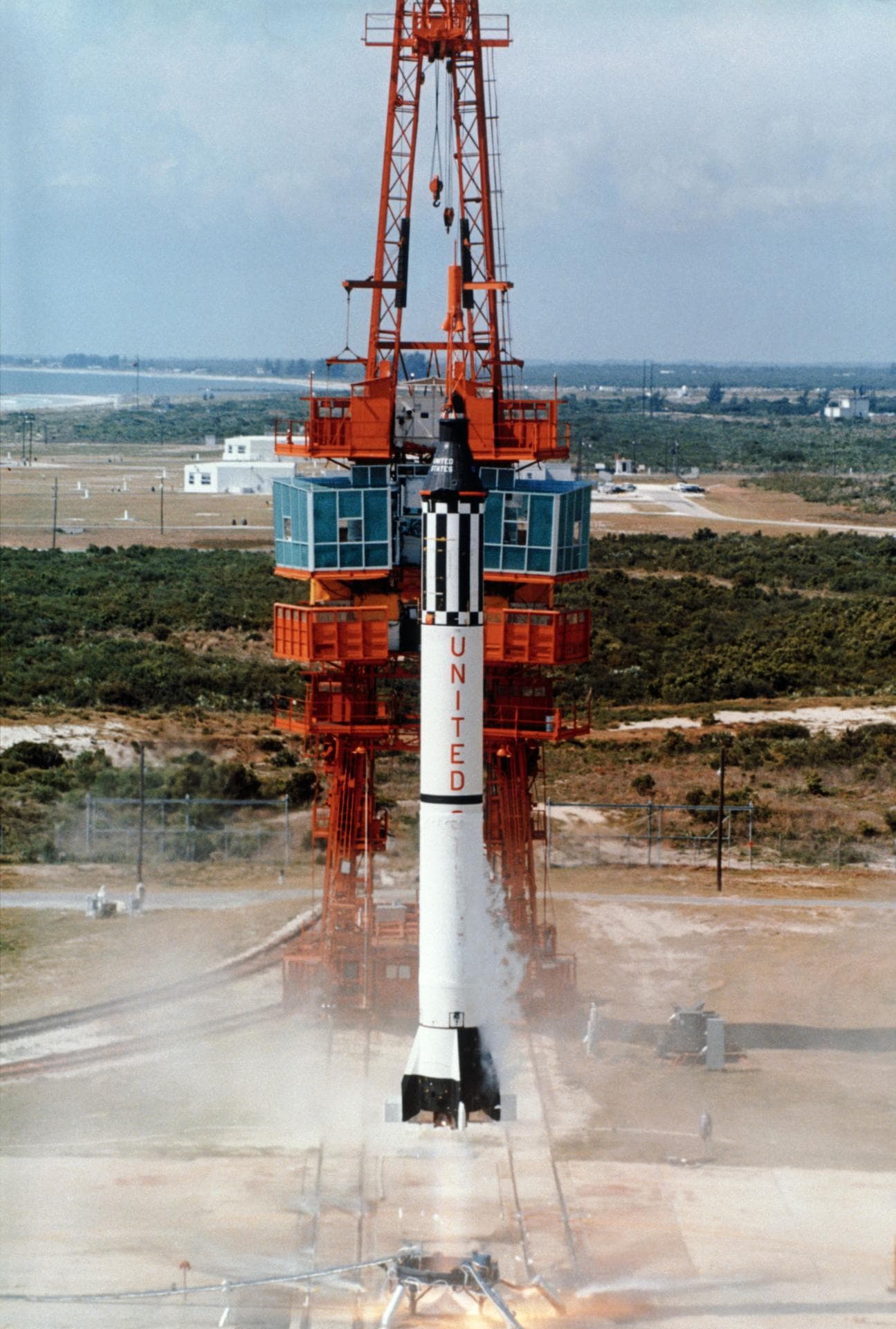
Liftoff of Freedom 7
NASA ID: S61-01928
Freedom 7 lifts off from Cape Canaveral atop a Mercury-Redstone rocket, carrying Alan Shepard on the fifteen-minute suborbital flight that made him the first American in space. The mission came just three weeks after Soviet cosmonaut Yuri Gagarin's orbital flight, and its success gave NASA the confidence to commit to landing astronauts on the Moon. Shepard's capsule reached an altitude of about 116 miles before splashing down in the Atlantic Ocean, where it was recovered by the Navy.
View Image →
Mercury
Liftoff of Liberty Bell 7
NASA ID: 6414824
Liberty Bell 7 lifts off from Cape Canaveral, carrying Gus Grissom on the second American suborbital spaceflight, a near-repeat of Alan Shepard's Freedom 7 mission two months earlier. After a smooth fifteen-minute flight, the capsule's hatch blew open prematurely during splashdown, flooding the cabin and forcing Grissom to swim to safety as Liberty Bell 7 sank to the ocean floor. The capsule was not recovered until 1999, when an expedition raised it from nearly three miles beneath the Atlantic.
View Image →
Mercury
Launch of Friendship 7
NASA ID: KSC-62PC-0011
Friendship 7 launches from Cape Canaveral atop a Mercury-Atlas rocket, carrying John Glenn on the flight that made him the first American to orbit Earth. Glenn circled the planet three times in just under five hours, and a sensor warning during the flight raised fears that the capsule's heat shield had come loose, prompting mission control to leave the retrorocket pack attached during reentry as a precaution. Glenn returned home a national hero and later flew again on the Space Shuttle in 1998.
View Image →
Mercury
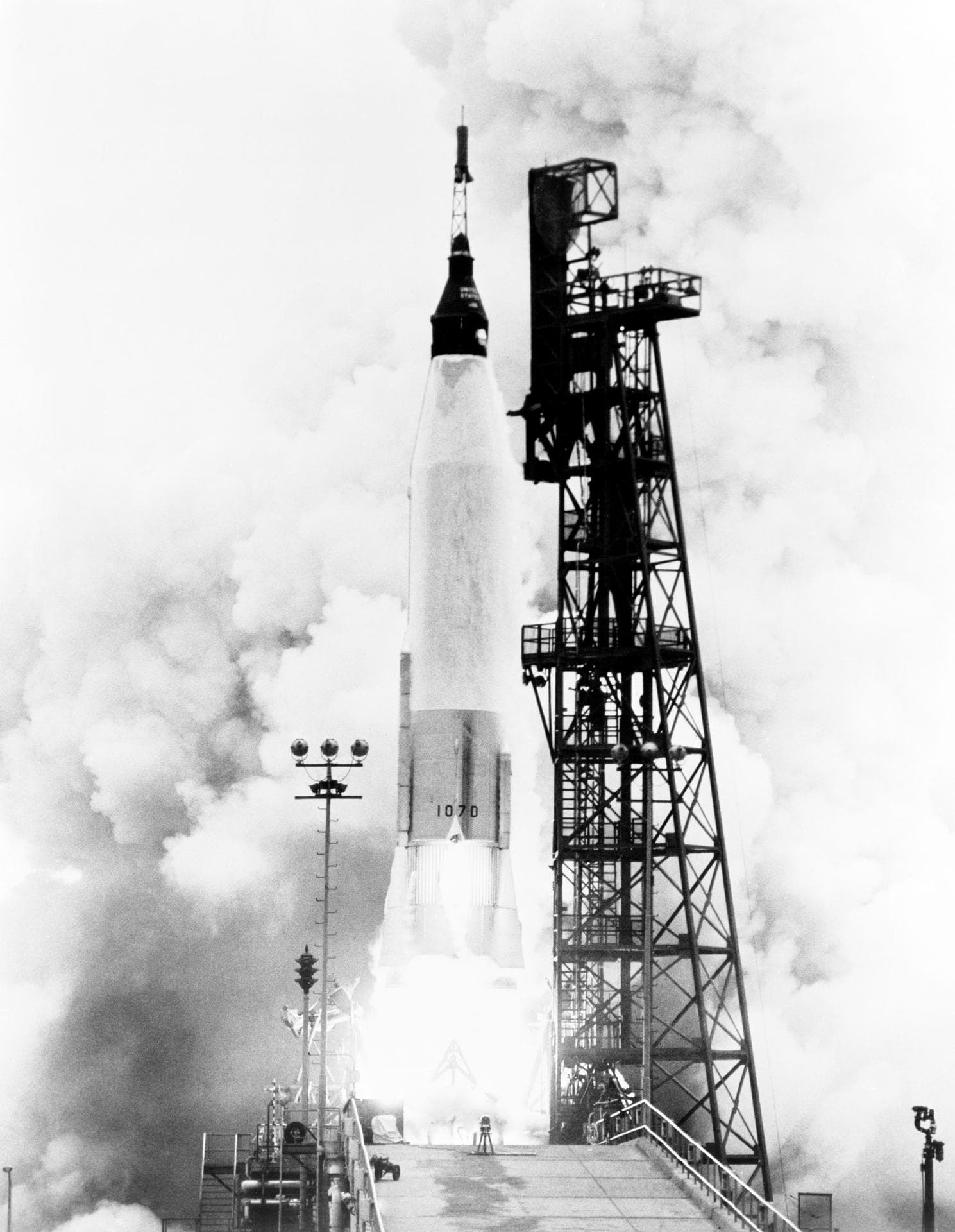
Liftoff of Aurora 7
NASA ID: S62-02849
Aurora 7 lifts off from Cape Canaveral, carrying Scott Carpenter on a three-orbit flight that closely repeated John Glenn's mission three months earlier. A series of piloting errors and fuel shortages left Carpenter unable to fire his retrorockets at the planned moment, and the capsule splashed down about 250 miles off target, leaving recovery forces searching for nearly an hour before locating Carpenter safe in his life raft.
View Image →
Mercury
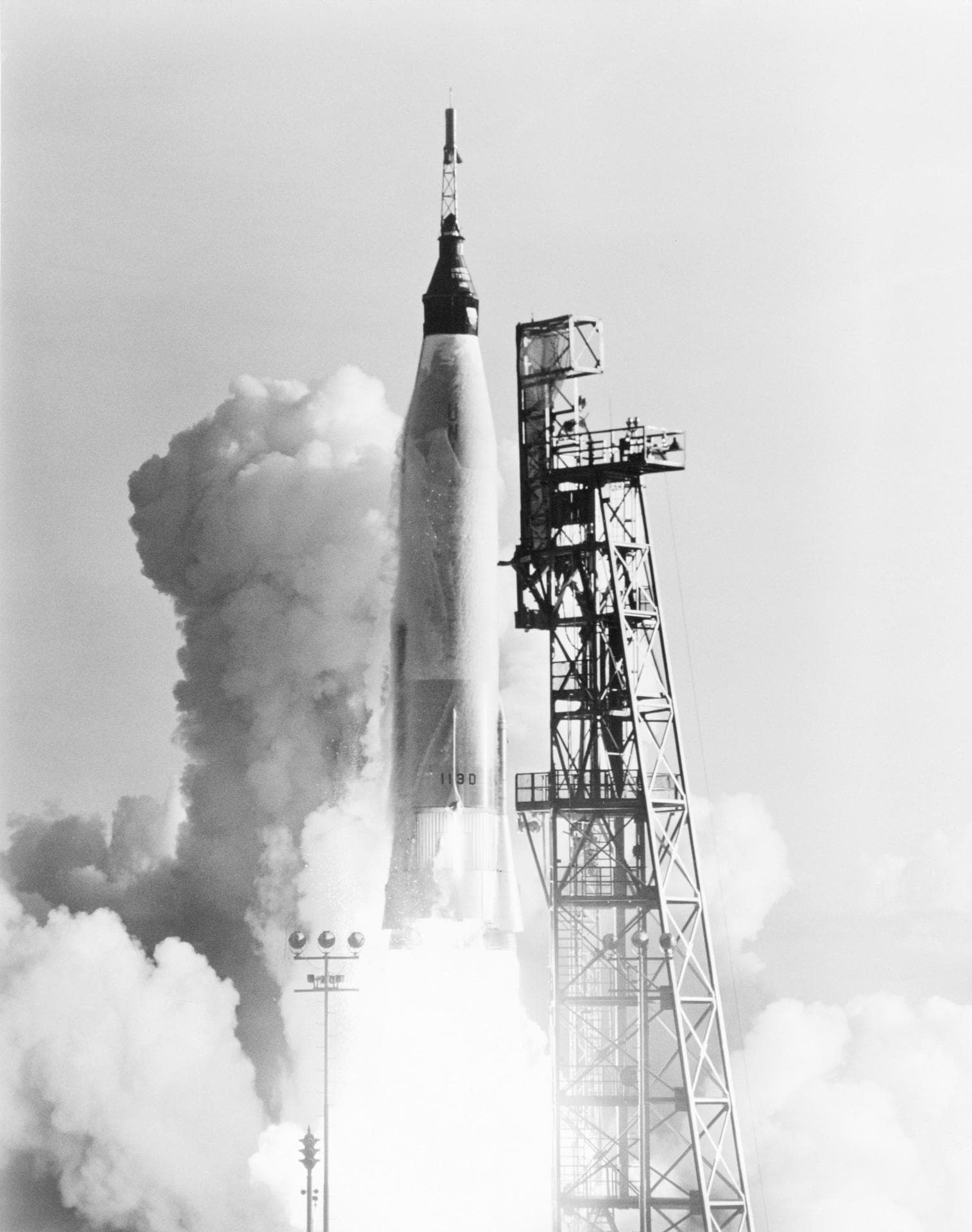
Liftoff of Sigma 7
NASA ID: S62-06006
Sigma 7 lifts off carrying Wally Schirra on a near-flawless six-orbit engineering test flight designed to evaluate the Mercury spacecraft's systems under a full day-long mission profile. Schirra deliberately conserved fuel and let the capsule drift for long stretches, demonstrating techniques essential for longer missions, and splashed down within five miles of the recovery ship — the most accurate landing of the Mercury program to that point.
View Image →
Mercury
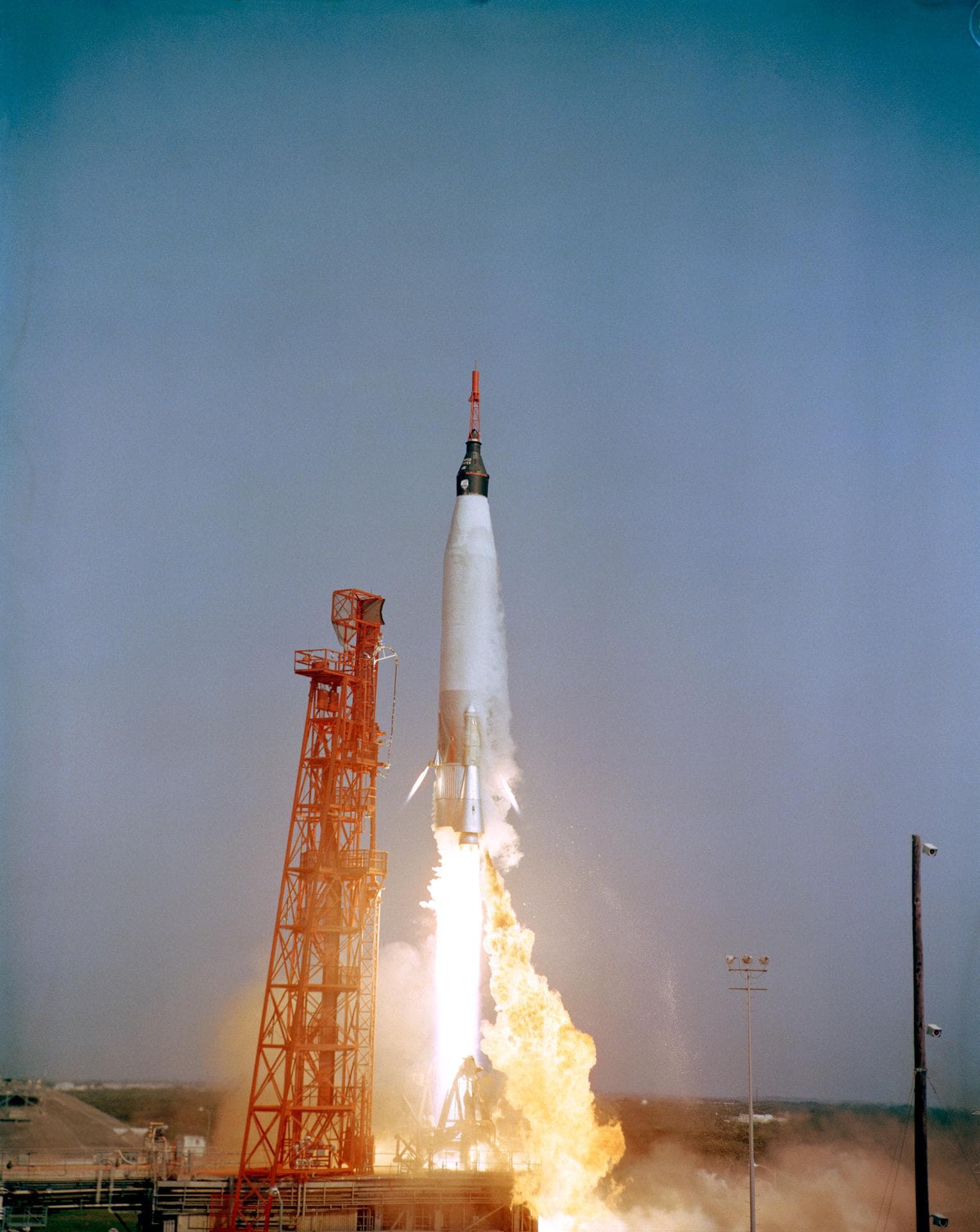
Liftoff of Faith 7
NASA ID: S63-07603
Faith 7 lifts off carrying Gordon Cooper on the final and longest flight of Project Mercury, a thirty-four-hour mission spanning twenty-two orbits of Earth. A series of electrical failures late in the flight knocked out the automatic control system, forcing Cooper to fly a manual reentry using a checklist and his own calculations — proof that astronauts could safely fly a spacecraft by hand if its systems failed.
View Image →
Mercury
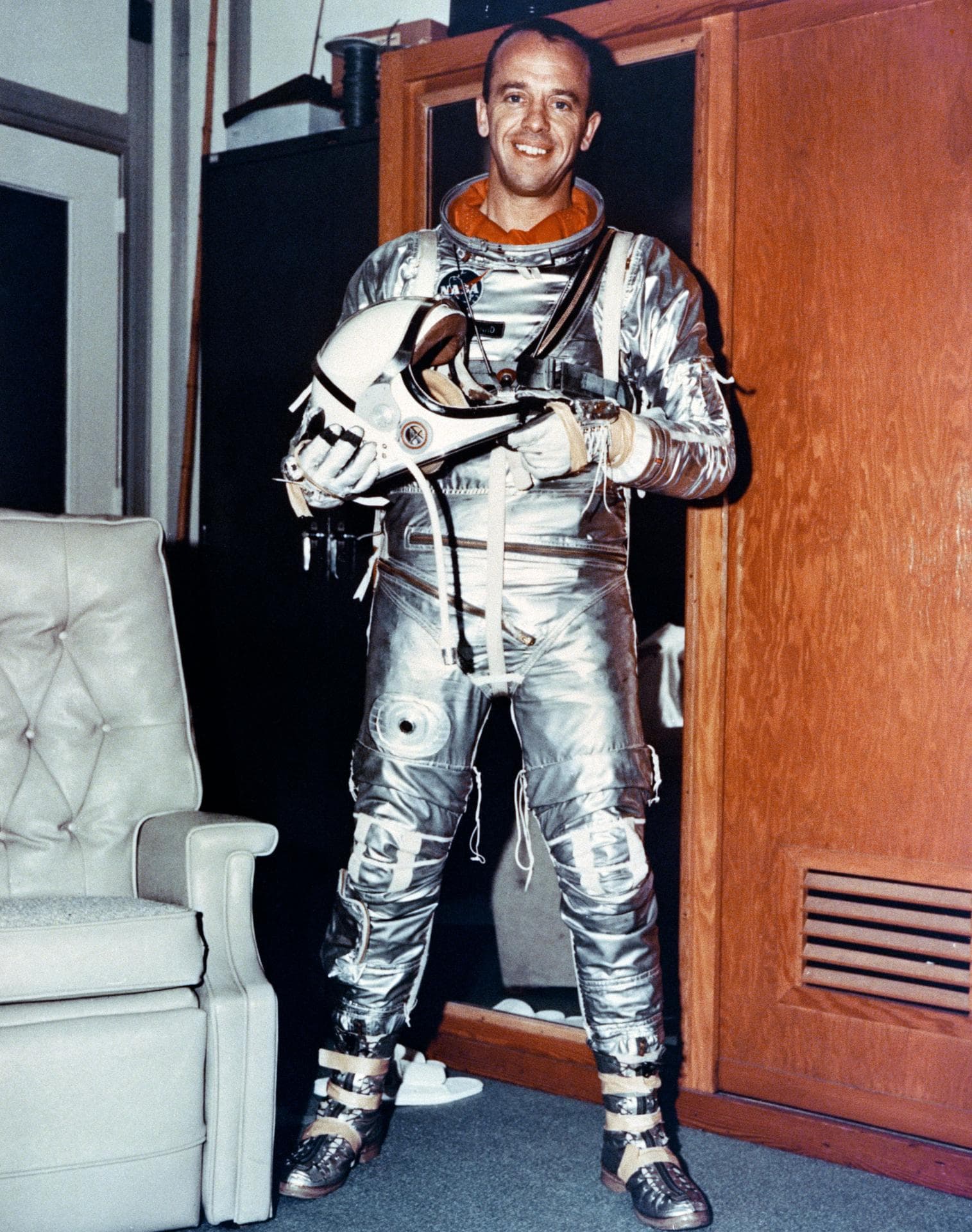
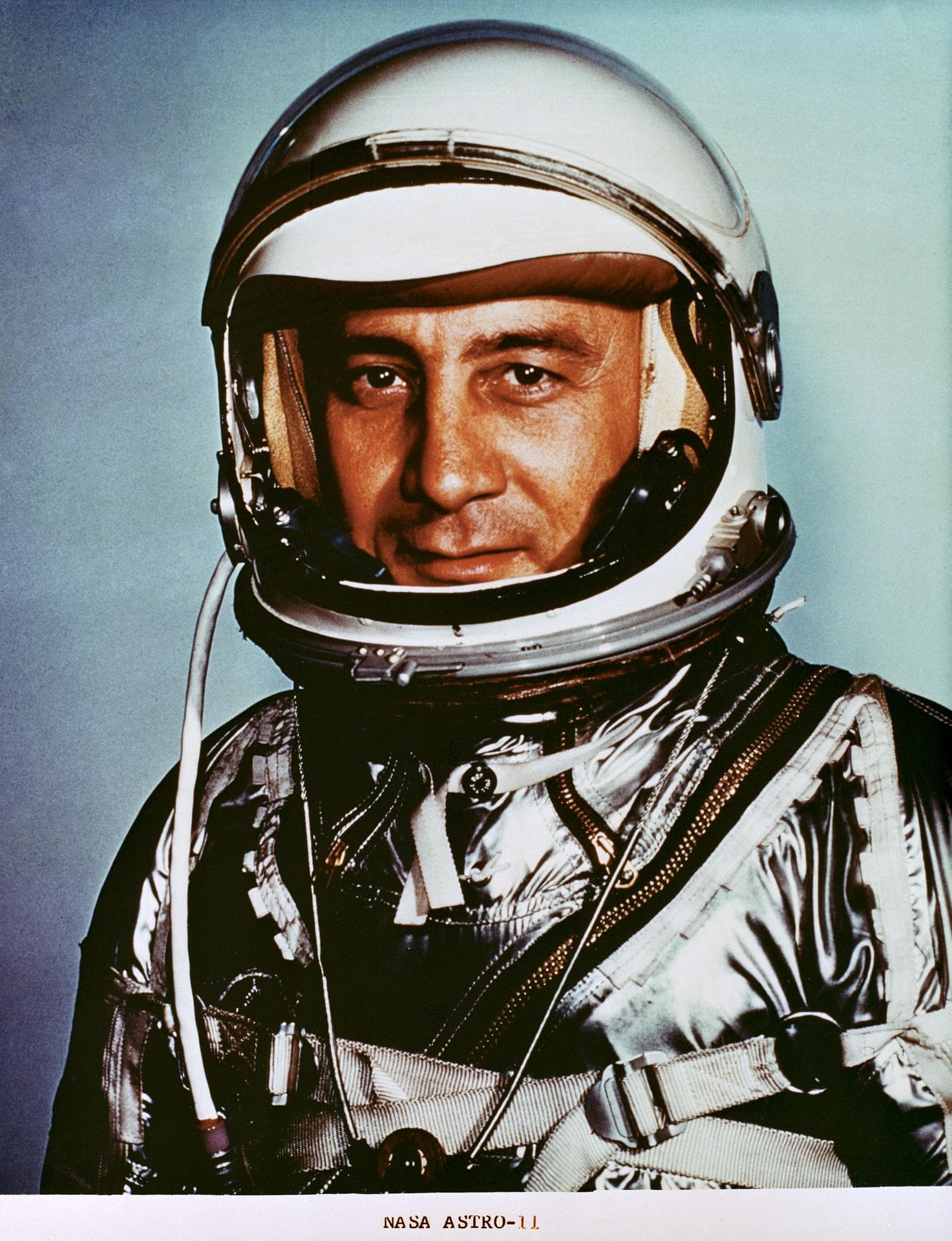
Official Portrait of Alan Shepard
NASA ID: s63-02082
Astronaut Alan B. Shepard Jr., attired in his Mercury pressure suit, ahead of the Freedom 7 mission that made him the first American in space in 1961. Grounded for several years by an inner-ear disorder, Shepard later returned to flight status after surgery and commanded Apollo 14 in 1971, becoming the fifth person to walk on the Moon and the only Mercury astronaut to do so.
View Image →
Mercury
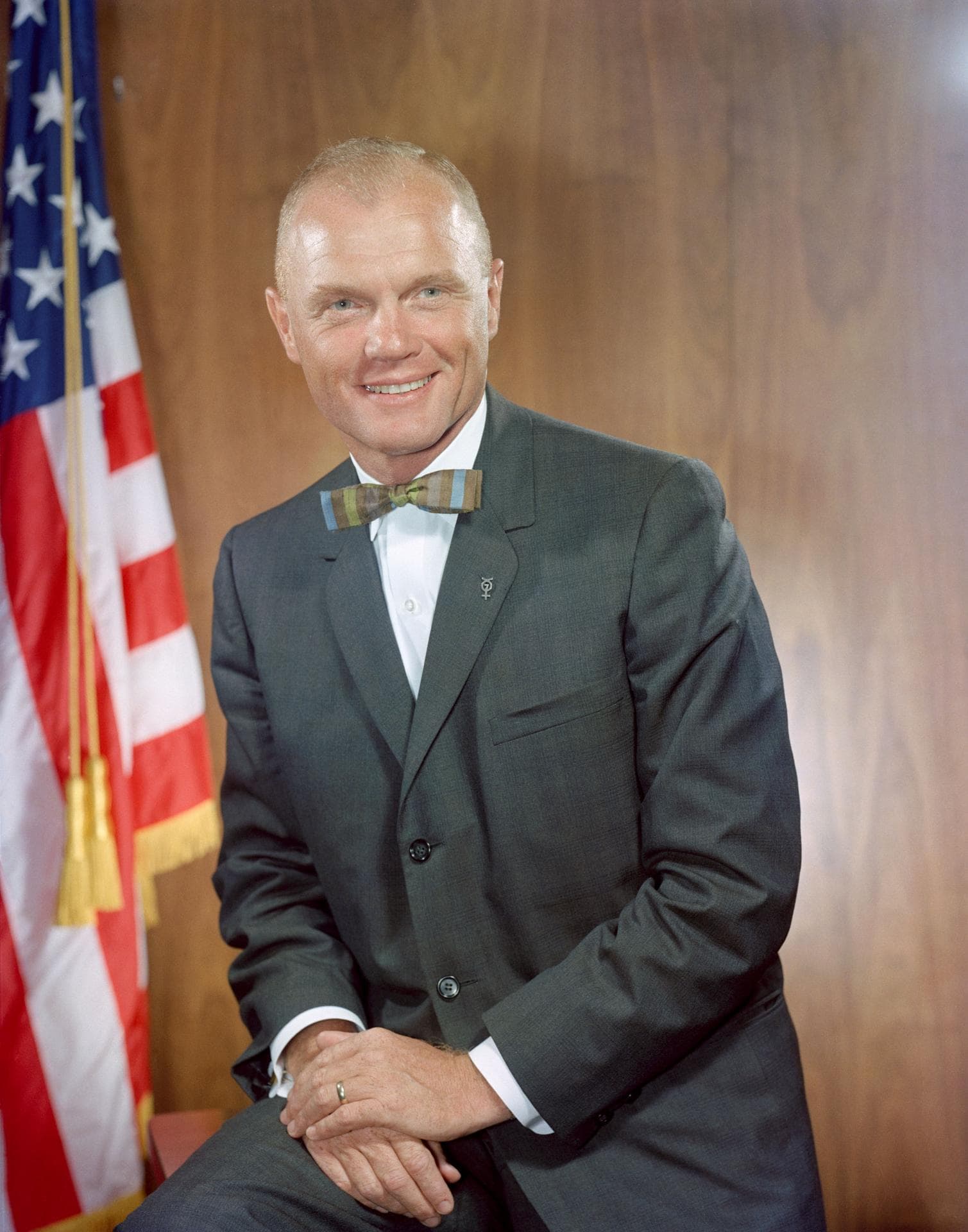
Official Portrait of Gus Grissom
NASA ID: S88-55873
Astronaut Virgil I. Grissom in his Mercury pressure suit, ahead of the Liberty Bell 7 mission that made him the second American in space. Grissom went on to command the first crewed Gemini flight in 1965, but was killed two years later alongside Ed White and Roger Chaffee in the Apollo 1 fire during a launch pad test.
View Image →
Mercury
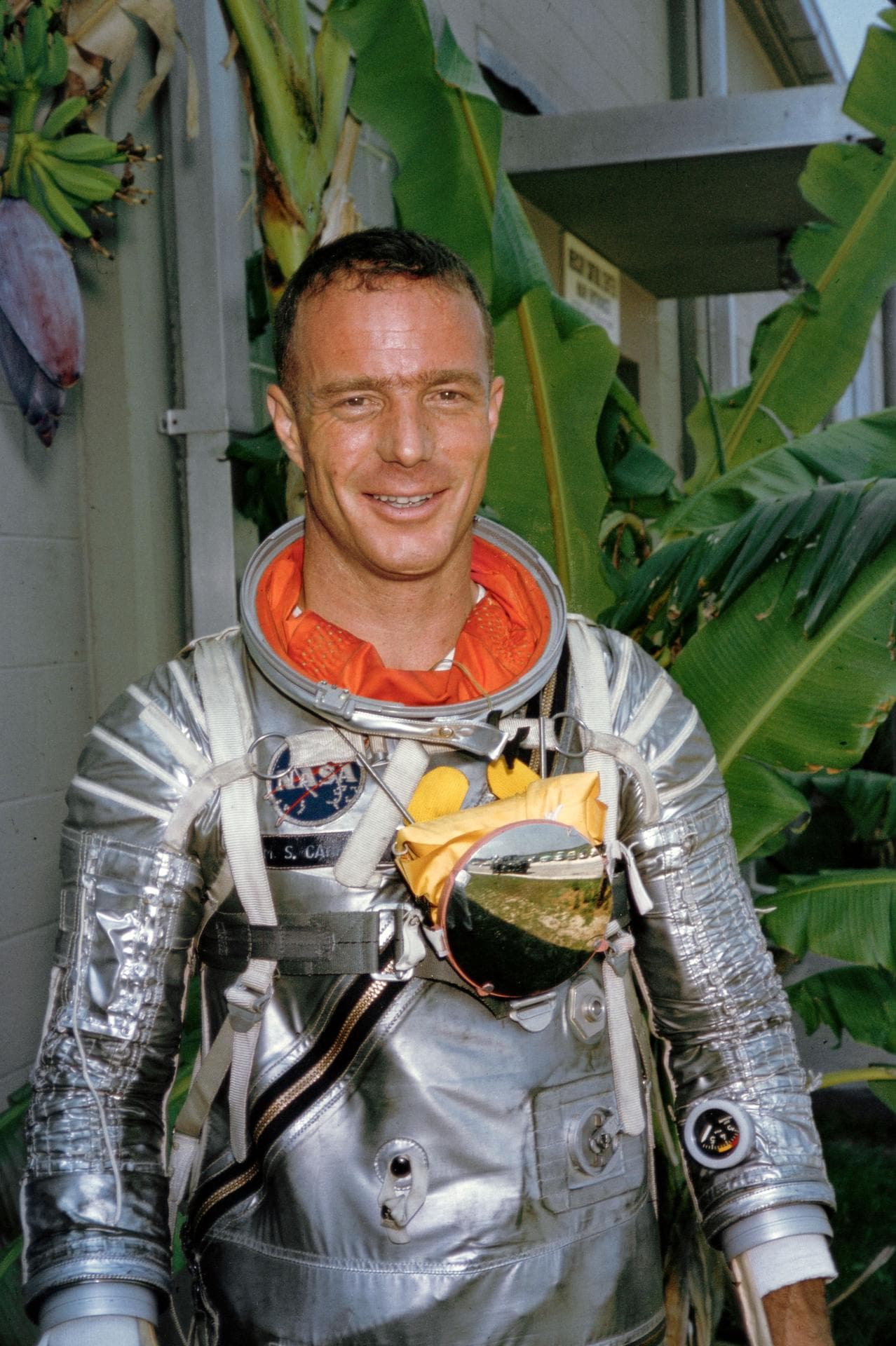
Official Portrait of John Glenn
NASA ID: S62-05540
Official portrait of astronaut John H. Glenn Jr., the first American to orbit Earth. After leaving NASA, Glenn served as a U.S. senator from Ohio for 24 years, then returned to space in 1998 aboard Space Shuttle Discovery at age 77, becoming the oldest person ever to fly in space.
View Image →
Mercury
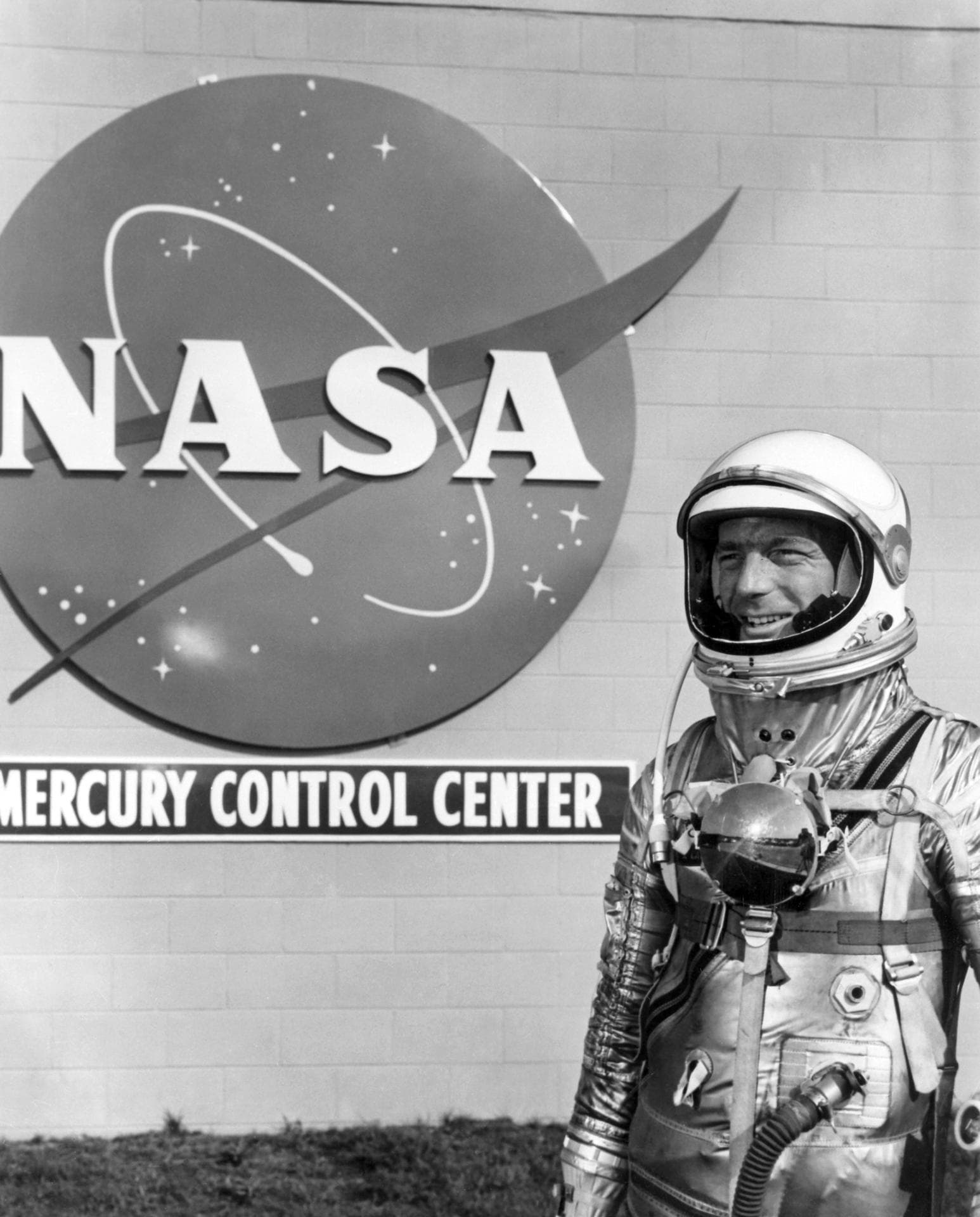
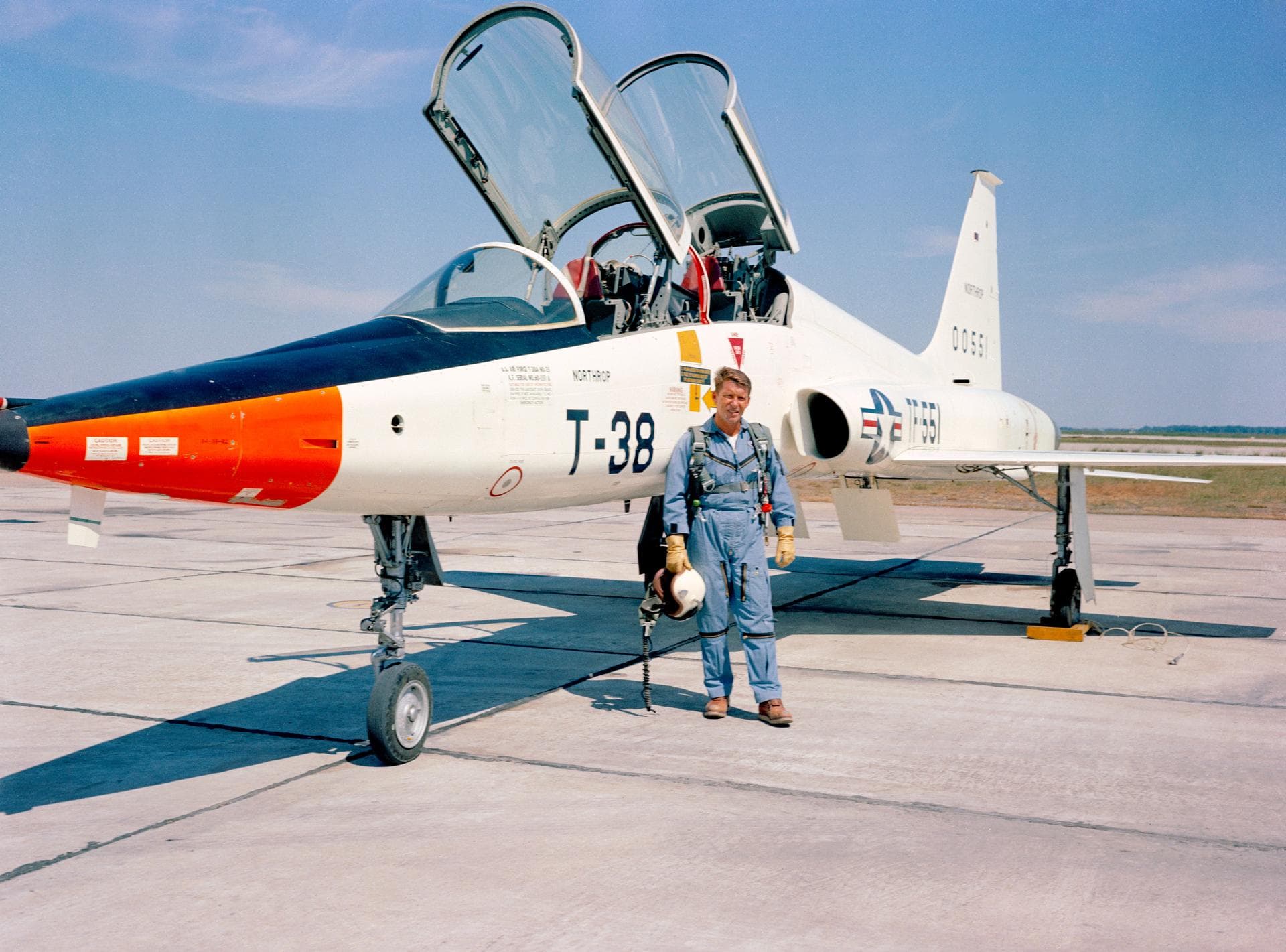
Scott Carpenter in Mercury Pressure Suit
NASA ID: s64-36908
Portrait of astronaut M. Scott Carpenter wearing his Mercury pressure suit ahead of his Aurora 7 flight, the second American orbital mission. Carpenter left NASA in 1967 to join the Navy's SEALAB program as an aquanaut, becoming the only person to have both orbited Earth and lived and worked on the ocean floor.
View Image →
Mercury
Astronaut Walter M. Schirra Jr.
NASA ID: s63-18249
Astronaut Walter M. Schirra Jr. standing beside a T-38 training jet. Schirra flew Sigma 7 during Project Mercury, commanded Gemini 6A during history's first space rendezvous, and later commanded Apollo 7, becoming the only astronaut to fly missions in all three of NASA's first human spaceflight programs.
View Image →
Mercury
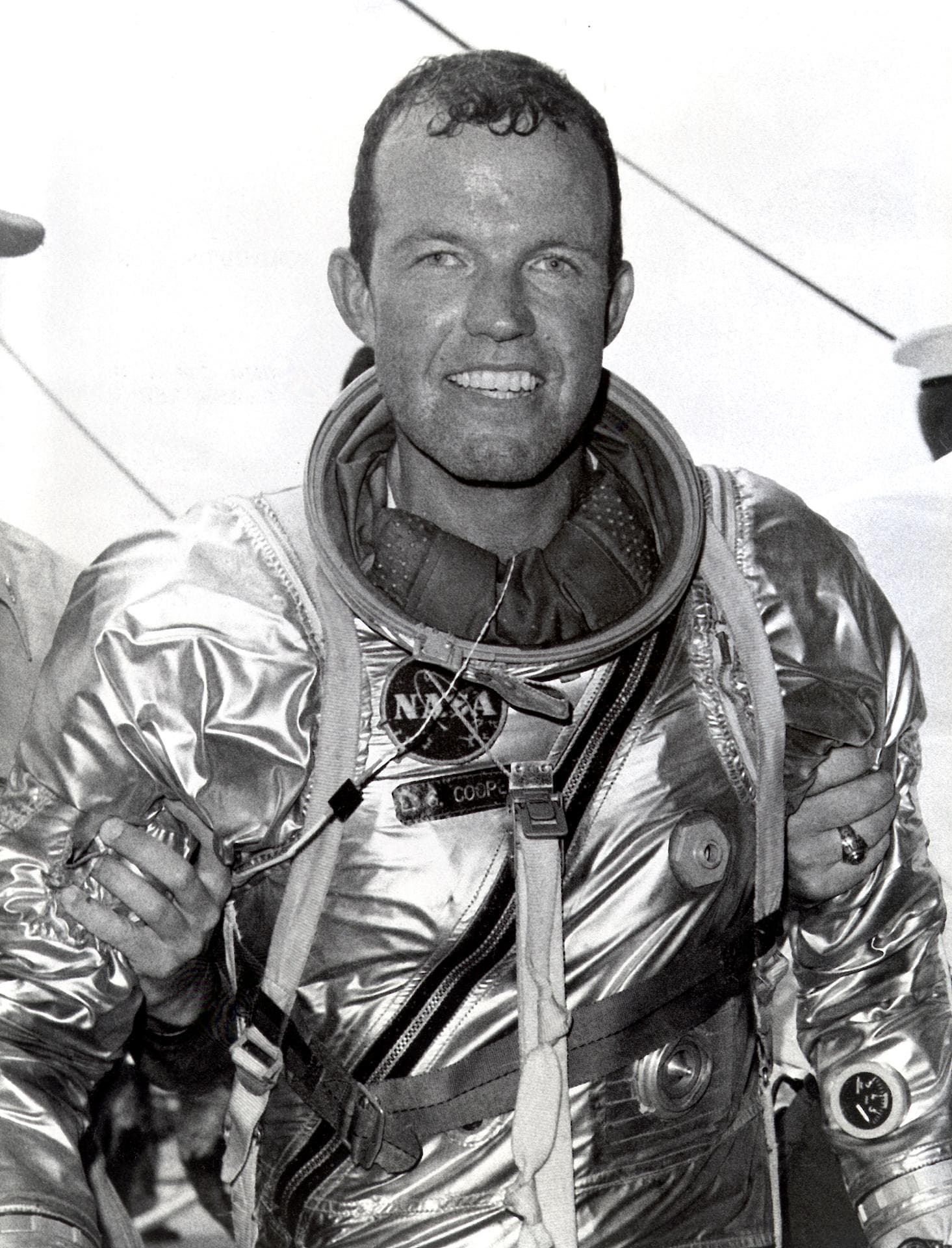
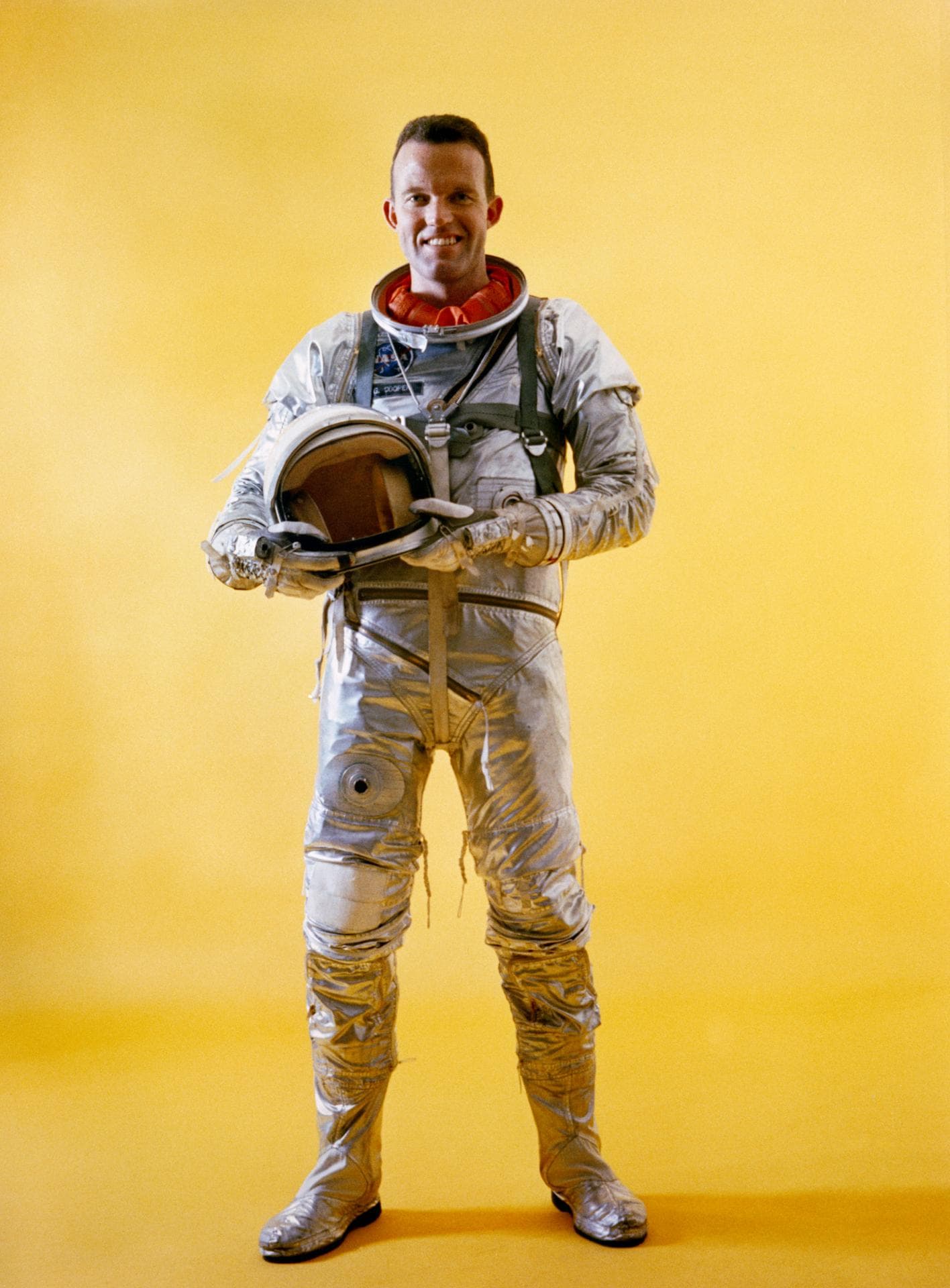
Full-Length Portrait of Gordon Cooper
NASA ID: S63-01755
Full-length portrait of Mercury astronaut L. Gordon Cooper Jr. in his spacesuit. Cooper flew the final and longest mission of Project Mercury aboard Faith 7 in 1963, then commanded Gemini 5 two years later on an eight-day endurance flight that tested how long astronauts could safely live in space.
View Image →
Mercury
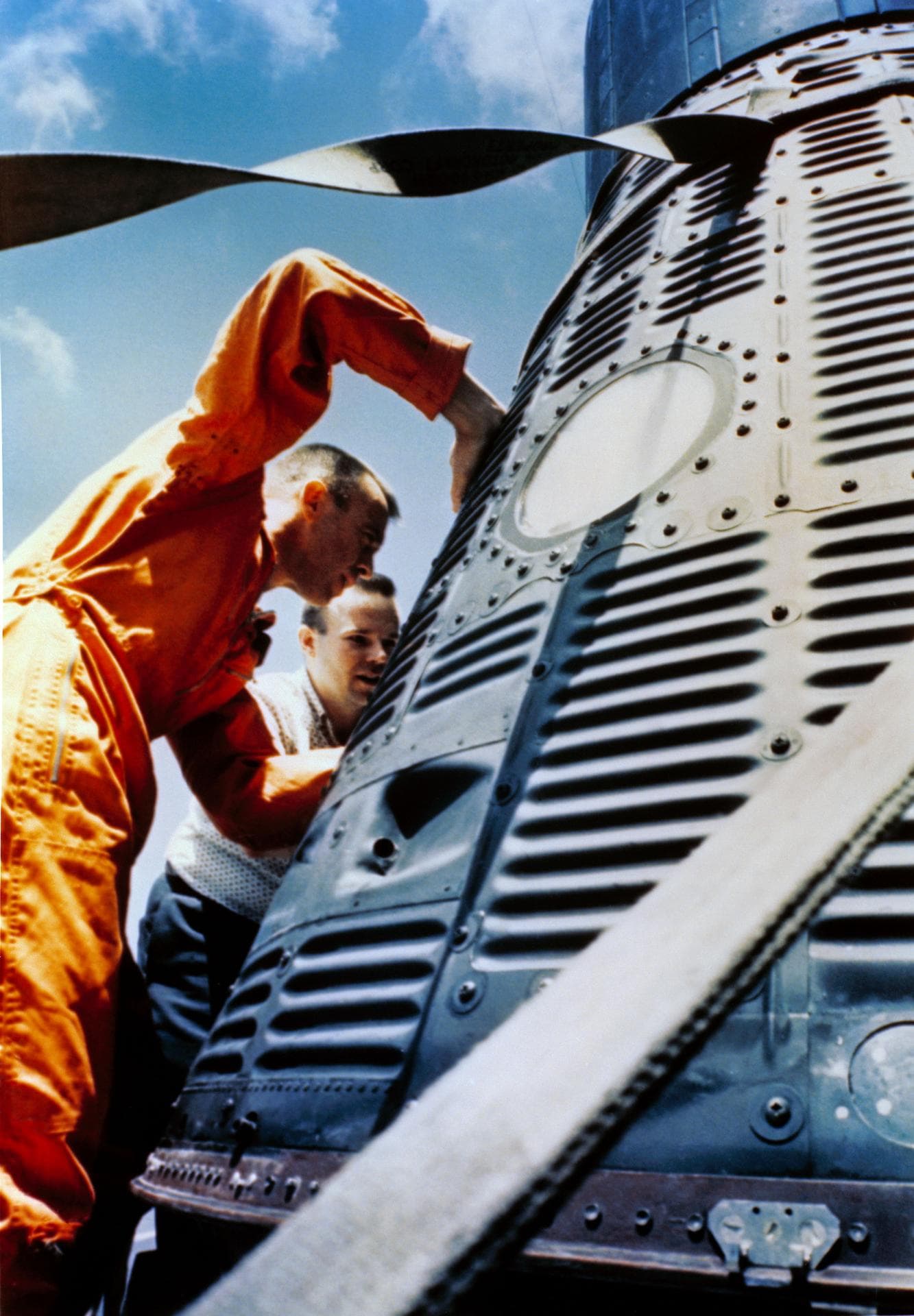
Alan Shepard Inspects Freedom 7 After Recovery
NASA ID: S88-31384
Astronaut Alan Shepard inspects his Freedom 7 capsule aboard the USS Champlain shortly after recovery. The bell-shaped Mercury spacecraft carried a single astronaut in a tightly fitted couch with barely enough room to move, and Freedom 7 is now preserved and on public display at the John F. Kennedy Presidential Library and Museum in Boston.
View Image →