Mercury
Liberty Bell 7
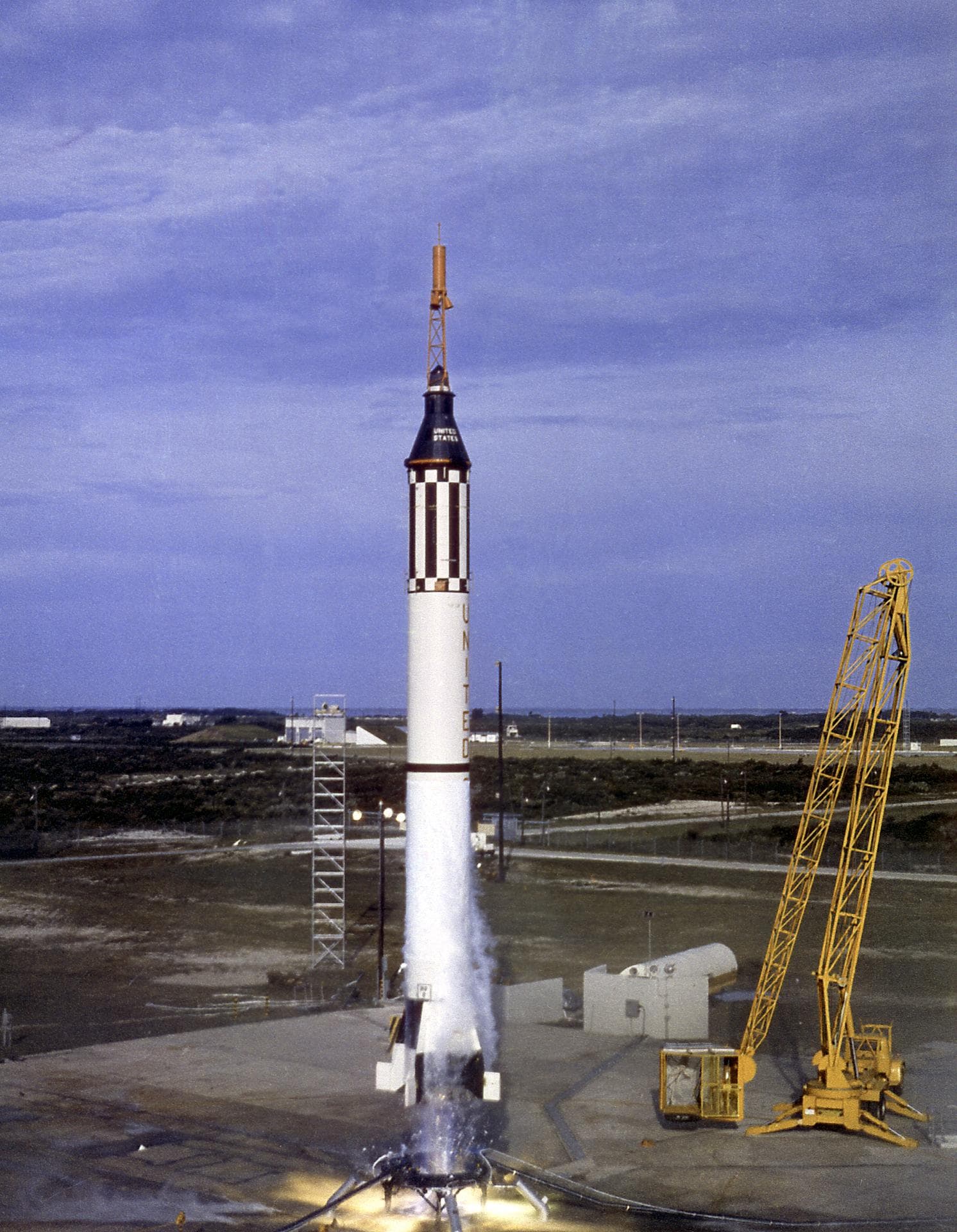
Liberty Bell 7 made Gus Grissom the second American in space on a suborbital flight nearly identical to Freedom 7, but the mission became famous for a dramatic near-disaster after splashdown when the capsule's hatch blew open prematurely and the spacecraft sank.
Launch
July 21, 1961
Duration
15 minutes, 37 seconds
Crew
1 astronaut
Mission record
Mercury archive entry · Successful
Mission Overview
The mission
Liberty Bell 7 made Gus Grissom the second American in space on a suborbital flight nearly identical to Freedom 7, but the mission became famous for a dramatic near-disaster after splashdown when the capsule's hatch blew open prematurely and the spacecraft sank.
In Depth
The Full Story
Liberty Bell 7 repeated the suborbital flight profile that had carried Alan Shepard into space two and a half months earlier, this time with Gus Grissom at the controls. Launched from Cape Canaveral on July 21, 1961, the mission followed the same ballistic arc as Freedom 7, reaching a peak altitude of over 118 miles and giving Grissom a similar window of weightlessness before a fiery reentry and parachute descent into the Atlantic.
The flight itself went almost exactly as planned. Grissom successfully tested manual control of the spacecraft and executed the mission's technical objectives without significant incident. It was what happened after splashdown that turned Liberty Bell 7 into one of the most talked-about flights of the early space program.
Moments after the capsule settled into the ocean, the explosive hatch blew open unexpectedly. Seawater rushed into the cabin, and Grissom had to scramble out into the ocean as the capsule began taking on water and losing buoyancy. His spacesuit, designed to be watertight, began filling with water through an open oxygen inlet valve he had left unlatched for ventilation, dragging him down and turning what should have been a routine swim into a genuine fight to stay afloat.
A recovery helicopter attempted to hook and lift the flooding capsule but could not overcome its rapidly increasing weight, and the pilots were forced to release it to avoid crashing into the ocean themselves. Liberty Bell 7 sank in roughly 15,000 feet of water while a second helicopter pulled an exhausted Grissom from the sea. He survived without serious injury, but questions about what caused the hatch to blow, and whether Grissom had activated it himself, followed him for years.
Mission Details
Official Designation
Mercury-Redstone 4 (MR-4)
Mission Type
Second American Crewed Spaceflight
Launch Date
July 21, 1961
Mission Duration
15 minutes, 37 seconds
Pilot
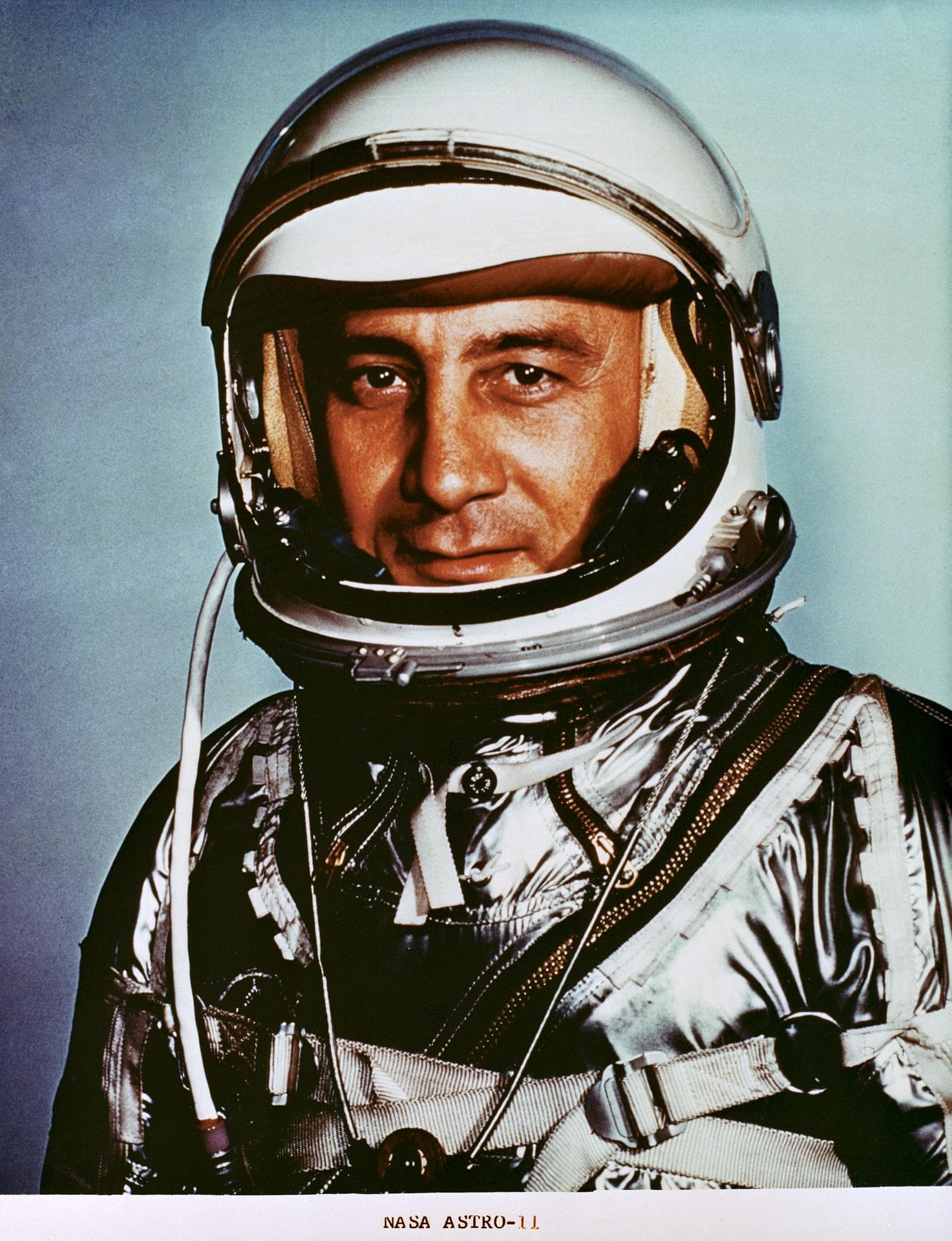
Virgil I. 'Gus' Grissom
Spacecraft
Mercury Capsule 11 'Liberty Bell 7'
Launch Vehicle
Redstone
Launch Site
Launch Complex 5, Cape Canaveral
Flight Profile
Suborbital
Peak Altitude
118.3 statute miles (190.3 km)
Splashdown
Atlantic Ocean, 302 miles downrange
Recovery Ship
USS Randolph
Post-Flight Incident
Hatch blew prematurely; capsule sank
Capsule Recovery
Raised from ocean floor in 1999
Mission Result
Successful (crewed flight objectives)
Mission by the Numbers
Mission Statistics
Mission Type
Second American Crewed Spaceflight
Launch Vehicle
Mercury-Redstone 4
Crew
1 astronauts
Status
Successful
The People Behind the Mission
Crew
The astronauts assigned to command, operate, and carry out the mission.
Mission Goals
Mission objectives
- 01
Repeat the suborbital flight profile validated by Freedom 7 with a second pilot.
- 02
Evaluate an astronaut's ability to manually control the Mercury spacecraft.
- 03
Test an improved centrifuge window and explosive hatch mechanism.
- 04
Continue building operational experience with launch, flight, and recovery procedures.
- 05
Study astronaut physiological responses across a second crewed flight.
- 06
Demonstrate reliable recovery of spacecraft and pilot at sea.
Fascinating Details
Did You Know?
Key did you know? recorded for this mission.
Liberty Bell 7 was the only Mercury capsule to have a triangular window added, giving Grissom a wider view than Shepard had on Freedom 7.
The capsule's explosive hatch used 70 small explosive charges around its edge, designed to blow outward in an emergency egress.
Investigators never conclusively determined why the hatch fired; Grissom insisted for the rest of his life that he never activated it.
Grissom's spacesuit began filling with water through an oxygen inlet valve he had left open for ventilation, nearly causing him to drown.
The rescue helicopter pilot later said the flooding capsule became so heavy it threatened to pull his own aircraft into the ocean.
Liberty Bell 7 rested in roughly 15,000 feet of water for 38 years before being recovered in 1999.
After conservation, Liberty Bell 7 went on public display at the Cosmosphere in Hutchinson, Kansas.
Grissom went on to command Gemini 3 in 1965 and was selected to command Apollo 1 before his death in the 1967 launch pad fire.
Mission Timeline
July 21, 1961 · 7:20 a.m. EST
Launch
Mercury-Redstone 4 lifted off from Launch Complex 5 at Cape Canaveral, carrying Gus Grissom aboard Liberty Bell 7 on a suborbital flight.
Peak of Flight
Weightlessness and Peak Altitude
Grissom experienced several minutes of weightlessness as the capsule reached a peak altitude of roughly 118 miles, testing manual attitude control along the way.
Reentry
Reentry and Parachute Descent
Liberty Bell 7 reentered the atmosphere and deployed its parachutes for a controlled descent toward the Atlantic Ocean.
July 21, 1961 · 7:36 a.m. EST
Splashdown
Liberty Bell 7 splashed down in the Atlantic Ocean roughly 302 miles downrange from Cape Canaveral after a flight of just over fifteen minutes.
Moments After Splashdown
Hatch Blows Prematurely
The capsule's explosive hatch blew open unexpectedly while Grissom was preparing for recovery, and seawater began rushing into the cabin.
Immediately After
Grissom Escapes Into the Ocean
Grissom scrambled out of the flooding capsule into open water, where his spacesuit began taking on water through an unlatched inlet valve.
Recovery Attempt
Capsule Sinks
A recovery helicopter could not lift the rapidly flooding capsule and was forced to release it; Liberty Bell 7 sank in approximately 15,000 feet of water.
Recovery Attempt
Grissom Rescued
A second helicopter pulled an exhausted Grissom from the ocean after several tense minutes, and he was recovered without serious injury.
1999
Capsule Recovered
An expedition sponsored by the Discovery Channel located and raised Liberty Bell 7 from the ocean floor, 38 years after it sank.
Mission Legacy
Legacy
Liberty Bell 7's flight validated the same suborbital profile Freedom 7 had proven two months earlier, but its dramatic aftermath left a lasting mark on how NASA thought about spacecraft hatch design and crew egress procedures.
The near-loss of Grissom in the ocean underscored how quickly a routine recovery could turn dangerous, and it influenced engineering discussions carried forward into later Mercury, Gemini, and Apollo hatch designs, which prioritized crew safety during both nominal and emergency scenarios.
For Grissom personally, the mission's ending cast an unfair shadow over an otherwise successful flight, with questions about the hatch following him despite no evidence he was at fault. He went on to fly Gemini 3 and was selected to command Apollo 1, cementing his place as one of the most trusted pilots in the astronaut corps before his death in the January 1967 launch pad fire.
The eventual recovery of Liberty Bell 7 in 1999 gave the public a rare chance to see a flown Mercury capsule up close, preserving a physical piece of one of the space program's most dramatic early moments.
Mission Photo Archive
Related Stories
Apollo
The Moon Photos That Still Feel Impossible
Before social media, astronauts brought back images that changed how humanity saw itself forever.
Read Article →
Artemis
Why Artemis Will Change Lunar Exploration
NASA's return to the Moon is designed to become more sustainable, more international, and more ambitious than Apollo.
Read Article →
ISS
Life 250 Miles Above Earth
Inside the daily routine of astronauts living and working aboard the International Space Station.
Read Article →