International Space Station
Zarya Launch
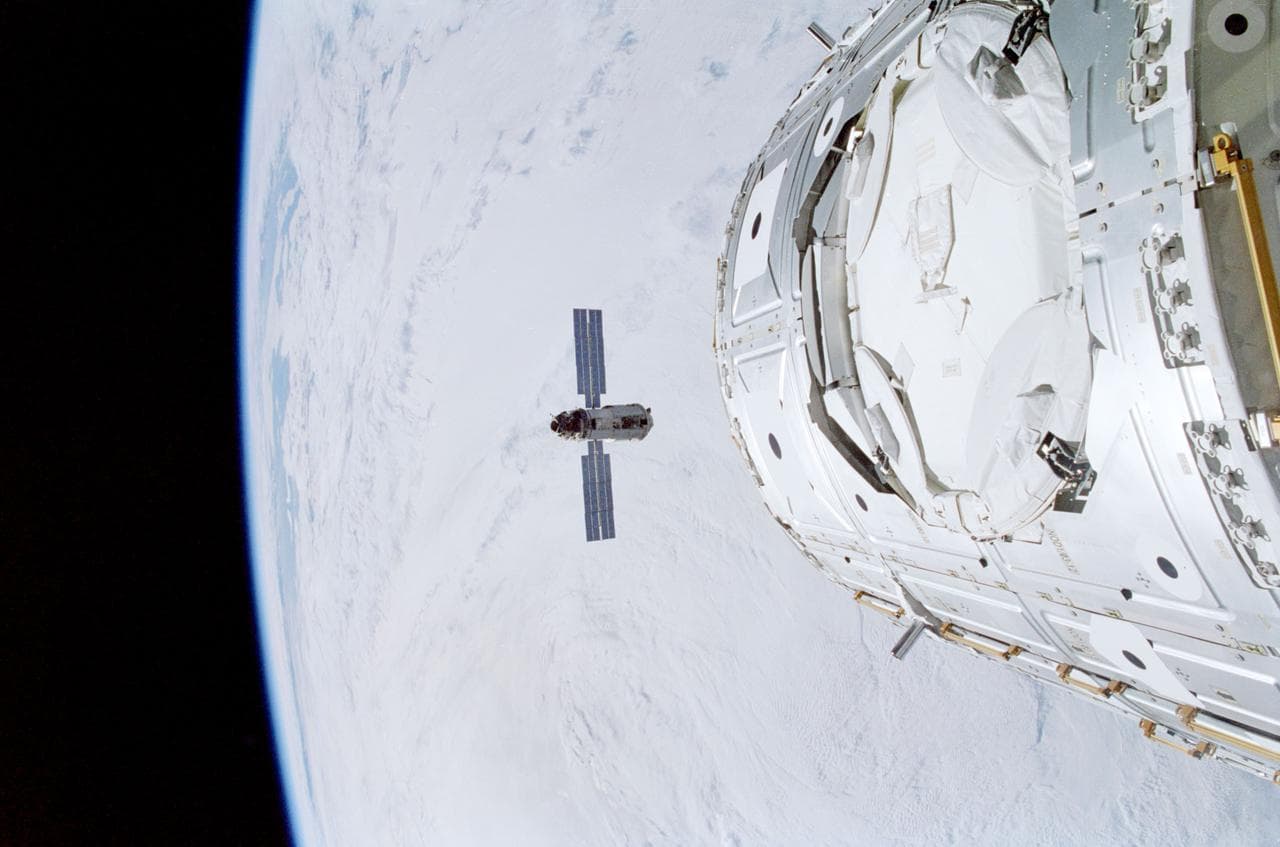
Zarya, a Russian-built, American-funded module, became the first component of the International Space Station launched into orbit, providing the new station's initial power, propulsion, and storage capability.
Launch
November 20, 1998
Duration
Ongoing (module remains in service)
Crew
Uncrewed
Mission record
International Space Station archive entry · Successful
Mission Overview
The mission
Zarya, a Russian-built, American-funded module, became the first component of the International Space Station launched into orbit, providing the new station's initial power, propulsion, and storage capability.
In Depth
The Full Story
The International Space Station began not with astronauts, but with an empty module launched on an uncrewed Russian rocket. Zarya, whose name means "sunrise" in Russian, lifted off from the Baikonur Cosmodrome in Kazakhstan on November 20, 1998, becoming the first piece of hardware in what would grow into the largest structure humans had ever built in space.
Zarya was built by Russia but funded by the United States, an arrangement that reflected the complicated, cooperative origins of the ISS program itself, born out of the Shuttle-Mir partnership of the mid-1990s and a broader post-Cold War effort to bind the American and Russian space programs together. The module carried its own propulsion, power generation, and storage systems, everything a fledgling space station would need to survive on its own before other modules arrived to expand its capabilities.
Two weeks after Zarya reached orbit, Space Shuttle Endeavour launched on STS-88, carrying the American-built Unity module and a crew tasked with joining the two pieces together, the station's first assembly operation. Zarya's early systems, particularly its propulsion, remained essential to the station for years afterward, helping to boost and maintain the growing complex's orbit even after more advanced modules had taken over most of its original functions.
Zarya's launch marked the formal beginning of a continuous international construction project that would take more than a decade to complete, eventually growing into a station larger than a football field, permanently staffed, and involving five space agencies representing more than a dozen countries.
Mission Details
Official Designation
Zarya (DOS-1 / FGB)
Mission Type
First ISS Module Launch
Launch Date
November 20, 1998
Launch Vehicle
Proton-K
Launch Site
Baikonur Cosmodrome, Kazakhstan
Manufacturer
Khrunichev State Research and Production Space Center
Funding
United States (built by Russia)
Crew
Uncrewed launch
Mission Result
Successful
Historic Achievement
First Component of the International Space Station
Mission by the Numbers
Mission Statistics
Mission Type
First ISS Module Launch
Launch Vehicle
Proton-K
Crew
0 astronauts
Status
Successful
Mission Goals
Mission objectives
- 01
Launch the first component of the International Space Station into orbit.
- 02
Provide initial power generation, propulsion, and storage capability for the growing station.
- 03
Establish a stable orbital platform for subsequent module deliveries.
- 04
Demonstrate the technical foundation of the American-Russian ISS partnership.
Fascinating Details
Did You Know?
Key did you know? recorded for this mission.
Zarya means 'sunrise' in Russian, chosen to symbolize the dawn of a new era in international space cooperation.
Although built by Russia, Zarya was funded by the United States as part of the ISS partnership agreement.
Zarya launched fully uncrewed, controlled remotely from the ground until its first crew arrived nearly two years later.
The module's early propulsion systems remained essential to maintaining the station's orbit for years after launch.
Zarya was based on a design derived from earlier Soviet space station modules.
The International Space Station eventually grew to be larger than a football field, beginning from this single module.
Mission Timeline
1993–1998
ISS Program Takes Shape
Following the Shuttle-Mir partnership, the United States, Russia, and international partners finalized plans to jointly build a permanent space station.
November 20, 1998 · 6:40 a.m. Moscow Time
Launch
Zarya launched aboard a Proton-K rocket from the Baikonur Cosmodrome in Kazakhstan, becoming the first component of the International Space Station in orbit.
Following Launch
Systems Activation
Zarya's propulsion, power, and communication systems activated successfully, establishing a stable platform awaiting its first connection.
December 1998
STS-88 Docking
Space Shuttle Endeavour launched on STS-88 and joined the American Unity module to Zarya, the station's first assembly operation.
Mission Legacy
Legacy
Zarya's launch marked the true beginning of the International Space Station, transforming years of planning and diplomacy between former Cold War rivals into an actual piece of hardware in orbit.
The module's early systems provided the essential foundation, power, propulsion, and stability, that every subsequent addition to the station depended on, a role it continued to play in various capacities even decades after more advanced modules had joined it in orbit.
Zarya remains part of the International Space Station today, one of the oldest components still in active service, a physical link back to the earliest days of the station's construction and the international partnership that made it possible.
Mission Photo Archive
Related Stories
Apollo
The Moon Photos That Still Feel Impossible
Before social media, astronauts brought back images that changed how humanity saw itself forever.
Read Article →
Artemis
Why Artemis Will Change Lunar Exploration
NASA's return to the Moon is designed to become more sustainable, more international, and more ambitious than Apollo.
Read Article →
ISS
Life 250 Miles Above Earth
Inside the daily routine of astronauts living and working aboard the International Space Station.
Read Article →