International Space Station
SpaceX CRS-1
SpaceX's CRS-1 mission delivered the first operational commercial cargo resupply flight to the International Space Station, opening a new era in which private companies, not just national space agencies, kept the station stocked.
Launch
October 8, 2012
Duration
20 days, 5 hours, 39 minutes
Crew
Uncrewed
Mission record
International Space Station archive entry · Successful
Mission Overview
The mission
SpaceX's CRS-1 mission delivered the first operational commercial cargo resupply flight to the International Space Station, opening a new era in which private companies, not just national space agencies, kept the station stocked.
In Depth
The Full Story
SpaceX's CRS-1 mission marked a quiet but consequential shift in how the International Space Station was supplied. Following the retirement of the Space Shuttle in 2011, NASA needed new ways to deliver cargo to the station, and rather than build another government-operated vehicle, the agency turned to a private company for the first time to handle regular, operational resupply flights.
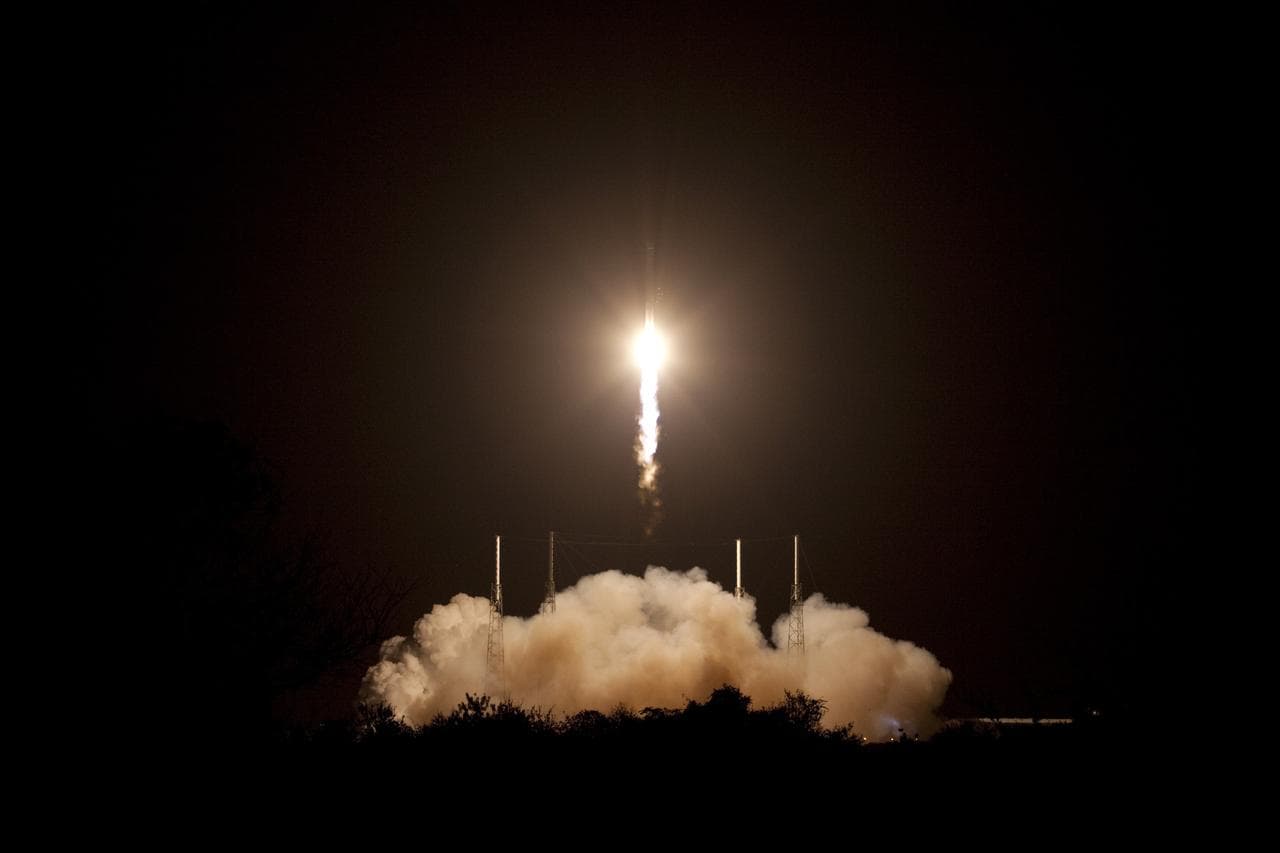
SpaceX had already proven its Dragon spacecraft could reach and safely return from the station during a demonstration flight earlier in 2012, but CRS-1, launched on October 8, 2012, aboard a Falcon 9 rocket, was the first flight under a formal NASA cargo contract, the beginning of routine commercial resupply operations rather than a one-off test.
Dragon carried more than 900 pounds of supplies, scientific experiments, and equipment to the station, docking successfully after a multi-day approach. The mission continued smoothly despite an engine anomaly during the Falcon 9's ascent, which the rocket's remaining engines compensated for without threatening the primary cargo delivery, an early demonstration of the vehicle's engine-out reliability margins. Dragon remained docked for over two weeks before returning a science cargo back to Earth via splashdown in the Pacific Ocean, one of Dragon's unique capabilities at the time as the only cargo spacecraft capable of returning meaningful cargo rather than simply burning up on reentry.
CRS-1 opened the door to what became a routine, essential logistics relationship between NASA and the commercial space industry, with SpaceX and later other companies flying dozens of resupply missions over the following decade, fundamentally changing how the International Space Station, and eventually crewed missions as well, were supplied and supported.
Mission Details
Official Designation
SpaceX CRS-1
Mission Type
First Commercial Cargo Resupply Mission
Launch Date
October 8, 2012
Mission Duration
20 days, 5 hours, 39 minutes
Spacecraft
Dragon
Launch Vehicle
Falcon 9
Launch Site
Space Launch Complex 40, Cape Canaveral
Cargo Delivered
Over 900 pounds of supplies and experiments
Crew
Uncrewed cargo mission
Mission Result
Successful
Historic Achievement
First Operational Commercial ISS Resupply Flight
Mission by the Numbers
Mission Statistics
Mission Type
First Commercial Cargo Resupply Mission
Launch Vehicle
Falcon 9
Crew
0 astronauts
Status
Successful
Mission Goals
Mission objectives
- 01
Conduct the first operational commercial cargo resupply mission under NASA contract.
- 02
Deliver supplies, experiments, and equipment to the International Space Station.
- 03
Demonstrate reliable Falcon 9 and Dragon performance for routine ISS logistics.
- 04
Return scientific cargo safely to Earth via splashdown.
- 05
Establish a sustainable commercial cargo relationship to support the station long-term.
Fascinating Details
Did You Know?
Key did you know? recorded for this mission.
CRS-1 was the first flight under NASA's formal Commercial Resupply Services contract, not just a demonstration.
One of the Falcon 9's nine first-stage engines shut down during ascent, but the rocket's design allowed the mission to continue safely.
Dragon was the only operational cargo spacecraft at the time capable of returning significant cargo to Earth rather than burning up during reentry.
SpaceX flew dozens of additional cargo resupply missions to the ISS in the years following CRS-1.
The mission came just over a year after the Space Shuttle's retirement left NASA without a domestic cargo vehicle.
CRS-1's success helped validate the commercial model NASA later expanded to crewed flights with Commercial Crew.
Mission Timeline
2011
Space Shuttle Retires
The retirement of the Space Shuttle program left NASA without its own vehicle for regular ISS cargo delivery, prompting a shift toward commercial partners.
May 2012
Dragon Demonstration Flight
SpaceX's Dragon spacecraft completed a successful demonstration flight to the ISS, proving the vehicle could safely dock with and depart from the station.
October 8, 2012 · 8:35 p.m. EDT
Launch
A Falcon 9 rocket launched from Cape Canaveral carrying Dragon on CRS-1, the first operational flight under NASA's commercial cargo contract.
During Ascent
Engine Anomaly
One of the Falcon 9's nine engines shut down during ascent; the rocket's remaining engines compensated, and the primary cargo delivery mission was not compromised.
October 10, 2012
Docking
Dragon successfully docked with the International Space Station, delivering more than 900 pounds of supplies and experiments.
October 28, 2012
Splashdown
Dragon returned to Earth with scientific cargo, splashing down in the Pacific Ocean after more than two weeks docked to the station.
Mission Legacy
Legacy
CRS-1 proved that a commercial company could reliably handle the essential logistics of keeping the International Space Station stocked, a responsibility previously held exclusively by government space agencies and their vehicles.
The mission's success, even through an in-flight engine anomaly, demonstrated the kind of built-in reliability margins that gave NASA confidence to expand its commercial partnerships significantly in the years that followed, eventually extending from cargo to crewed flights.
CRS-1 marked the practical beginning of a new era in which private companies became essential, routine partners in sustaining human spaceflight, a model that expanded dramatically with SpaceX's Demo-2 crewed mission less than eight years later.
Mission Photo Archive
Related Stories
Apollo
The Moon Photos That Still Feel Impossible
Before social media, astronauts brought back images that changed how humanity saw itself forever.
Read Article →
Artemis
Why Artemis Will Change Lunar Exploration
NASA's return to the Moon is designed to become more sustainable, more international, and more ambitious than Apollo.
Read Article →
ISS
Life 250 Miles Above Earth
Inside the daily routine of astronauts living and working aboard the International Space Station.
Read Article →