Space Shuttle
STS-107
Space Shuttle Columbia disintegrated during reentry on February 1, 2003, killing all seven crew members after a piece of insulating foam struck and damaged the orbiter's wing during launch sixteen days earlier.
Launch
January 16, 2003
Duration
15 days, 22 hours, 20 minutes
Crew
7 astronauts
Mission record
Space Shuttle archive entry · Failed
Mission Overview
The mission
Space Shuttle Columbia disintegrated during reentry on February 1, 2003, killing all seven crew members after a piece of insulating foam struck and damaged the orbiter's wing during launch sixteen days earlier.
In Depth
The Full Story
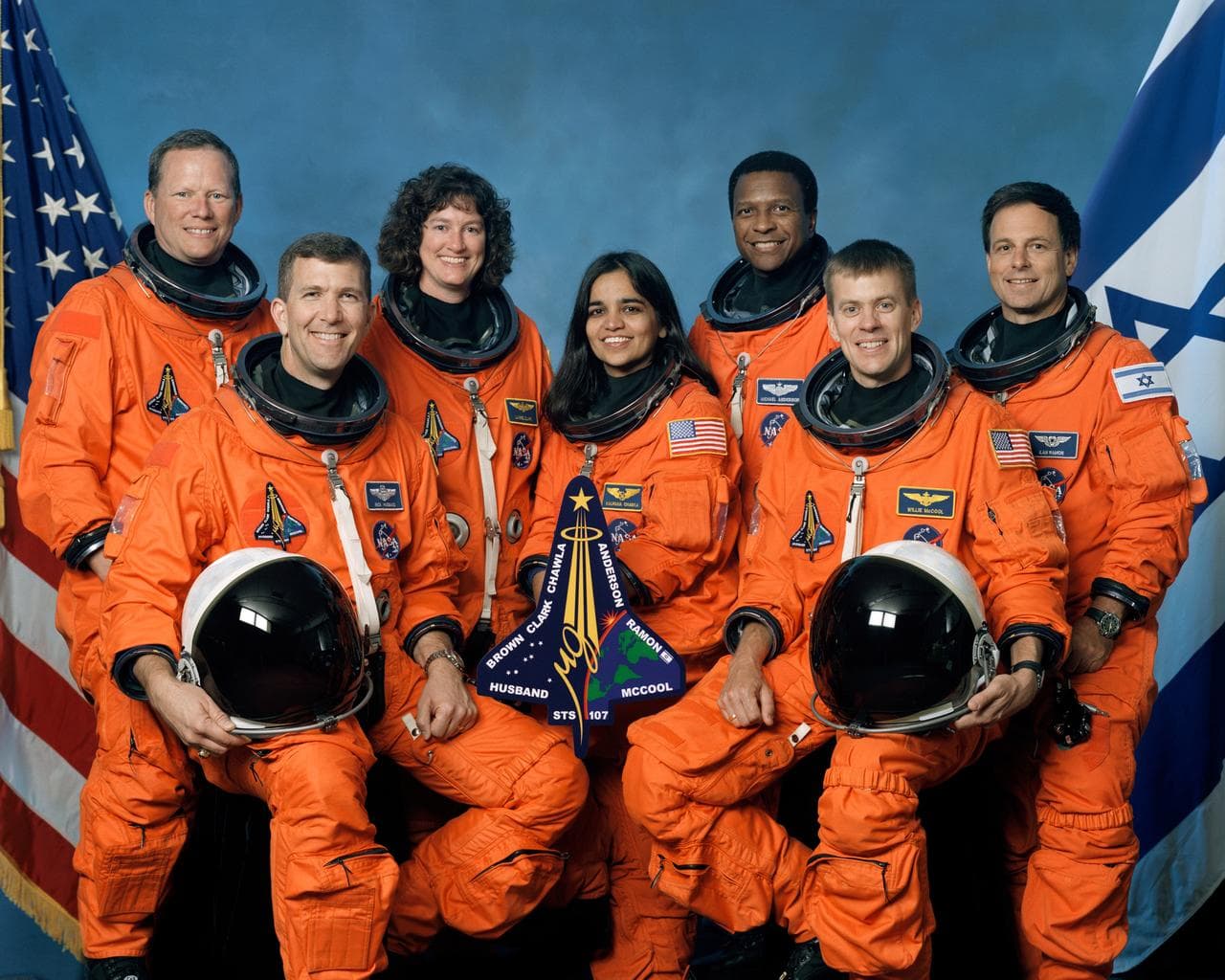
STS-107 was a sixteen-day science mission, the longest Shuttle flight of its kind, packed with more than eighty experiments spanning biology, physics, and materials science. Its seven-person crew included Commander Rick Husband, Mission Specialist Kalpana Chawla, who had become the first Indian-born woman in space on an earlier flight, and Payload Specialist Ilan Ramon, the first Israeli astronaut to fly in space. What none of them knew was that the mission had already suffered a critical, undetected injury during launch.
Eighty-two seconds after Columbia lifted off on January 16, 2003, a piece of insulating foam broke away from the external fuel tank and struck the leading edge of the orbiter's left wing at high speed. Engineers reviewing launch footage noticed the strike and raised concerns, but NASA management determined, based on incomplete analysis, that the foam strike did not pose a safety-of-flight issue, and the crew was never informed of the full extent of the concern.
For sixteen days, Columbia's crew conducted their science mission unaware that the foam strike had cracked the wing's thermal protection, opening a breach that would prove catastrophic during reentry. On February 1, as Columbia descended toward a landing at Kennedy Space Center, superheated atmospheric gases entered through the damaged wing, progressively destroying the internal structure from within. Columbia broke apart over Texas and Louisiana, killing all seven astronauts, just sixteen minutes before its scheduled landing.
The Columbia Accident Investigation Board determined the technical cause was the foam strike, but like the Rogers Commission after Challenger seventeen years earlier, it also identified deep organizational failures at NASA, a culture that had normalized foam debris strikes as an acceptable risk rather than treating them as a serious safety concern. The Space Shuttle program was grounded for more than two years, and NASA implemented sweeping changes to its safety culture, debris monitoring, and on-orbit inspection procedures before flights resumed.
Mission Details
Official Designation
STS-107
Mission Type
Columbia Disaster
Launch Date
January 16, 2003
Mission Duration
15 days, 22 hours, 20 minutes
Commander
Rick D. Husband
Pilot
William C. McCool
Orbiter
Columbia
Launch Site
Launch Complex 39A, Kennedy Space Center
Crew Size
7 Astronauts
Cause
Foam Strike Damage to Wing Thermal Protection
Mission Result
Failed
Historic Significance
Second In-Flight Loss of a Space Shuttle Crew
Mission by the Numbers
Mission Statistics
Mission Type
Columbia Disaster
Launch Vehicle
Space Shuttle Columbia
Crew
7 astronauts
Status
Failed
The People Behind the Mission
Crew
The astronauts assigned to command, operate, and carry out the mission.
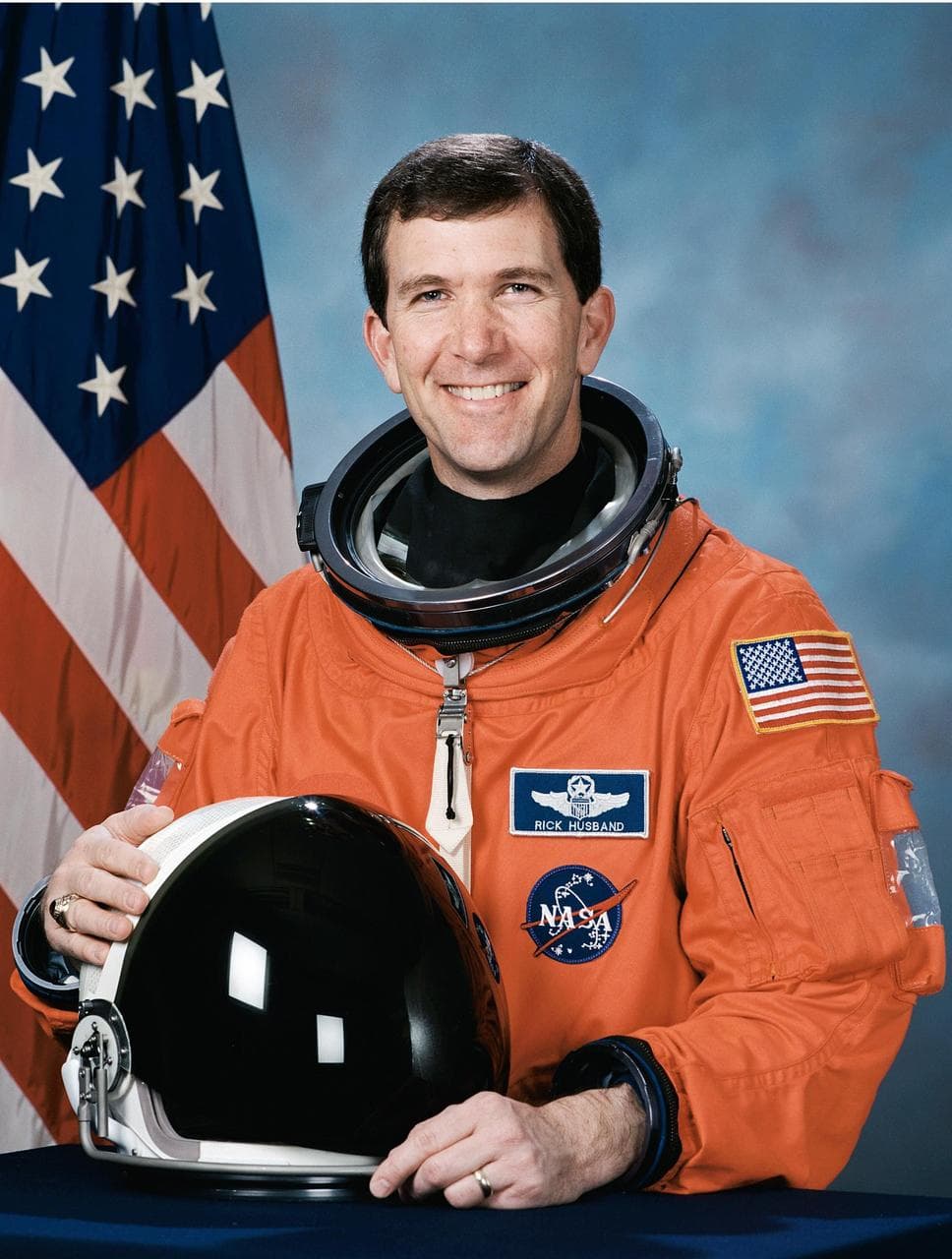
Commander
Rick Husband
Rick Husband commanded Space Shuttle Columbia on STS-107, and was killed with his six crewmates when the orbiter broke apart during reentry on February 1, 2003.
View Astronaut →

Pilot
William C. McCool
William McCool was piloting his first spaceflight aboard Columbia when the orbiter broke apart during reentry on February 1, 2003.
View Astronaut →
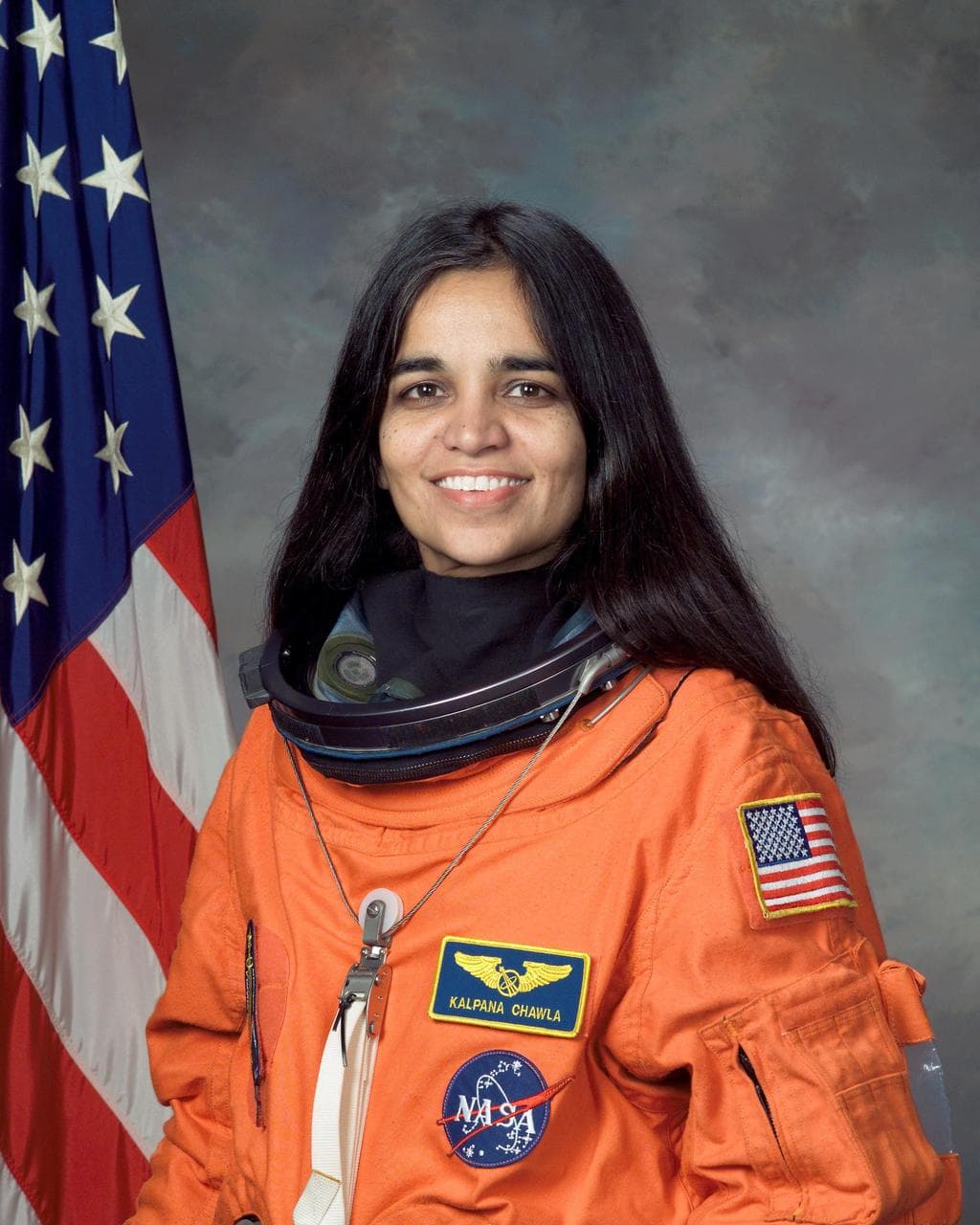
Mission Specialist
Kalpana Chawla
Kalpana Chawla was the first Indian-born woman to fly in space, and was killed aboard Columbia during STS-107's reentry on February 1, 2003.
View Astronaut →

Mission Specialist
David M. Brown
David Brown, a former circus acrobat turned Navy flight surgeon, was on his first spaceflight aboard Columbia when the orbiter broke apart during reentry on February 1, 2003.
View Astronaut →

Mission Specialist
Laurel B. Clark
Laurel Clark, a Navy flight surgeon and former submarine medical officer, was on her first spaceflight aboard Columbia when the orbiter broke apart during reentry on February 1, 2003.
View Astronaut →

Payload Commander
Michael P. Anderson
Michael Anderson, a physicist and Air Force officer, had already flown to Mir once before he was killed on his second flight when Columbia broke apart during reentry.
View Astronaut →

Payload Specialist
Ilan Ramon
Ilan Ramon became Israel's first astronaut aboard Columbia's final flight, and was killed along with his six crewmates when the orbiter broke apart during reentry.
View Astronaut →
Mission Goals
Mission objectives
- 01
Conduct over eighty scientific experiments in biology, physics, and materials science.
- 02
Study the effects of microgravity on a wide range of biological and physical processes.
- 03
Complete a sixteen-day extended-duration science mission.
- 04
Return the crew, orbiter, and research results safely to Earth.
Fascinating Details
Did You Know?
Key did you know? recorded for this mission.
The foam strike that doomed Columbia occurred just 82 seconds after launch, sixteen days before the disaster.
Kalpana Chawla was the first Indian-born woman to fly in space, having flown a previous mission in 1997.
Ilan Ramon was the first Israeli astronaut to fly in space.
Engineers had requested additional imagery of the wing damage during the flight, but the request did not reach NASA management in time to act on it.
Columbia broke apart over Texas and Louisiana, just sixteen minutes before its scheduled landing.
The Columbia Accident Investigation Board's report drew direct parallels to the organizational failures identified after the 1986 Challenger disaster.
The Space Shuttle program was grounded for more than two years following the accident.
NASA implemented new on-orbit wing inspection and repair procedures for all subsequent Shuttle missions.
Mission Timeline
January 16, 2003 · 10:39 a.m. EST
Launch
Columbia lifted off from Launch Complex 39A at Kennedy Space Center, carrying seven astronauts on a sixteen-day science mission.
T+82 seconds
Foam Strike
A piece of insulating foam broke away from the external fuel tank and struck the leading edge of Columbia's left wing, damaging its thermal protection system.
Following Days
Engineering Concerns Dismissed
Engineers who reviewed launch footage raised concerns about the foam strike, but NASA management concluded, based on incomplete analysis, that it did not threaten flight safety.
16 Days
Science Mission Continues
The crew conducted their extensive research program, unaware of the extent of the wing damage sustained during launch.
February 1, 2003
Reentry Begins
Columbia began its descent toward a planned landing at Kennedy Space Center, entering the atmosphere over the Pacific Ocean.
February 1, 2003 · 9:00 a.m. EST
Breakup
Superheated gases entered through the damaged wing, destroying Columbia's internal structure; the orbiter broke apart over Texas and Louisiana, killing all seven crew members.
2003
Columbia Accident Investigation Board
An independent investigation determined the foam strike as the technical cause and identified deep organizational failures in how NASA assessed and communicated safety risk.
July 2005
Return to Flight
The Space Shuttle program resumed after more than two years with STS-114, commanded by Eileen Collins, following sweeping safety reforms.
Mission Legacy
Legacy
The Columbia disaster, like Challenger seventeen years before it, forced NASA to confront how organizational culture and communication failures could turn a known technical risk into a fatal accident, reinforcing lessons the agency had already learned once and needed to relearn.
The investigation's findings led to sweeping changes in how NASA monitors Shuttle launches and inspects orbiters in flight, including new procedures for photographing the external tank during ascent and inspecting the wings and heat shield tiles while in orbit, changes that remained in place for every Shuttle mission that followed.
The loss of Columbia's seven astronauts, alongside the Challenger crew before them, is memorialized at Kennedy Space Center and remains a defining reminder of the risks inherent in human spaceflight, studied by engineers and organizational researchers alike as a case study in the dangers of normalized risk and breakdowns in technical communication.
Mission Photo Archive
Related Stories
Apollo
The Moon Photos That Still Feel Impossible
Before social media, astronauts brought back images that changed how humanity saw itself forever.
Read Article →
Artemis
Why Artemis Will Change Lunar Exploration
NASA's return to the Moon is designed to become more sustainable, more international, and more ambitious than Apollo.
Read Article →
ISS
Life 250 Miles Above Earth
Inside the daily routine of astronauts living and working aboard the International Space Station.
Read Article →