The Six Minutes Before Apollo 11
Three years before he became the first person on the Moon, Neil Armstrong nearly died on his very first spaceflight, spinning out of control in a malfunctioning Gemini capsule.
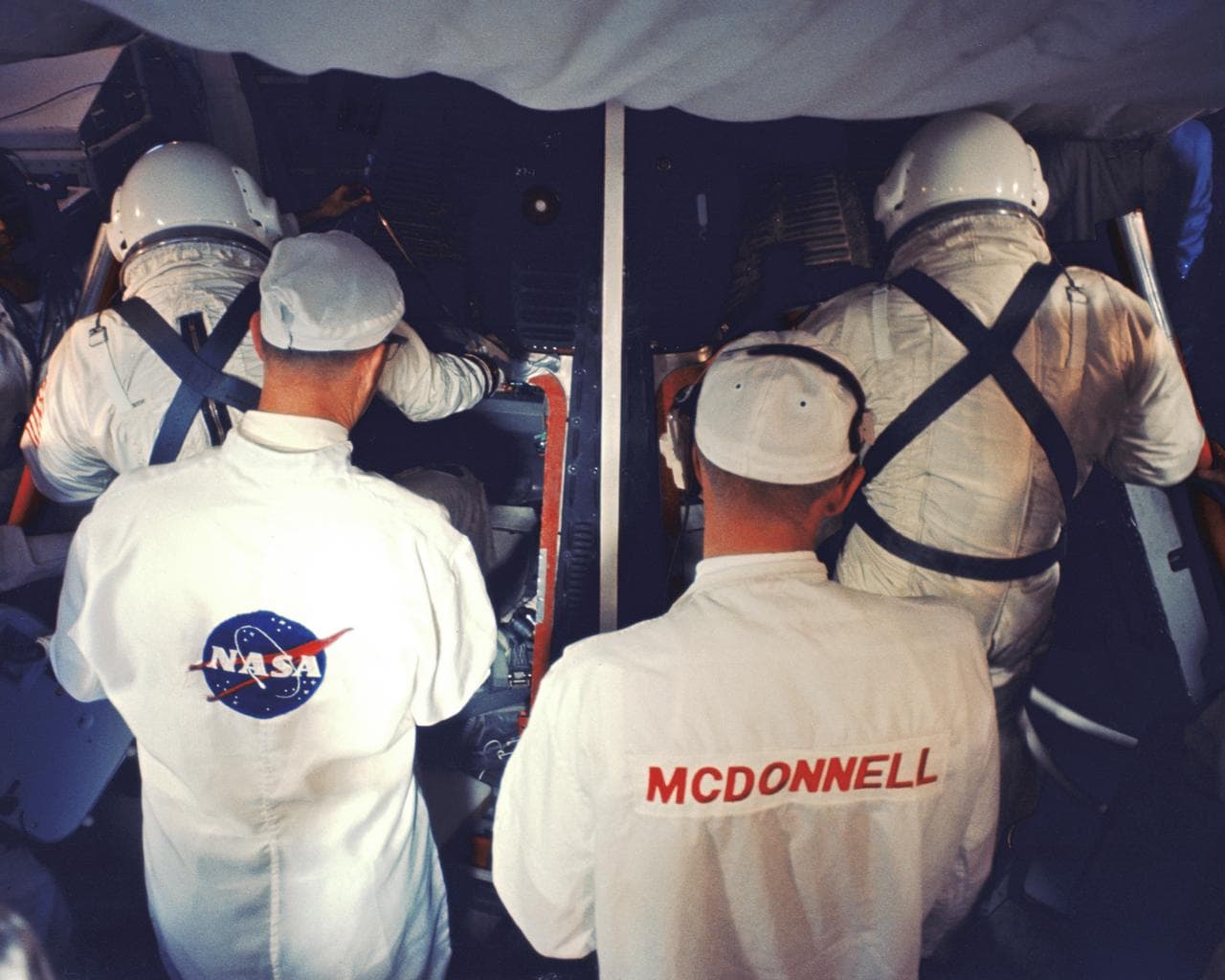
Gemini 8 spacecraft docked with its Agena target vehicle
OrbitingTruths EditorialHistory remembers Neil Armstrong for his composure on the Moon. It rarely remembers the six minutes, three years earlier, when that same composure kept him alive.
On March 16, 1966, Neil Armstrong flew into space for the first time in his life, aboard Gemini 8. It very nearly became his last flight of any kind.
Armstrong and pilot David Scott had just achieved the first docking between two spacecraft in orbit, joining Gemini 8 with an uncrewed Agena target vehicle, a milestone Apollo's lunar missions would depend on completely. Less than half an hour later, the combined vehicle began spinning out of control.
By the time it was over, Armstrong had personally diagnosed and resolved one of the most dangerous in-flight emergencies of the entire space program, on the very first spaceflight of his career, using nothing but a backup system never designed for the situation he was in.
First flight, worst case
A Debut Flight Goes Wrong
Gemini 8 was Armstrong's first spaceflight. He had joined NASA's astronaut corps in 1962 and spent nearly four years training, but had never left the ground until this mission. David Scott, flying as pilot, was on his first spaceflight too.
Minutes after their historic docking with the Agena, the joined spacecraft began to roll unexpectedly. Armstrong initially suspected the problem was in the Agena and undocked to investigate, standard procedure for isolating a fault. Instead, the tumbling grew dramatically worse the moment Gemini 8 was flying alone, revealing that the real problem was a stuck-open thruster on his own spacecraft.
Losing control
One Revolution Per Second
With the faulty thruster firing continuously, Gemini 8 accelerated into a spin approaching one full revolution per second, fast enough that Armstrong's vision began to blur and both astronauts risked losing consciousness entirely.
There was no time for a lengthy diagnosis. Armstrong made the call to activate the spacecraft's reentry control system, a separate set of thrusters normally held in reserve exclusively for atmospheric reentry, to fight the spin under manual control.
It worked. The spacecraft stabilized. But mission rules were explicit: once the reentry thrusters had been used, the flight had to end immediately, regardless of how the crew or spacecraft were doing otherwise.
No parade, no headlines
A Quiet Return
Armstrong and Scott splashed down in the Pacific Ocean less than eleven hours after launch, a fraction of the planned three-day mission. David Scott's planned spacewalk, one of the mission's primary objectives, never happened at all.
There was no ticker-tape parade. Gemini 8 became, in the eyes of much of the public, simply a mission that was cut short. Within NASA, though, it became something else entirely: a defining case study in what a single well-trained astronaut, thinking clearly under lethal pressure, was actually capable of.
Three years later, when it came time to select a commander for the first mission attempting to land on the Moon, Armstrong's calm handling of Gemini 8's emergency was part of a record NASA already trusted completely.
Key takeaways
What matters most
- Gemini 8 was Neil Armstrong's first spaceflight, three years before he commanded Apollo 11.
- A stuck-open thruster spun the docked spacecraft at nearly one revolution per second.
- Armstrong stopped the spin using the reentry control system, a backup meant only for atmospheric reentry.
- Using that system automatically triggered mission rules requiring an immediate splashdown, cutting the flight to under eleven hours.
Article Details
Mission
Gemini 8
Launch Date
March 16, 1966
Command Pilot
Neil A. Armstrong
Pilot
David R. Scott
Mission Duration
10 hours, 41 minutes
Emergency
Stuck thruster, near one revolution per second
NASA ID
104-KSC-66C-1852
Lasting impact
Why it still matters
Gemini 8 proved the first docking between two spacecraft in orbit, a technique Apollo's lunar missions absolutely required.
Armstrong's emergency response became a widely cited example of composure under pressure inside NASA's astronaut corps.
The mission's conservative abort rules, prioritizing crew survival over completing objectives, shaped NASA's safety culture for the rest of the human spaceflight program.
NASA Sources
Primary Archive
NASA Gemini 8 Mission Overview
NASA ID
104-KSC-66C-1852
Collection
Project Gemini Photography
Credit
NASA / Kennedy Space Center
Connected archive
Continue exploring
Related Stories
Apollo
The Moon Photos That Still Feel Impossible
Before social media, astronauts brought back images that changed how humanity saw itself forever.
Read Article →
Artemis
Why Artemis Will Change Lunar Exploration
NASA's return to the Moon is designed to become more sustainable, more international, and more ambitious than Apollo.
Read Article →
ISS
Life 250 Miles Above Earth
Inside the daily routine of astronauts living and working aboard the International Space Station.
Read Article →